


When you're sourcing high-quality titanium sheets, understanding the difference between cold rolling and hot rolling isn't just technical trivia-it directly impacts the performance, cost-efficiency, and final application of the titanium materials you choose.
What many don't realize is that cold rolling and hot rolling aren't opposing processes-they're actually complementary steps in the titanium sheet production chain. Henan Gnee New Material Co., Ltd, we combine both methods to deliver high-performance titanium sheets that meet the demanding standards of aerospace, medical, and industrial applications.
Hot Rolling: The Foundation of Formability
Hot rolling involves deforming titanium at high temperatures-typically between 900°C and 1000°C. At these temperatures, titanium becomes more ductile and easier to shape, allowing for large reductions in thickness.
You benefit from hot rolling because it:
Refines the grain structure
Eliminates internal defects like porosity or inclusions
Improves mechanical strength
Enables production of thicker plates, usually 4 mm and above
However, hot-rolled sheets might not always meet tight surface or dimensional tolerances. That's where cold rolling comes in.


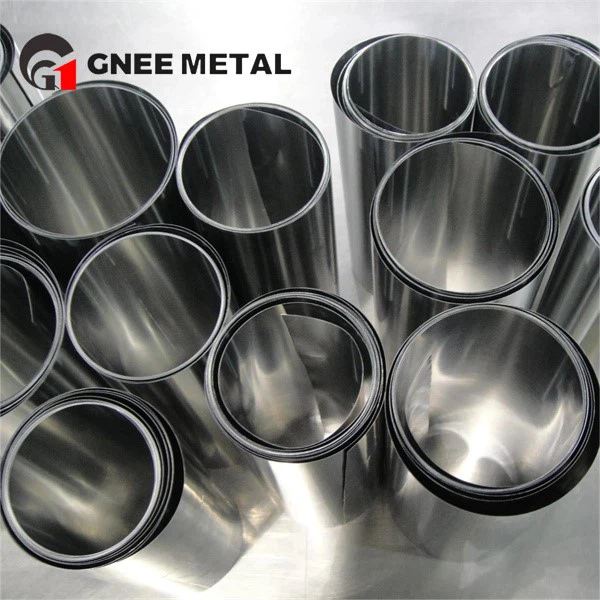
Cold Rolling: Precision at Its Best
Cold rolling is performed at room temperature or below the recrystallization point. It significantly improves surface finish, enhances dimensional accuracy, and increases mechanical strength due to strain hardening.
When you require:
Thinner sheets
Superior surface quality
Tighter tolerances
Cold rolling becomes your go-to process. It's ideal for industries where aesthetic finish, biocompatibility, or tight machining specs are crucial-such as medical implants or aerospace skins.
Hot and Cold Rolling: Why You Need Both
Over 95% of commercial titanium sheets are produced using a combined process of hot rolling followed by cold rolling. Relying on only one method may compromise either cost-efficiency or quality.
Here's how both steps work together:
Hot rolling prepares the base material with appropriate thickness and internal integrity.
Cold rolling refines it to the desired finish, tolerance, and strength.
Skipping one step may reduce costs, but it also significantly lowers product performance-something you can't afford when you're manufacturing for critical industries.
Why Choose Henan Gnee New Material Co., Ltd Titanium?
We offer:
ISO 9001 and AS9100-certified production
Custom sizing and surface finishes (pickling, polishing, sandblasting)
Expert guidance for both hot-rolled and cold-rolled titanium sheets
Competitive global shipping and responsive customer service
Discuss Your Project Requirements
Our product range
| Product Category | Standard Forms / Types | Common Grades (ASTM) | Typical Dimensions / Specifications | Key Applications |
|---|---|---|---|---|
| Titanium Pipes & Tubes | Seamless Pipe, Welded Tube, Heat Exchanger Tubes, Condenser Tubes, Capillary Tubes | Grade 1, 2, 3, 5 (Ti-6Al-4V), 7, 9 (Ti-3Al-2.5V), 12 | OD: 0.5mm - 300mm+ Wall Thickness: 0.1mm - 20mm Length: Custom up to 15m |
Aerospace, Chemical Processing, Marine, Power Plant Condensers, Bicycle Frames, Medical Implants |
| Titanium Sheets & Plates | Hot-Rolled Plate, Cold-Rolled Sheet, Checker Plate (Flooring) | Grade 1, 2, 3, 5 (Ti-6Al-4V), 7, 12 | Thickness: 0.1mm - 100mm+ Width: Up to 2000mm Length: Up to 6000mm |
Chemical Tanks, Pressure Vessels, Architectural Cladding, Marine Hardware, Armor Plating, Heat Exchangers |
| Titanium Bars & Rods | Round Bar, Square Bar, Hex Bar, Forged Bar, Wire Rod | Grade 1, 2, 4, 5 (Ti-6Al-4V), 7, 12 | Diameter/Size: 1mm - 500mm+ Length: 1000mm - 6000mm (Std.), Custom |
Fasteners (Bolts, Nuts), Surgical Implants, Pump Shafts, Valve Components, Golf Clubs, Marine Shafting |
| Titanium Strips & Coils | Cold-Rolled Strip, Precision Foil, Coiled Strip | Grade 1, 2, 5 (Ti-6Al-4V), 12 | Thickness: 0.02mm (Foil) - 5mm Width: 5mm - 500mm Coil Weight: Up to 1000kg |
Bellows, Medical Stents, Gaskets, Honeycomb Cores, Springs, Electronic Components |
| Titanium Wires | Welding Wire, Spring Wire, Fastener Wire, Mesh Wire, Medical Suture Wire | Grade 1, 2, 4, 5 (Ti-6Al-4V), ELI (Extra Low Interstitial) | Diameter: 0.05mm - 10mm Condition: Annealed, Hard-Drawn Form: Coils, Spools, Straight Lengths |
3D Printing (Wire-AM), Welding Filler, Chemical Mesh, Orthodontic Archwires, Fishing Leaders, Springs |
Our factory
Our factory specializes in the field of international trade of titanium materials, professionally producing high-quality series products such as titanium tubes, titanium bars, titanium plates, titanium wires, and titanium strips. The factory is equipped with internationally advanced production and testing equipment, including precision forging units, high-speed cold rolling mills, vacuum melting furnaces, CNC spinning machines, continuous drawing production lines, and automated surface treatment systems. Coupled with precision testing instruments such as spectrometers and ultrasonic flaw detectors, we ensure precise control over the entire process from raw materials to finished products. We are committed to providing global customers with titanium products that offer excellent performance and a complete range of specifications through stable and reliable processes and strict quality management, meeting the application needs of high-end industries such as energy, chemical, aerospace, and medical fields.

Titanium product packaging
We place great emphasis on the transportation safety and delivery quality of our products. All titanium materials are packaged using strict industrial-grade solutions: titanium tubes and bars undergo anti-rust treatment, are tightly wrapped with waterproof stretch film, and then placed in reinforced wooden or iron boxes lined with moisture-proof paper, with fillers added to prevent sliding and collisions during transportation. Titanium plates and strips are covered with protective film, fitted with edge protectors, separated layer by layer with moisture-proof paper, loaded onto sturdy wooden or steel pallets, and securely fastened with steel straps. Fine titanium wires are neatly coiled onto specialized spools and encapsulated in sealed boxes that are waterproof and dustproof. Each packaging unit is accompanied by clear product labels, material certificates, and moisture-proof indicators, ensuring that the goods remain intact, clearly labeled, and safely delivered to global customers through long-distance sea freight and multimodal transportation.

Discuss Your Project Requirements


