


For titanium products, understanding forging processes is key to ensuring high material quality. There are three main forging processes for titanium alloys: free forging, radial forging, and die forging. Each method has its own advantages and is suitable for producing a variety of titanium products, such as billets, rings, discs, bars, and complex structural components. GNEE specializes in high-quality titanium products and can tailor solutions to your specific needs, whether you require titanium bars, titanium flanges, or custom titanium parts.
Free Forging of Titanium Alloys
As the main method for forging titanium alloys, free forging, combined with current advanced forging technology, is a key means to optimize the internal structure of titanium alloys. By performing high-temperature and low-temperature piercing on fast forging machines, titanium alloy ingots can obtain a more refined and compact high-magnification structure, thereby meeting the diverse international standard requirements of customers. In theory, the more upsetting times, the finer the high-multiple organizational structure of the titanium alloy will be. However, a strict and reasonable forging process must be followed, otherwise it will lead to unnecessary waste of resources.
Radial Forging for Titanium
Radial forging is another crucial method in titanium alloy forging, mainly used for producing small-sized titanium bars, thick-walled tubes, stepped shafts, and rectangular bars. This method involves the radial deformation of the titanium alloy by applying forces in multiple directions, which allows for the formation of complex geometries and tight tolerances. The precision of radial forging is achieved through the use of advanced electronic control systems, enabling the forming tolerance to be controlled within 0.5mm. As a result, radial forging plays a vital role in improving the yield rate of titanium alloy products while reducing waste. It's particularly effective for manufacturing thick-walled titanium tubes and other high-strength profiles, making it a preferred option for industries requiring intricate titanium parts with exceptional mechanical properties.
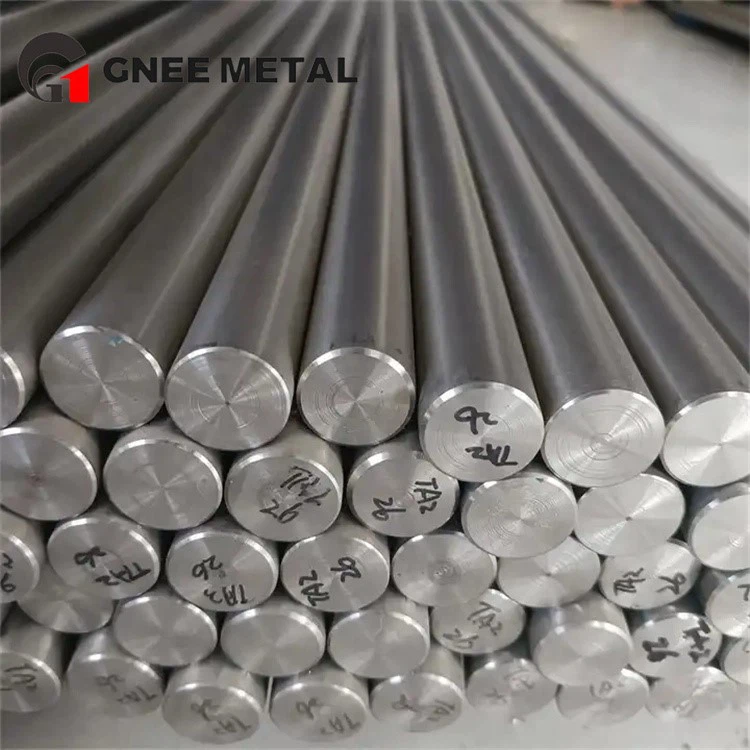


Die Forging of Titanium Alloys
Die forging is used for producing complex structural parts made from titanium alloys. This method involves placing titanium alloy billets into a mold and applying pressure to shape them. Die forging is particularly useful for creating parts with intricate designs or those requiring high precision. In some cases, multi-directional die forging is employed to achieve the desired shape. Not only does die forging reduce material costs by using less titanium, but it also preserves the streamlines and microstructure of the titanium alloy. This helps to maintain the integrity of the material's strength and durability. Due to these benefits, die forging is frequently used in industries like aerospace, where high-performance titanium parts are critical for safety and reliability.
Why Choose Titanium Forging?
Whether you're manufacturing titanium alloy bars, custom titanium parts, or high-performance aerospace components, forging plays a crucial role in ensuring material integrity and quality. Titanium's excellent strength-to-weight ratio, corrosion resistance, and high durability make it an ideal material for a wide range of applications, including aerospace and medical devices. GNEE employs advanced forging processes to ensure that every titanium product meets the highest industry standards.
Discuss Your Project Requirements
Our product range
| Category | Product Name | Common Specifications (Available Upon Request) | Key Applications | |
|---|---|---|---|---|
| Titanium Tube | Seamless Titanium Tube Welded Titanium Tube |
ASTM B338 Gr1, Gr2, Gr5, Gr7, Gr9, Gr12 OD: 1mm - 300mm Wall Thickness: 0.5mm - 20mm Standards: ASTM, ASME, DIN, JIS |
Heat Exchangers, Condensers, Chemical Processing, Aerospace, Marine, Medical Implants | Get Free Sample & Evaluation |
| Titanium Sheet/Plate | Titanium Sheet Titanium Plate |
ASTM B265 Gr1, Gr2, Gr5, Gr7, Gr9, Gr12 Thickness: 0.1mm - 100mm Width: Up to 2000mm Conditions: Hot Rolled, Cold Rolled, Annealed |
Chemical Vessels, Pressure Vessels, Aerospace Structures, Marine Hardware, Architectural Cladding, Anodes | Get Free Sample & Evaluation |
| Titanium Bar/Rod | Titanium Round Bar Titanium Hexagon Bar Titanium Square Bar |
ASTM B348 Gr1, Gr2, Gr5, Gr7, Gr9, Gr12 Diameter/Section: 3mm - 300mm Length: As per requirement Forms: Forged, Rolled, Turned & Polished |
Fasteners, Valve Parts, Pump Shafts, Surgical Instruments, Sports Equipment, Automotive Components | Get Free Sample & Evaluation |
| Titanium Wire | Titanium Coil Wire Straight Titanium Wire Welding Wire |
ASTM B863 Gr1, Gr2, Gr5, Gr7, Gr9, Gr12 Diameter: 0.1mm - 10mm Forms: Annealed, Pickled Spool Weight: Customizable |
Welding Filler, 3D Printing (Wire Arc), Springs, Mesh, Medical Staples & Sutures, Fishing Tackle | Get Free Sample & Evaluation |
| Titanium Strip/Foil | Titanium Strip (Coil) Titanium Foil |
ASTM B265 Gr1, Gr2 Thickness: 0.03mm - 2.0mm Width: Up to 600mm Surface: Bright, Matte, Pickled |
Bellows, Gaskets, Honeycomb Structures, Heat Shields, Precision Instrument Parts, Battery Current Collectors | Get Free Sample & Evaluation |
Our factory
Our factory operates a dedicated production facility equipped with modern machinery for processing titanium. We have a complete set of equipment including forging presses, hot and cold rolling mills, tube drawing and welding lines, bar & wire drawing machines, and surface treatment units. This allows us to control the production process from raw material to finished products such as sheets, plates, tubes, bars, and wires. Our workshop is capable of handling large-volume orders while maintaining consistent quality across our product range.

Titanium product packaging
Our packaging is designed for maximum security and international standards. We use tailored wooden crates for heavy plates and bars, with internal waterproof wrapping and blocking to prevent movement. Tubes and coils are securely packed in wooden boxes with reinforced edges and protective end caps. For smaller items like wires and strips, we use standard export cartons with inner plastic and moisture-proof sealing. All packages are clearly marked with product details, weight, and handling instructions to ensure safe arrival. We can also customize packing methods, such as palletization or container optimization, based on specific shipping and customer requirements.

Discuss Your Project Requirements


