


If you're sourcing high-performance titanium products, understanding the production process of seamless titanium alloy tubes is key. These pipes are widely used in aerospace, chemical, and medical industries due to their excellent corrosion resistance, high strength, and versatility. Let's break down the process step by step, so you know what makes a high-quality customized titanium tube.
Understand the Types: Seamless vs Welded, Large vs Small Diameter
Before diving in, you should know that titanium alloy pipes come in two main types: seamless and welded. This article focuses on seamless pipes.
Seamless pipes are also classified by diameter:
Large-diameter pipes: Nominal diameter > 200mm
Small-diameter pipes: Nominal diameter ≤ 200mm
The pipe diameter determines the billet production method, so choosing the right process is critical.
Billet Production: Punch Extrusion vs Skew Rolling
The billet is the "raw form" of a seamless pipe. Two main methods are used to produce billets:
Punch Extrusion: Flexible but Costly
In punch extrusion, a heated titanium ingot is pushed through a die to form a hollow billet. The advantages are:
Flexibility: Supports multiple specifications, ideal for large-diameter pipes
Enhanced Properties: Large deformation refines grains and improves strength, even for low-plasticity metals
But there are trade-offs: high metal consumption, expensive tooling, and surface quality can be challenging.
For larger diameters, reverse extrusion is often preferred, as it reduces lubricant use and improves surface quality.
Skew Rolling: Cost-Effective but Less Flexible
Skew rolling passes a titanium rod through rollers to form a billet. Its benefits include:
Lower cost: 50%-70% of punch extrusion
Simpler operation: Good surface quality
Limitations: less flexible, single-specification billets, not suitable for very thin walls.
You can see the difference in this comparison table:
|
Process Type |
Core Advantage |
Main Limitation |
Ideal Use Case |
|
Punch Extrusion |
Flexible specs, fine grain, can handle low-plasticity metals |
High metal & die consumption, costly, surface quality issues |
Multi-spec pipes, especially large diameter, high deformation |
|
Skew Rolling |
Low cost, minimal die wear, good surface |
Single-spec, low deformation, not thin-walled |
Single-spec pipes, standard wall thickness |


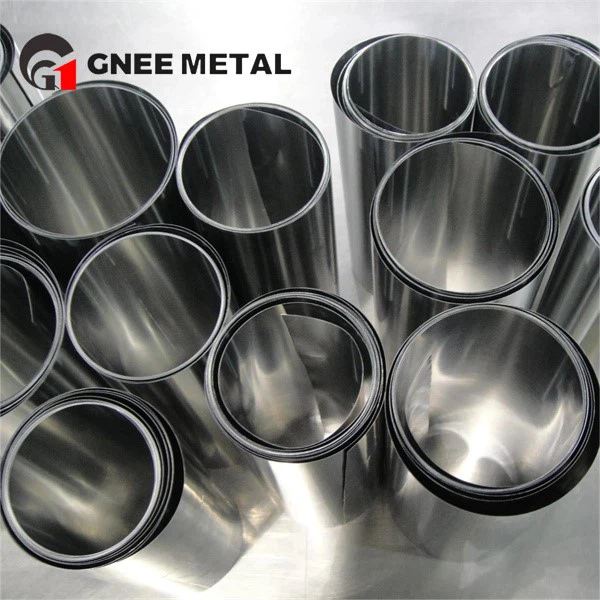
Rolling: The Key Step to Pipe Formation
After producing the billet, you must roll it into the final seamless pipe. Rolling conditions directly affect precision and quality.
Hot Rolling vs Cold Rolling
Hot rolling: Rarely used today, less precise, high die wear
Cold rolling: Performed at room temperature, superior precision, widely preferred
Cold Rolling Types: Two-Roll vs Three-Roll
|
Type |
Principle |
Advantage |
Limitation |
|
Two-Roll |
Billet intermittently rotated, passed through changing grooves |
Large reduction, high efficiency |
Complex equipment, harder to replace rolls, less precise surface finish |
|
Three-Roll |
Three rolls at 120°, reciprocating |
Uniform deformation, good surface quality |
Lower reduction per pass, slower production |
Process Parameters: Controlling Performance
The rolling parameters determine the pipe's mechanical properties. Key factors include:
Deformation amount: Optimizes strength and ductility
Feed rate: Balances efficiency and quality
Rolling passes: Ensures uniform wall thickness while managing cost
For example, cold rolling increasing deformation from 20% to 30% can raise tensile strength from 1207.5 MPa to 1223.5 MPa and elongation from 12.75% to 13.25%.
Discuss Your Project Requirements
Our product range
| Product Category | Standard Forms / Types | Common Grades (ASTM) | Typical Dimensions / Specifications | Key Applications |
|---|---|---|---|---|
| Titanium Pipes & Tubes | Seamless Pipe, Welded Tube, Heat Exchanger Tubes, Condenser Tubes, Capillary Tubes | Grade 1, 2, 3, 5 (Ti-6Al-4V), 7, 9 (Ti-3Al-2.5V), 12 | OD: 0.5mm - 300mm+ Wall Thickness: 0.1mm - 20mm Length: Custom up to 15m |
Aerospace, Chemical Processing, Marine, Power Plant Condensers, Bicycle Frames, Medical Implants |
| Titanium Sheets & Plates | Hot-Rolled Plate, Cold-Rolled Sheet, Checker Plate (Flooring) | Grade 1, 2, 3, 5 (Ti-6Al-4V), 7, 12 | Thickness: 0.1mm - 100mm+ Width: Up to 2000mm Length: Up to 6000mm |
Chemical Tanks, Pressure Vessels, Architectural Cladding, Marine Hardware, Armor Plating, Heat Exchangers |
| Titanium Bars & Rods | Round Bar, Square Bar, Hex Bar, Forged Bar, Wire Rod | Grade 1, 2, 4, 5 (Ti-6Al-4V), 7, 12 | Diameter/Size: 1mm - 500mm+ Length: 1000mm - 6000mm (Std.), Custom |
Fasteners (Bolts, Nuts), Surgical Implants, Pump Shafts, Valve Components, Golf Clubs, Marine Shafting |
| Titanium Strips & Coils | Cold-Rolled Strip, Precision Foil, Coiled Strip | Grade 1, 2, 5 (Ti-6Al-4V), 12 | Thickness: 0.02mm (Foil) - 5mm Width: 5mm - 500mm Coil Weight: Up to 1000kg |
Bellows, Medical Stents, Gaskets, Honeycomb Cores, Springs, Electronic Components |
| Titanium Wires | Welding Wire, Spring Wire, Fastener Wire, Mesh Wire, Medical Suture Wire | Grade 1, 2, 4, 5 (Ti-6Al-4V), ELI (Extra Low Interstitial) | Diameter: 0.05mm - 10mm Condition: Annealed, Hard-Drawn Form: Coils, Spools, Straight Lengths |
3D Printing (Wire-AM), Welding Filler, Chemical Mesh, Orthodontic Archwires, Fishing Leaders, Springs |
Our factory
Our factory specializes in the field of international trade of titanium materials, professionally producing high-quality series products such as titanium tubes, titanium bars, titanium plates, titanium wires, and titanium strips. The factory is equipped with internationally advanced production and testing equipment, including precision forging units, high-speed cold rolling mills, vacuum melting furnaces, CNC spinning machines, continuous drawing production lines, and automated surface treatment systems. Coupled with precision testing instruments such as spectrometers and ultrasonic flaw detectors, we ensure precise control over the entire process from raw materials to finished products. We are committed to providing global customers with titanium products that offer excellent performance and a complete range of specifications through stable and reliable processes and strict quality management, meeting the application needs of high-end industries such as energy, chemical, aerospace, and medical fields.

Titanium product packaging
We place great emphasis on the transportation safety and delivery quality of our products. All titanium materials are packaged using strict industrial-grade solutions: titanium tubes and bars undergo anti-rust treatment, are tightly wrapped with waterproof stretch film, and then placed in reinforced wooden or iron boxes lined with moisture-proof paper, with fillers added to prevent sliding and collisions during transportation. Titanium plates and strips are covered with protective film, fitted with edge protectors, separated layer by layer with moisture-proof paper, loaded onto sturdy wooden or steel pallets, and securely fastened with steel straps. Fine titanium wires are neatly coiled onto specialized spools and encapsulated in sealed boxes that are waterproof and dustproof. Each packaging unit is accompanied by clear product labels, material certificates, and moisture-proof indicators, ensuring that the goods remain intact, clearly labeled, and safely delivered to global customers through long-distance sea freight and multimodal transportation.

Discuss Your Project Requirements


