


Titanium Alloy Pipes
Titanium is a highly chemically stable metal with excellent corrosion resistance to most acids, alkalis, salts and other chemical media. At room temperature, titanium reacts with oxygen to form a dense oxide film on the surface, preventing further corrosion. Even in extreme environments such as high temperature, high pressure, and strong corrosion, titanium tubing can maintain a long service life.
Titanium Alloy Grades Overview
| Grade | UNS Designation | Nominal Composition | Key Characteristics | Primary Applications |
|---|---|---|---|---|
| Grade 5 | R56400 | Ti-6Al-4V | High strength, heat treatable | Aerospace, structural, high-pressure |
| Grade 7 | R52400 | Ti-0.15Pd | Superior corrosion resistance | Chemical processing, marine |
| Grade 9 | R56320 | Ti-3Al-2.5V | Medium strength, excellent formability | Hydraulic tubing, aerospace |
| Grade 23 | R56407 | Ti-6Al-4V ELI | High strength, enhanced toughness | Medical implants, cryogenic |
Professional pure titanium pipe material supplier - Henan Gnee New Material Co., Ltd

Titanium Pipe Sizing Standards
| NPS | DN | OD[in (mm)] | Wall thickness[in (mm)] | |||||||
|---|---|---|---|---|---|---|---|---|---|---|
| SCH 5 | SCH 10s / 10 | SCH 30 | SCH 40s / 40 / STD | SCH 80s / 80 / XS | SCH 120 | SCH 160 | XXS | |||
| ⅛ | 6 | 0.405 (10.29) | 0.035 (0.889) | 0.049 (1.245) | 0.057 (1.448) | 0.068 (1.727) | 0.095 (2.413) | - | - | - |
| ¼ | 8 | 0.540 (13.72) | 0.049 (1.245) | 0.065 (1.651) | 0.073 (1.854) | 0.088 (2.235) | 0.119 (3.023) | - | - | - |
| ⅜ | 10 | 0.675 (17.15) | 0.049 (1.245) | 0.065 (1.651) | 0.073 (1.854) | 0.091 (2.311) | 0.126 (3.200) | - | - | - |
| ½ | 15 | 0.840 (21.34) | 0.065 (1.651) | 0.083 (2.108) | 0.095 (2.413) | 0.109 (2.769) | 0.147 (3.734) | - | 0.188 (4.775) | 0.294 (7.468) |
| ¾ | 20 | 1.050 (26.67) | 0.065 (1.651) | 0.083 (2.108) | 0.095 (2.413) | 0.113 (2.870) | 0.154 (3.912) | - | 0.219 (5.563) | 0.308 (7.823) |
| 1 | 25 | 1.315 (33.40) | 0.065 (1.651) | 0.109 (2.769) | 0.114 (2.896) | 0.133 (3.378) | 0.179 (4.547) | - | 0.250 (6.350) | 0.358 (9.093) |
| 1¼ | 32 | 1.660 (42.16) | 0.065 (1.651) | 0.109 (2.769) | 0.117 (2.972) | 0.140 (3.556) | 0.191 (4.851) | - | 0.250 (6.350) | 0.382 (9.703) |
| 1½ | 40 | 1.900 (48.26) | 0.065 (1.651) | 0.109 (2.769) | 0.125 (3.175) | 0.145 (3.683) | 0.200 (5.080) | - | 0.281 (7.137) | 0.400 (10.160) |
| 2 | 50 | 2.375 (60.33) | 0.065 (1.651) | 0.109 (2.769) | 0.125 (3.175) | 0.154 (3.912) | 0.218 (5.537) | 0.250 (6.350) | 0.343 (8.712) | 0.436 (11.074) |
| 2½ | 65 | 2.875 (73.03) | 0.083 (2.108) | 0.120 (3.048) | 0.188 (4.775) | 0.203 (5.156) | 0.276 (7.010) | 0.300 (7.620) | 0.375 (9.525) | 0.552 (14.021) |
| 3 | 80 | 3.500 (88.90) | 0.083 (2.108) | 0.120 (3.048) | 0.188 (4.775) | 0.216 (5.486) | 0.300 (7.620) | 0.350 (8.890) | 0.438 (11.125) | 0.600 (15.240) |
| 3½ | 90 | 4.000 (101.60) | 0.083 (2.108) | 0.120 (3.048) | 0.188 (4.775) | 0.226 (5.740) | 0.318 (8.077) | - | - | 0.636 (16.154) |
Comparative
Mechanical Properties Comparison
| Grade | Tensile Strength (MPa) | Yield Strength (MPa) | Elongation (%) | Formability | Weldability |
|---|---|---|---|---|---|
| Grade 5 | 895 | 825 | 10 | ★★ | ★★★ |
| Grade 7 | 345 | 275 | 20 | ★★★★★ | ★★★★★ |
| Grade 9 | 620 | 480 | 15 | ★★★★ | ★★★★★ |
| Grade 23 | 860 | 795 | 12 | ★★★ | ★★★ |
Corrosion Resistance Comparison
| Environment | Grade 5 | Grade 7 | Grade 9 | Grade 23 |
|---|---|---|---|---|
| Seawater | Excellent | Excellent | Excellent | Excellent |
| Oxidizing Acids | Good | Excellent | Good | Good |
| Reducing Acids | Fair | Excellent | Fair | Fair |
| Chlorides | Excellent | Excellent | Excellent | Excellent |
| High Temperature | Excellent | Good | Good | Excellent |
Cost Comparison
| Factor | Grade 5 | Grade 7 | Grade 9 | Grade 23 |
|---|---|---|---|---|
| Raw Material Cost | Moderate | High | Moderate | Moderate-High |
| Fabrication Cost | Higher | Low | Moderate | Higher |
| Lifecycle Cost | Low | Very Low | Low | Low |
| Availability | Excellent | Good | Good | Good |
Titanium Tubing For Industrial Applications:
Marine Industry
Chemical and petrochemical industry
Pulp and paper industry
Sporting goods - golf shafts, bicycle frames, etc.
Medical industry
Nuclear industry
Titanium is classified in two categories, commercially pure and alloys with additives such as aluminum and vanadium.
Packaging and transport of titanium alloys
Our titanium alloy pipes are protected by a multi-layer export-grade packaging system designed to ensure they arrive in perfect condition. Each pipe is first individually protected with foam spacers or plastic end caps to prevent surface contact and damage, then securely bundled with steel strapping and edge protectors. The bundles are wrapped in a moisture barrier layer of VCI (Vapor Corrosion Inhibitor) paper and polyethylene film, with desiccant packs added for additional humidity control during sea freight. Finally, the pipes are securely packed in robust ISPM 15 compliant wooden crates or steel-framed pallets, clearly labeled with grade, specification, heat number, dimensions, and shipping marks for full traceability and safe handling during international transport.

Why Choose US
Henan Gnee New Material Co., Ltd Group has its own factory producing many different grades of titanium products. The factory has experienced workers, qualified and professional equipment, well-collaborated operations, and a business team with rising sales year-round. The company has been specializing in the titanium material field for more than 10 years, and we have earned a worldwide reputation for our fast delivery, competitive prices, and good after-sales service.

FAQ
Q1: What is the difference between seamless and welded titanium pipes?
Seamless pipes are made from solid billet with no weld seam, offering maximum integrity for high-pressure or critical applications. Welded pipes are made from strip with a longitudinal weld, offering more economical production for larger diameters and longer lengths. Both types are acceptable under ASTM specifications when properly manufactured and inspected.
Q2: Can different titanium grades be welded together?
Yes, with appropriate filler metal selection:
Gr5 to Gr5: ERTi-5 filler
Gr5 to Gr9: ERTi-9 filler
Gr7 to Gr2: ERTi-7 or ERTi-2
Gr23 to Gr23: ERTi-5 ELI filler
Consult welding procedures for specific combinations.
Q3: What is the maximum pressure rating for titanium pipes?
Pressure ratings depend on grade, size, wall thickness, and temperature. Consult ASME B31.3 for process piping or specific design codes. As a guideline, Schedule 10S Grade 5 pipe can typically handle 2000-4000 psi depending on diameter.
Q4: Are these grades suitable for sour service (H₂S environments)?
Grade 5: Limited resistance, may require special considerations
Grade 7: Excellent resistance to sulfide stress cracking
Grade 9: Good resistance, often specified for sour service
Grade 23: Similar to Grade 5, with enhanced toughness
Trustworthy Team

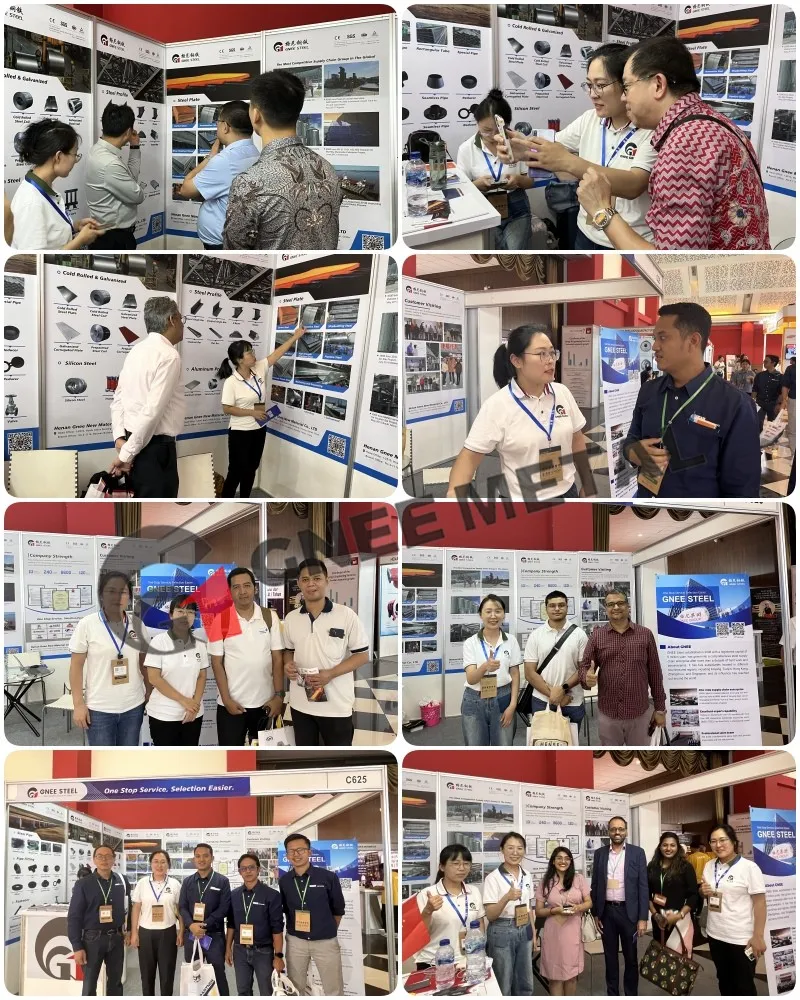
Customer visits

Henan Gnee New Material Co., Ltd Participation in Exhibitions
Hot Tags: titanium alloy pipes, China titanium alloy pipes manufacturers, suppliers, factory, titanium, 6Al 4V Industrial Titanium plate, titanium pipe density, titanium pipe liquid compatibility, titanium pipe ethical sourcing, titanium pipe certification, titanium pipe general purpose
Previous
Titanium Grade 5 TubeYou Might Also Like


Send Inquiry