


What is TA7 titanium?
TA7 titanium alloy is a commonly used alpha+beta (α+β) type titanium alloy known for its good mechanical properties and corrosion resistance. It is suitable for various engineering applications in high-strength and high-temperature environments. The following is an introduction to the main characteristics and application fields of TA7 titanium alloy.
Characteristics
Excellent Mechanical Properties: It has high strength and hardness, with tensile strength reaching 800-1000 MPa and yield strength around 600-800 MPa, making it suitable for engineering applications requiring high strength.
Good Corrosion Resistance: Possesses excellent corrosion resistance, allowing it to function in harsh chemical environments, and has good heat resistance.
Lightweight Design: Has a low density of about 4.5 g/cm³, which is approximately half that of steel, making it suitable for fields requiring lightweight design.
Good Processing Properties: Easy to machine into various shapes and has good weldability.
Good Low-Temperature Performance: TA7 alloy has good low-temperature performance. The TA7ELI alloy, with low interstitial element content, maintains good plasticity even at -250°C.
Thermal Stability: Can operate at temperatures up to 450°C for long periods, and up to 800~850°C for short durations.
Oxidation Resistance: Exhibits good oxidation resistance, strength, and high-temperature stability in the range of 316~593°C.
Processing
Cold Working: Includes cold stamping, cold rolling, and cold bending. Parts after cold working have smooth surfaces and high dimensional accuracy, suitable for processing components requiring high dimensional precision. Control the deformation rate to avoid uneven deformation or cracking caused by excessive speed.
Hot Working: Includes hot stamping, hot rolling, and hot forging. Hot working can reduce processing hardness and improve workability, suitable for parts with large deformation or complex shapes. Control the processing temperature to avoid excessively high temperatures that could lead to grain growth or microstructure coarsening, affecting material properties.
Aging Treatment: Can adjust the alloy's hardness and strength, improving its tensile and yield strengths. Typically involves holding within the temperature range of 450°C to 650°C for a period, followed by cooling.
Solution Treatment: Can dissolve precipitated phases in the alloy, improving plasticity and workability. Usually involves holding at temperatures above 800°C, followed by rapid cooling to room temperature.
Age Hardening: Can give the alloy good strength and hardness while maintaining a certain level of plasticity. After solution treatment, the alloy is held at a lower temperature for a period to allow precipitated phases to recrystallize into a stable microstructure.
Quenching Treatment: Can give the alloy high hardness and strength but may reduce its plasticity. Involves heating to a relatively high temperature followed by rapid cooling, then performing aging treatment to adjust properties.
Welding: Includes various welding methods such as TIG and MIG welding. The alloy has good weldability, suitable for welding parts of different shapes and thicknesses. Control welding parameters to avoid excessively high welding temperatures or speeds, ensuring weld joint quality and microstructural uniformity.


Application Fields
Aerospace Industry: Used in manufacturing aircraft structural components, engine parts, etc.
Chemical Equipment: Used in manufacturing chemical containers, pipelines, chemical valves, etc.
Marine Engineering: Suitable for offshore platform components, seawater treatment equipment, and related fields.
Medical Devices: Used in manufacturing artificial joints, bone fixation devices, etc.
Automotive Industry: Suitable for manufacturing high-end automotive components.
Sports Equipment: Such as high-performance bicycles, golf clubs, etc.
Get Instant Quote & Stock Check
Our product range
| Product Category | Standard Forms / Types | Common Grades (ASTM) | Typical Dimensions / Specifications | Key Applications |
|---|---|---|---|---|
| Titanium Pipes & Tubes | Seamless Pipe, Welded Tube, Heat Exchanger Tubes, Condenser Tubes, Capillary Tubes | Grade 1, 2, 3, 5 (Ti-6Al-4V), 7, 9 (Ti-3Al-2.5V), 12 | OD: 0.5mm - 300mm+ Wall Thickness: 0.1mm - 20mm Length: Custom up to 15m |
Aerospace, Chemical Processing, Marine, Power Plant Condensers, Bicycle Frames, Medical Implants |
| Titanium Sheets & Plates | Hot-Rolled Plate, Cold-Rolled Sheet, Checker Plate (Flooring) | Grade 1, 2, 3, 5 (Ti-6Al-4V), 7, 12 | Thickness: 0.1mm - 100mm+ Width: Up to 2000mm Length: Up to 6000mm |
Chemical Tanks, Pressure Vessels, Architectural Cladding, Marine Hardware, Armor Plating, Heat Exchangers |
| Titanium Bars & Rods | Round Bar, Square Bar, Hex Bar, Forged Bar, Wire Rod | Grade 1, 2, 4, 5 (Ti-6Al-4V), 7, 12 | Diameter/Size: 1mm - 500mm+ Length: 1000mm - 6000mm (Std.), Custom |
Fasteners (Bolts, Nuts), Surgical Implants, Pump Shafts, Valve Components, Golf Clubs, Marine Shafting |
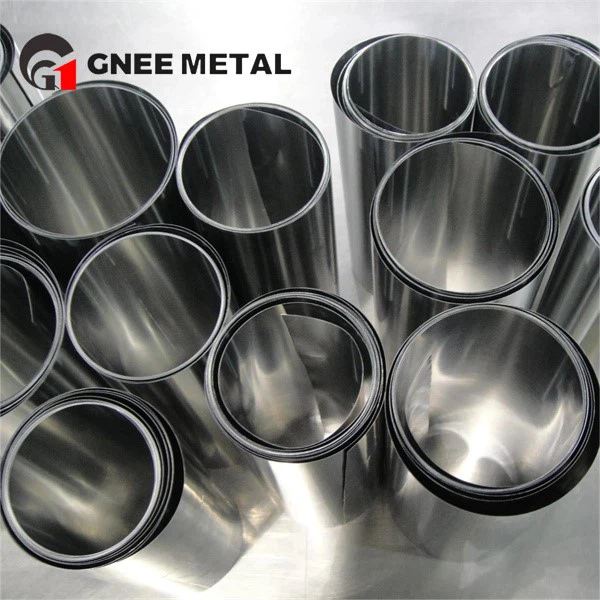
| Titanium Strips & Coils | Cold-Rolled Strip, Precision Foil, Coiled Strip | Grade 1, 2, 5 (Ti-6Al-4V), 12 | Thickness: 0.02mm (Foil) - 5mm Width: 5mm - 500mm Coil Weight: Up to 1000kg |
Bellows, Medical Stents, Gaskets, Honeycomb Cores, Springs, Electronic Components |
| Titanium Wires | Welding Wire, Spring Wire, Fastener Wire, Mesh Wire, Medical Suture Wire | Grade 1, 2, 4, 5 (Ti-6Al-4V), ELI (Extra Low Interstitial) | Diameter: 0.05mm - 10mm Condition: Annealed, Hard-Drawn Form: Coils, Spools, Straight Lengths |
3D Printing (Wire-AM), Welding Filler, Chemical Mesh, Orthodontic Archwires, Fishing Leaders, Springs |
Our factory
Our factory specializes in the field of international trade of titanium materials, professionally producing high-quality series products such as titanium tubes, titanium bars, titanium plates, titanium wires, and titanium strips. The factory is equipped with internationally advanced production and testing equipment, including precision forging units, high-speed cold rolling mills, vacuum melting furnaces, CNC spinning machines, continuous drawing production lines, and automated surface treatment systems. Coupled with precision testing instruments such as spectrometers and ultrasonic flaw detectors, we ensure precise control over the entire process from raw materials to finished products. We are committed to providing global customers with titanium products that offer excellent performance and a complete range of specifications through stable and reliable processes and strict quality management, meeting the application needs of high-end industries such as energy, chemical, aerospace, and medical fields.

Titanium product packaging
We place great emphasis on the transportation safety and delivery quality of our products. All titanium materials are packaged using strict industrial-grade solutions: titanium tubes and bars undergo anti-rust treatment, are tightly wrapped with waterproof stretch film, and then placed in reinforced wooden or iron boxes lined with moisture-proof paper, with fillers added to prevent sliding and collisions during transportation. Titanium plates and strips are covered with protective film, fitted with edge protectors, separated layer by layer with moisture-proof paper, loaded onto sturdy wooden or steel pallets, and securely fastened with steel straps. Fine titanium wires are neatly coiled onto specialized spools and encapsulated in sealed boxes that are waterproof and dustproof. Each packaging unit is accompanied by clear product labels, material certificates, and moisture-proof indicators, ensuring that the goods remain intact, clearly labeled, and safely delivered to global customers through long-distance sea freight and multimodal transportation.

Request Technical Consultation


