


Titanium alloys are widely used in various fields, such as aerospace, automotive manufacturing, and medical devices, thanks to their lightweight and high-strength characteristics. Among these, Grade 5 and Grade 1 titanium alloys are two of the most commonly used grades. They each exhibit unique advantages in terms of elastic properties. In this article, we will explore the elastic properties of these two alloys and their performance in practical applications, with a focus on machining techniques.
Elastic Properties of Grade 5 and Grade 1 Titanium Alloys
Grade 5 titanium alloy, an aluminum-vanadium alloy, is known for its high strength and corrosion resistance. Its modulus of elasticity is approximately 110 GPa, making it ideal for high-temperature and corrosive environments. This alloy is commonly used in aerospace applications, where its superior strength-to-weight ratio and excellent elasticity are essential.
On the other hand, Grade 1 titanium alloy is based on pure titanium, offering higher ductility and toughness. With a modulus of elasticity around 105 GPa, it performs exceptionally well at low temperatures and boasts excellent corrosion resistance. Grade 1 titanium is commonly used in medical devices, where its lower elastic modulus provides comfort and reduces stress when in contact with the human body.
Machining Techniques for Titanium Alloys
The machining of titanium alloys can be challenging due to their hardness, poor thermal conductivity, and high chemical reactivity. However, advancements in machining techniques have made it possible to process these alloys effectively.
Cutting Processes: Titanium alloys have low cutting speeds and experience significant tool wear. Choosing the right tool material and cutting parameters is crucial. Carbide tools are often used, and controlling the cutting speed and feed rate can help reduce tool wear and increase efficiency.
Welding Techniques: Titanium alloys have excellent weldability, though they are prone to defects such as porosity and cracks. It is essential to control welding parameters and environmental conditions during welding. Methods like inert gas shielded welding or vacuum electron beam welding are often employed to minimize these issues.
In addition to these, titanium alloys can be processed using heat treatment, forging, and rolling, which further enhance their mechanical properties, including strength, toughness, and corrosion resistance.


Applications of Titanium Alloys in Various Fields
Thanks to their outstanding elastic properties and advanced machining capabilities, Grade 5 and Grade 1 titanium alloys are applied across various industries:
Aerospace: Titanium alloys are extensively used in the aerospace industry due to their high strength-to-weight ratio, resistance to high temperatures, and excellent elasticity. They are commonly found in critical parts such as aircraft body structures and engine components.
Automotive: In the automotive industry, Grade 5 titanium alloys are used in high-performance parts such as racing car components and engine parts. Their strength and light weight help reduce the overall weight of the vehicle, improving fuel efficiency.
Medical Devices: Grade 1 titanium alloys, with their low elastic modulus and excellent biocompatibility, are ideal for implants, joint replacements, and other medical devices.
With the continuous advancement in science and technology, the applications of titanium alloys will continue to grow. Future research will focus on optimizing the elastic properties and developing new alloy compositions to meet the demanding needs of high-performance applications. Furthermore, as manufacturing techniques improve, the cost of titanium alloys will decrease, making them more accessible for a wider range of industries.
Discuss Your Project Requirements
Our product range
| Category | Product Name | Common Specifications (Available Upon Request) | Key Applications | |
|---|---|---|---|---|
| Titanium Tube | Seamless Titanium Tube Welded Titanium Tube |
ASTM B338 Gr1, Gr2, Gr5, Gr7, Gr9, Gr12 OD: 1mm - 300mm Wall Thickness: 0.5mm - 20mm Standards: ASTM, ASME, DIN, JIS |
Heat Exchangers, Condensers, Chemical Processing, Aerospace, Marine, Medical Implants | Get Free Sample & Evaluation |
| Titanium Sheet/Plate | Titanium Sheet Titanium Plate |
ASTM B265 Gr1, Gr2, Gr5, Gr7, Gr9, Gr12 Thickness: 0.1mm - 100mm Width: Up to 2000mm Conditions: Hot Rolled, Cold Rolled, Annealed |
Chemical Vessels, Pressure Vessels, Aerospace Structures, Marine Hardware, Architectural Cladding, Anodes | Get Free Sample & Evaluation |
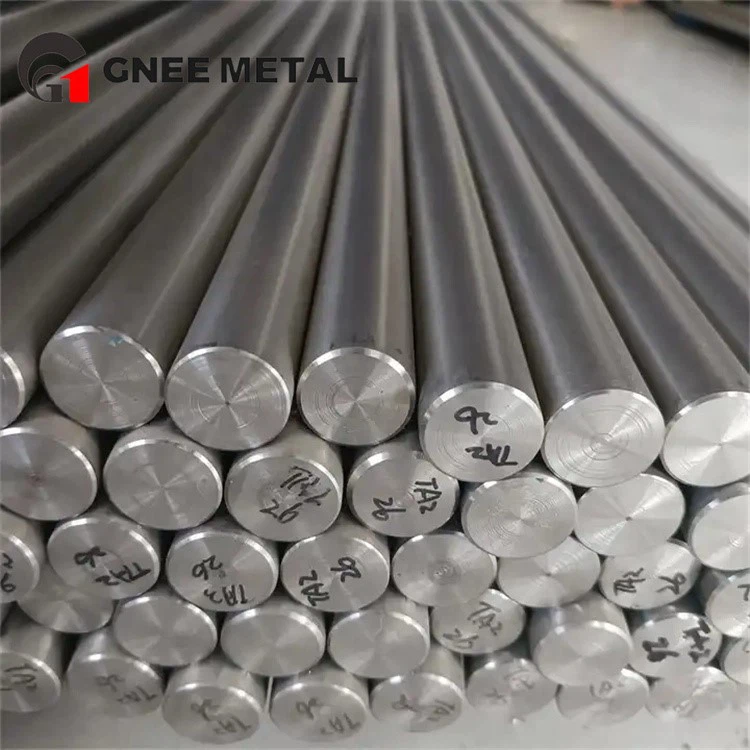
| Titanium Bar/Rod | Titanium Round Bar Titanium Hexagon Bar Titanium Square Bar |
ASTM B348 Gr1, Gr2, Gr5, Gr7, Gr9, Gr12 Diameter/Section: 3mm - 300mm Length: As per requirement Forms: Forged, Rolled, Turned & Polished |
Fasteners, Valve Parts, Pump Shafts, Surgical Instruments, Sports Equipment, Automotive Components | Get Free Sample & Evaluation |
| Titanium Wire | Titanium Coil Wire Straight Titanium Wire Welding Wire |
ASTM B863 Gr1, Gr2, Gr5, Gr7, Gr9, Gr12 Diameter: 0.1mm - 10mm Forms: Annealed, Pickled Spool Weight: Customizable |
Welding Filler, 3D Printing (Wire Arc), Springs, Mesh, Medical Staples & Sutures, Fishing Tackle | Get Free Sample & Evaluation |
| Titanium Strip/Foil | Titanium Strip (Coil) Titanium Foil |
ASTM B265 Gr1, Gr2 Thickness: 0.03mm - 2.0mm Width: Up to 600mm Surface: Bright, Matte, Pickled |
Bellows, Gaskets, Honeycomb Structures, Heat Shields, Precision Instrument Parts, Battery Current Collectors | Get Free Sample & Evaluation |
Our factory
Our factory operates a dedicated production facility equipped with modern machinery for processing titanium. We have a complete set of equipment including forging presses, hot and cold rolling mills, tube drawing and welding lines, bar & wire drawing machines, and surface treatment units. This allows us to control the production process from raw material to finished products such as sheets, plates, tubes, bars, and wires. Our workshop is capable of handling large-volume orders while maintaining consistent quality across our product range.

Titanium product packaging
Our packaging is designed for maximum security and international standards. We use tailored wooden crates for heavy plates and bars, with internal waterproof wrapping and blocking to prevent movement. Tubes and coils are securely packed in wooden boxes with reinforced edges and protective end caps. For smaller items like wires and strips, we use standard export cartons with inner plastic and moisture-proof sealing. All packages are clearly marked with product details, weight, and handling instructions to ensure safe arrival. We can also customize packing methods, such as palletization or container optimization, based on specific shipping and customer requirements.

Discuss Your Project Requirements


