


Why titanium welding is different from stainless steel
Stainless steel welders often assume titanium is the same. It is not.
Titanium is reactive. At welding temperature, it absorbs oxygen, nitrogen, and hydrogen from the air. Contaminated welds become brittle and crack. Stainless steel tolerates some air exposure during welding. Titanium does not.
ASTM B338 GR1 titanium tube requires the same welding precautions as other titanium grades. No shortcuts.
For the full technical specifications of ASTM B338 GR1 titanium tube, including weldability data and filler metal recommendations, see the product page here.
Argon shielding requirements
The weld zone must be protected from air until the metal cools below 400°C (750°F).
Three zones require shielding:
The weld puddle (front shield)
The back side of the weld (backing purge)
The heat-affected zone trailing the weld (trailing shield)
For tube welding, 100% argon backing purge is required. No exceptions. The purge must run before striking the arc and continue after the arc stops until the tube cools.
Acceptable shielding gases: Pure argon (99.995% minimum). Argon-helium mixtures are acceptable but not necessary. Do not use argon-CO₂ mixtures. CO₂ contaminates titanium.
Signs of inadequate shielding: Blue, straw, or gray discoloration on the weld or adjacent tube surface. A properly shielded weld is bright silver.

Filler metal selection
For butt welding of GR1 titanium tubes, filler metal is usually not required. The weld is made by fusing the tube edges directly.
When filler is needed (for repair or mismatched fit-up), use GR1 or GR2 titanium filler rod. Do not use ERTi-5 (6Al-4V) filler on GR1 base metal. The mismatch in strength and ductility causes problems.
Filler rod must be cleaned before use. Wipe with acetone and store in a clean container. Oily or dirty filler contaminates the weld.
Cleaning steps before welding
Contamination is the main cause of failed titanium welds.
Required cleaning steps:
Remove oil, grease, or fingerprints with acetone or isopropyl alcohol
Remove oxide layer with a clean stainless steel wire brush (dedicated for titanium only - never used on carbon steel or other metals)
Wipe again with solvent
Weld within 4 hours of cleaning
Do not use: Chlorinated solvents (carbon tetrachloride, trichloroethylene). These leave residues that cause stress corrosion cracking.
Do not use: Abrasive pads or wheels that have been used on other metals. Embedded iron particles cause galvanic corrosion later.
Common welding defects
| Defect | Cause | Prevention |
|---|---|---|
| Blue or straw discoloration | Insufficient argon shielding | Increase gas flow, check purge, add trailing shield |
| Gray weld | Severe contamination | Clean base metal, check gas purity, replace filler |
| Cracking at weld seam | Hydrogen embrittlement | Check for moisture in argon line, clean base metal |
| Porosity | Dirty base metal or filler | Clean thoroughly, store filler properly |
| Undercut | Excessive current or travel speed | Reduce amperage, increase travel speed |
| Incomplete fusion | Low current or poor fit-up | Adjust parameters, ensure tube ends are square |
Any weld with blue, straw, or gray color should be rejected. Grinding the discoloration away does not fix the problem. The metal underneath is already embrittled.
Weld testing requirements
For welded ASTM B338 GR1 titanium tube, the standard requires:
Eddy current test - 100% of the weld seam
Flattening test - weld seam must not crack when tube is flattened
Flaring test - weld seam must not crack when tube end is expanded
For critical applications, additional testing is available:
Radiographic testing (RT) - detects internal weld defects
Penetrant testing (PT) - detects surface cracks
Bend test - confirms ductility of the weld zone
These tests must be documented on the mill certificate. If a supplier cannot provide eddy current results for welded tubes, the tubes do not meet ASTM B338.
Shop welding vs field welding
Shop welding (at the tube mill) is automated. Parameters are controlled. Argon shielding is consistent. Quality is high.
Field welding (during installation or repair) is manual. Fit-up is harder. Argon purge is more difficult. Quality depends on welder skill.
For field welding of GR1 titanium tubes, additional precautions are required:
Use a larger argon purge volume to compensate for leaks
Use a trailing shield on the torch
Weld in still air (no fans or drafts)
Test the first few welds and cut them for inspection
Many fabricators require welder qualification on titanium before starting field work. A welder who runs perfect stainless steel welds may fail on titanium.
FAQ
1. Can GR1 titanium tube be welded to stainless steel?
Not directly. Titanium and stainless steel form brittle intermetallic compounds. Use a transition joint (explosion-bonded titanium-stainless steel plate) or mechanical connection (flanges, ferrules).
2. What happens if a titanium weld turns blue?
The blue color means oxygen contamination. The weld metal is embrittled. It will crack under stress or in service. Cut out the blue weld and re-weld with proper shielding.
3. Can the same tungsten electrode be used for titanium and stainless steel?
No. Tungsten can pick up iron from stainless steel and transfer it to the titanium weld. Iron contamination causes galvanic corrosion. Dedicate a set of tungsten electrodes to titanium only.
4. Is preheating required for GR1 titanium welding?
No. GR1 does not require preheat. Excessive preheat (above 150°C) actually increases contamination risk because the hot metal absorbs oxygen faster.
5. What is the minimum wall thickness for welded GR1 tubes?
0.5 mm is the practical minimum for welded and drawn tubes. Below that, welding is difficult and the weld seam becomes unreliable. For thinner walls, use seamless.
6. Can GR1 tubes be welded in the field without a backing purge?
No. Some contractors try to skip the backing purge on small diameter tubes. The weld root oxidizes and fails. Backing purge is not optional.
7. How to check argon gas purity for titanium welding?
Use a gas purity meter or weld a test coupon and look for color. A silver weld indicates pure argon. Blue or straw means contamination. Grade 5 argon (99.995%) is the minimum acceptable.
8. Can GR1 be welded to GR2?
Yes. GR1 and GR2 are fully compatible. Use GR2 filler or no filler. The weld will have properties between the two grades.
9. What is the maximum acceptable discoloration per ASTM B338?
Light straw color on the back side of the weld is allowed by some interpretations, but most buyers specify no discoloration on either side. Silver is the only acceptable color for critical service.
10. Does welding reduce corrosion resistance of GR1?
Not if done correctly. A properly shielded silver weld has the same corrosion resistance as the base metal. A contaminated blue or gray weld will corrode preferentially.
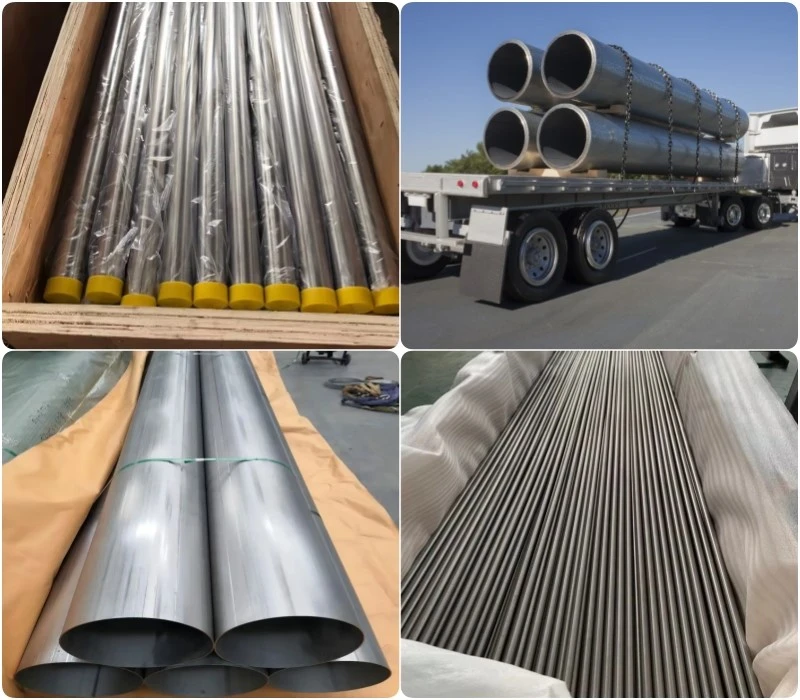
Packaging
Anti-Corrosion VCI Paper: Wrapped individually to protect the surface finish.
Custom EVA Foam: For smaller parts and precision components, we use laser-cut foam inserts to prevent movement during transit.
Double-Walled Cartons: All shipments go out in reinforced boxes rated for heavy freight to ensure your investment arrives in perfect condition.
Our Facility & Equipment
We manufacture in-house using German-engineered CNC lathes and milling centers. Our factory floor is equipped with:
Vacuum Annealing Furnaces: To ensure zero surface contamination during heat treatment.
Laser Inspection Systems: Every batch is measured to ensure dimensional accuracy within 0.01mm.
Clean Room Assembly: For our medical and food-grade products, final assembly happens in a controlled environment to prevent particulate contamination.


