


Why Titanium Earns Its Place in the Alloy Menu
Titanium is not a single material. It is a family of grades that share a base metal but differ sharply in strength, formability and temperature capability. Understanding the base metal first makes the grade system easier to read.
Weight and strength. Pure titanium has a density of about 4.5 g/cm³, roughly 60% of steel's 7.85 g/cm³, while annealed commercially pure grades reach tensile strengths of 240-550 MPa minimum. The result is a specific strength (strength per unit weight) that is hard to match in ordinary structural alloys. Two design notes follow from the physics: the elastic modulus of titanium is only about 103-116 GPa, roughly half of steel's 200 GPa, so stiffness-critical parts must be sized for deflection as well as stress; and the melting point is about 1,668°C, which is why the useful service limits below come from oxidation and creep, not melting.
Corrosion resistance. Titanium forms a dense, self-healing TiO₂ oxide film that gives it outstanding resistance in seawater, chloride solutions and oxidizing acids. Where 316L stainless steel can fail by chloride pitting or stress-corrosion cracking, commercially pure titanium and most alloys resist these mechanisms. Two limits are worth remembering: crevice corrosion can appear in hot chloride service above roughly 70-80°C, and reducing acids such as dilute hydrochloric or sulfuric acid attack unalloyed titanium - palladium-bearing grades (Grade 7 / Grade 11) and alloyed grades (Grade 12) are the standard answers there.
Temperature behavior. Commercially pure titanium serves long-term to about 300-400°C. α and near-α alloys extend the range to 500-600°C, where they hold creep resistance better than any other titanium family. Above about 600°C, oxidation scaling and oxygen embrittlement become the limiting factors; short excursions above the design range require a specific evaluation of oxide growth and mechanical property loss.
Cryogenic toughness. Unlike many steels, titanium does not become brittle at low temperatures. α-type grades such as TA7 (Ti-5Al-2.5Sn) and α+β grades such as Ti-6Al-4V ELI are used for cryogenic components down to -200°C and below, which matters for LNG plant, space and superconductive equipment.
Biocompatibility and non-magnetic behavior. The passive film also explains why titanium is the leading implant metal: it is accepted by the body without significant reaction, covered by ASTM F67 (commercially pure) and ASTM F136 (Ti-6Al-4V ELI). Titanium is non-magnetic, which suits MRI environments, precision instruments and electronics housings.
The cost reality. Titanium costs more per kilogram than stainless steel - the Kroll reduction process is energy-intensive and machining is slow because of low thermal conductivity and work hardening. The engineering case for titanium is made on weight saved, corrosion life, temperature performance or biocompatibility, not on first price. A fair comparison therefore uses lifecycle cost: corrosion allowance, maintenance intervals, weight penalties and downtime.


Grade Families and What Each One Is For
Wrought titanium is grouped by microstructure into commercially pure grades and three alloy families. Chinese designations (TA, TC, TB under GB/T 3621) and ASTM grades are both in common use internationally, so the tables below give both.
Commercially Pure Titanium - Grades 1-4 (TA1-TA3 under GB/T 3621)
Commercially pure (CP) titanium contains no deliberate alloying elements. The difference between Grades 1-4 is the level of interstitial impurities - mainly oxygen, plus nitrogen, carbon and iron. As the interstitial content rises, tensile and yield strength increase while formability and weld ductility decrease. Corrosion resistance is broadly the same across the four grades because all of them rely on the same oxide film.
Grade 2 (TA2) is the most widely used CP grade: it balances strength, formability, weldability and corrosion resistance for chemical vessels, piping, marine hardware and heat exchangers. Grade 1 (TA1) is softer and more ductile, preferred for deep-drawn parts, anodes and heat exchanger sheets. Grade 3 (TA3) and Grade 4 are chosen when higher strength is needed without alloying - pressure vessels, fasteners and cold-headed wire; Grade 4 also serves in surgical instruments under ASTM F67. Note that GB/T 3621 designates TA1-TA3 for Grades 1-3; Grade 4 is normally supplied to the ASTM designation.
| Grade | GB/T designation | Tensile strength, min (MPa) | Yield strength, min (MPa) | Elongation, min (%) | Typical use |
|---|---|---|---|---|---|
| 1 | TA1 | 240 | 170 | 24 | Deep-drawn parts, heat exchanger sheets, anodes |
| 2 | TA2 | 345 | 275 | 20 | Chemical vessels, piping, marine hardware - most common |
| 3 | TA3 | 450 | 380 | 18 | Pressure vessels, higher-strength components |
| 4 | - (no direct TA equivalent; supplied to ASTM) | 550 | 483 | 15 | Fasteners, surgical instruments, cold-heading wire |
α and Near-α Alloys
α alloys keep a single α-phase structure from room temperature to service temperature. They cannot be strengthened by heat treatment; their strength comes from solid solution hardening, mainly with aluminum and tin. Their room-temperature strength is below that of α+β and β alloys, but they offer the best creep resistance of all titanium families at 500-600°C, along with stable structure, good oxidation resistance, good weldability and good low-temperature toughness. The trade-offs are lower plasticity and poor cold stamping performance.
TA7 (Ti-5Al-2.5Sn) is the best-known α grade: medium strength, sufficient annealed plasticity, good weldability, long-term service to about 500°C and cryogenic toughness down to about -233°C. Short excursions above 500°C are possible, but oxidation scaling and oxygen embrittlement must be evaluated for the actual duty. Near-α alloys add small amounts of β-stabilizing elements (molybdenum, niobium, silicon) to raise creep strength further; Ti-6Al-2Sn-4Zr-2Mo serves jet engine casings and exhaust ducts, while Ti-3Al-2.5V (Grade 9) is the standard titanium for welded hydraulic and aerospace tubing.
α+β Alloys
α+β alloys hold a two-phase structure and combine the corrosion behavior of titanium with substantially higher strength. Most can be strengthened by solution treatment and aging; they forge and weld well, machine reasonably, and keep good low-temperature toughness together with resistance to seawater stress corrosion and hot-salt stress corrosion. Their drawback is lower microstructural stability than α alloys at sustained high temperature.
Ti-6Al-4V (TC4, Grade 5) is the most widely applied titanium alloy in the world. Annealed minimum tensile strength is 895 MPa with 828 MPa yield (per ASTM B265), about 2.5 times the strength of Grade 2 at the same density. It serves aircraft structural parts, marine hardware, chemical equipment, sports goods and, in the ELI variant (Grade 23), surgical implants per ASTM F136. Fabrication note: Ti-6Al-4V is normally formed hot or superplastically; cold forming is limited to small deformations because of springback and the narrow ductility window.
Other α+β grades follow the same GB/T logic: TC1 (Ti-2Al-1.5Mn) and TC2 (Ti-4Al-1.5Mn) for stamped parts, weldments and die forgings below 400°C; TC6 (Ti-6Al-2.5Mo-1.5Cr-0.5Fe-0.3Si) for aircraft engine structural parts below about 450°C; TC9 for long-term parts below 500°C; TC10 (Ti-6Al-6V-2Sn) for higher-strength parts below about 450°C.
β and Near-β Alloys
β alloys retain a body-centered cubic β structure at room temperature and can be aged to the highest strengths available in titanium - typical aged tensile strengths of 1,100-1,250 MPa - with deep hardenability in thick sections and good toughness. The costs are lower creep resistance than α alloys (long-term service usually below 300-400°C), higher density from heavy alloying elements, and more demanding process control.
Representative grades: TB6 (Ti-10V-2Fe-3Al) for aircraft landing-gear components and high-strength fasteners; Ti-15V-3Cr-3Sn-3Al for sheet-metal parts and springs; Ti-3Al-8V-6Cr-4Mo-4Zr for springs, fasteners and downhole tools. In solution-treated condition β alloys form readily, which makes complex sheet parts practical before aging.
Typical applications: landing gear, high-strength fasteners and bolts, springs, downhole oilfield tools, surgical instruments.
Grade-to-Application Selection Table
| Family | Example grades (ASTM / GB) | Typical tensile strength (MPa) | Character | Typical applications | Long-term service temperature |
|---|---|---|---|---|---|
| Commercially pure | Gr1-4 / TA1-TA3 | 240-550 (min per ASTM B265) | Corrosion resistance, formability, weldability | Chemical plant, marine, desalination, architecture, anodes | ≈ 300-400°C |
| α / near-α | TA7 (Ti-5Al-2.5Sn), Gr9 (Ti-3Al-2.5V), Ti-6Al-2Sn-4Zr-2Mo | 620-900 (typical range) | Creep resistance, weldable, not heat-treatable | Aero engine casings, ducting, hydraulic tubing, cryogenic vessels | 500-600°C |
| α+β | Gr5 (Ti-6Al-4V, TC4), TC6, Gr23 (ELI) | 895-1,100 | Strength plus toughness, heat-treatable | Aerospace structure, medical implants (F136), marine, sports equipment | ≈ 400-450°C (Gr5) |
| β / near-β | TB6 (Ti-10V-2Fe-3Al), Ti-15V-3Cr-3Sn-3Al | 1,100-1,250 (aged, typical) | Highest strength, deep hardenability | Landing gear, high-strength fasteners, springs, downhole tools | ≈ 300-400°C |
A Practical Selection Process
For a new component, run the decision in five steps rather than picking a familiar grade first.
Define the environment. Record the medium (seawater, chlorides, acids, oxidizing or reducing), temperature range, pressure, cyclic loading and any galvanic coupling. The medium decides whether CP titanium, a palladium grade (Gr7/Gr11) or an alloyed grade (Gr12) is needed; the temperature decides whether the choice moves from CP to α or near-α alloys.
Set mechanical targets. State the required static strength, fatigue life, creep life, fracture toughness and weight budget. Strength targets push the selection toward α+β or β alloys; creep targets push it toward α and near-α alloys; weight budgets favor titanium over steel whenever the strength-to-weight ratio is decisive.
Check the fabrication route. Deep drawing and heavy cold forming point to Grade 1 or 2; welded structures favor CP and α grades; machined forgings and fasteners favor α+β or β grades. Confirming the forming and welding route early avoids a grade that is strong on paper but difficult to make.
Compare cost honestly. Build a lifecycle comparison against stainless steel (304/316L), duplex stainless and, where relevant, nickel alloys: material price, machining rate, corrosion allowance, maintenance interval, weight-related operating cost and scrap value. Titanium wins on chloride resistance, weight and temperature capability - not on first price.
Lock the specification. Write the order as standard + grade + condition (annealed, solution-treated, solution-treated and aged) + surface finish + inspection level. Require a mill test certificate with chemical analysis and mechanical test results, and specify ultrasonic or eddy-current inspection where the duty demands it.
Our product range
| Category | Product Name | Common Specifications (Available Upon Request) | Key Applications | |
|---|---|---|---|---|
| Titanium Tube | Seamless Titanium Tube Welded Titanium Tube |
ASTM B338 Gr1, Gr2, Gr5, Gr7, Gr9, Gr12 OD: 1mm - 300mm Wall Thickness: 0.5mm - 20mm Standards: ASTM, ASME, DIN, JIS |
Heat Exchangers, Condensers, Chemical Processing, Aerospace, Marine, Medical Implants | Get Free Sample & Evaluation |
| Titanium Sheet/Plate | Titanium Sheet Titanium Plate |
ASTM B265 Gr1, Gr2, Gr5, Gr7, Gr9, Gr12 Thickness: 0.1mm - 100mm Width: Up to 2000mm Conditions: Hot Rolled, Cold Rolled, Annealed |
Chemical Vessels, Pressure Vessels, Aerospace Structures, Marine Hardware, Architectural Cladding, Anodes | Get Free Sample & Evaluation |
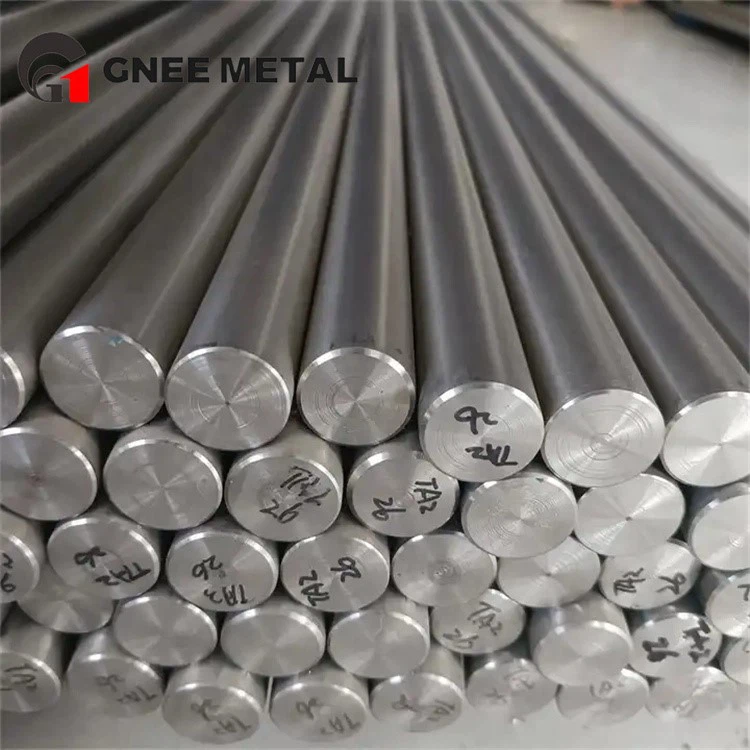
| Titanium Bar/Rod | Titanium Round Bar Titanium Hexagon Bar Titanium Square Bar |
ASTM B348 Gr1, Gr2, Gr5, Gr7, Gr9, Gr12 Diameter/Section: 3mm - 300mm Length: As per requirement Forms: Forged, Rolled, Turned & Polished |
Fasteners, Valve Parts, Pump Shafts, Surgical Instruments, Sports Equipment, Automotive Components | Get Free Sample & Evaluation |
| Titanium Wire | Titanium Coil Wire Straight Titanium Wire Welding Wire |
ASTM B863 Gr1, Gr2, Gr5, Gr7, Gr9, Gr12 Diameter: 0.1mm - 10mm Forms: Annealed, Pickled Spool Weight: Customizable |
Welding Filler, 3D Printing (Wire Arc), Springs, Mesh, Medical Staples & Sutures, Fishing Tackle | Get Free Sample & Evaluation |
| Titanium Strip/Foil | Titanium Strip (Coil) Titanium Foil |
ASTM B265 Gr1, Gr2 Thickness: 0.03mm - 2.0mm Width: Up to 600mm Surface: Bright, Matte, Pickled |
Bellows, Gaskets, Honeycomb Structures, Heat Shields, Precision Instrument Parts, Battery Current Collectors | Get Free Sample & Evaluation |
Our factory
Our factory operates a dedicated production facility equipped with modern machinery for processing titanium. We have a complete set of equipment including forging presses, hot and cold rolling mills, tube drawing and welding lines, bar & wire drawing machines, and surface treatment units. This allows us to control the production process from raw material to finished products such as sheets, plates, tubes, bars, and wires. Our workshop is capable of handling large-volume orders while maintaining consistent quality across our product range.

Titanium product packaging
Our packaging is designed for maximum security and international standards. We use tailored wooden crates for heavy plates and bars, with internal waterproof wrapping and blocking to prevent movement. Tubes and coils are securely packed in wooden boxes with reinforced edges and protective end caps. For smaller items like wires and strips, we use standard export cartons with inner plastic and moisture-proof sealing. All packages are clearly marked with product details, weight, and handling instructions to ensure safe arrival. We can also customize packing methods, such as palletization or container optimization, based on specific shipping and customer requirements.

Discuss Your Project Requirements
FAQ
Q: Which titanium grade is used most often?
Grade 2 (TA2) is the default for corrosion service - chemical vessels, piping and marine hardware. For structural applications where strength matters, Ti-6Al-4V (Grade 5 / TC4) is the most widely used alloy.
Q: Is Grade 5 an α alloy?
No. Ti-6Al-4V (Grade 5 / TC4) is an α+β alloy. It holds a two-phase structure, can be strengthened by solution treatment and aging, and sits between α alloys (best creep resistance) and β alloys (highest strength).
Q: How hot can titanium components run?
Commercially pure grades serve long-term to about 300-400°C. α and near-α alloys extend to 500-600°C with the best creep resistance in the titanium family. Above about 600°C, oxidation and oxygen embrittlement dominate; short excursions above the design range need a dedicated evaluation.
Q: Does titanium resist seawater corrosion?
Yes. The self-healing TiO₂ film gives excellent resistance in seawater and chlorides, including immunity to the chloride stress-corrosion cracking that can affect stainless steels. For hot crevice duty and reducing acids, palladium-bearing Grade 7 or Grade 11, or alloyed Grade 12, are the standard choices.
Q: Is titanium magnetic?
No. Titanium and its alloys are non-magnetic, which makes them suitable for MRI environments, precision instruments and electronic enclosures.
Q: Why is titanium more expensive than stainless steel?
Production uses the energy-intensive Kroll reduction process, and machining is slow because of low thermal conductivity and work hardening. The higher first price is justified when weight, corrosion life, temperature capability or biocompatibility reduce lifecycle cost.


