


Titanium-palladium alloy is a high-performance material composed primarily of titanium with the addition of palladium. It is widely used across various industrial sectors. Among them, the Gr7/TA9 titanium-palladium alloy, known for its exceptional corrosion resistance and high-temperature stability, serves as a critical material in key industries such as aerospace, aviation, defense, energy, and chemical processing. This alloy not only inherits the lightweight and high-strength properties of titanium but also significantly enhances its corrosion resistance through the addition of palladium, making it particularly suitable for extreme environments like strong acids and bases.
Material Composition and Core Properties
The main components of the Gr7/TA9 titanium-palladium alloy are titanium (content up to 99.5%) and palladium (typically between 0.12% and 0.25%). The addition of palladium modifies the alloy's crystal structure, enabling the formation of a dense protective oxide film on its surface that effectively blocks the ingress of corrosive media. This material can resist corrosion from strong acids such as hydrochloric and sulfuric acid at room temperature and maintain structural stability in high-temperature environments, with a service temperature limit of up to 600°C. Furthermore, the alloy has a density of only 4.5 g/cm³, approximately 60% that of steel, allowing for weight reduction without sacrificing strength.
Processing Technology and Surface Treatment
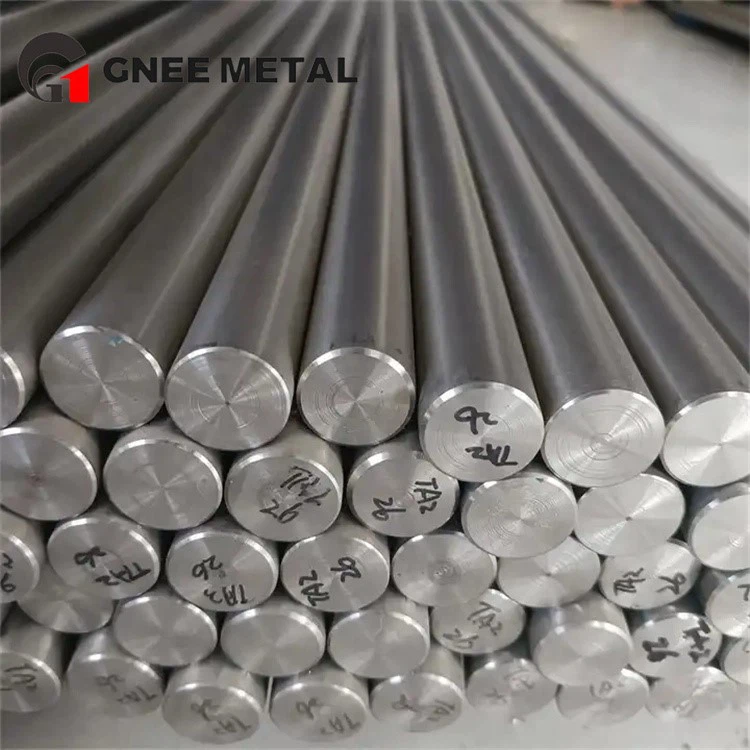
Manufacturing this material involves multiple precision processes: it begins with vacuum melting to ensure compositional uniformity, followed by forging or hot rolling to form basic plates or bars. Subsequent steps include cold rolling, cutting, or grinding based on specific requirements. Surface treatment options are varied, including "black skin" (the original oxide layer), "bright" (mechanical polishing), "ground" (surface flattening), and "pickled" (removing scale and activating the surface). Strict control over temperature and deformation during processing is essential to prevent material embrittlement or degradation of properties. For instance, cold rolling must be performed below the tempering temperature to preserve the material's ductility.


Application Scenarios and Technical Standards
Gr7/TA9 titanium-palladium alloy is extensively used in fields with stringent material performance requirements:
In the aerospace sector, it is used to manufacture rocket engine nozzles and fuel storage tanks.
In the chemical industry, it is fabricated into heat exchangers and reactor linings.
In the energy sector, it serves as a key component in nuclear power plant cooling systems.
The material must comply with various national standards, national military standards, and aerospace standards. Quality grades are divided into AA grade (premium) and A grade (qualified), primarily distinguished by the control of surface defects and dimensional precision. For example, the surface roughness of AA grade material must be below Ra 0.8μm, while A grade permits minor machining marks.
Selection and Usage Considerations
When selecting a titanium-palladium alloy, the appropriate composition ratio should be determined based on the specific operating conditions:
For environments with extremely high corrosivity (e.g., concentrated hydrochloric acid), the palladium content should be increased to above 0.25%.
For applications requiring only general corrosion resistance, a palladium content of 0.12% may suffice.
During machining, specialized cutting tools (such as carbide or diamond-coated tools) are necessary to prevent material adhesion or work hardening. Furthermore, welding should employ methods like TIG (argon arc) welding or plasma welding, with strict control over heat input to prevent deterioration of properties in the weld zone. For storage, contact with chloride ions should be avoided to prevent pitting corrosion.
Discuss Your Project Requirements
Our product range
| Category | Product Name | Common Specifications (Available Upon Request) | Key Applications | |
|---|---|---|---|---|
| Titanium Tube | Seamless Titanium Tube Welded Titanium Tube |
ASTM B338 Gr1, Gr2, Gr5, Gr7, Gr9, Gr12 OD: 1mm - 300mm Wall Thickness: 0.5mm - 20mm Standards: ASTM, ASME, DIN, JIS |
Heat Exchangers, Condensers, Chemical Processing, Aerospace, Marine, Medical Implants | Get Free Sample & Evaluation |
| Titanium Sheet/Plate | Titanium Sheet Titanium Plate |
ASTM B265 Gr1, Gr2, Gr5, Gr7, Gr9, Gr12 Thickness: 0.1mm - 100mm Width: Up to 2000mm Conditions: Hot Rolled, Cold Rolled, Annealed |
Chemical Vessels, Pressure Vessels, Aerospace Structures, Marine Hardware, Architectural Cladding, Anodes | Get Free Sample & Evaluation |
| Titanium Bar/Rod | Titanium Round Bar Titanium Hexagon Bar Titanium Square Bar |
ASTM B348 Gr1, Gr2, Gr5, Gr7, Gr9, Gr12 Diameter/Section: 3mm - 300mm Length: As per requirement Forms: Forged, Rolled, Turned & Polished |
Fasteners, Valve Parts, Pump Shafts, Surgical Instruments, Sports Equipment, Automotive Components | Get Free Sample & Evaluation |
| Titanium Wire | Titanium Coil Wire Straight Titanium Wire Welding Wire |
ASTM B863 Gr1, Gr2, Gr5, Gr7, Gr9, Gr12 Diameter: 0.1mm - 10mm Forms: Annealed, Pickled Spool Weight: Customizable |
Welding Filler, 3D Printing (Wire Arc), Springs, Mesh, Medical Staples & Sutures, Fishing Tackle | Get Free Sample & Evaluation |
| Titanium Strip/Foil | Titanium Strip (Coil) Titanium Foil |
ASTM B265 Gr1, Gr2 Thickness: 0.03mm - 2.0mm Width: Up to 600mm Surface: Bright, Matte, Pickled |
Bellows, Gaskets, Honeycomb Structures, Heat Shields, Precision Instrument Parts, Battery Current Collectors | Get Free Sample & Evaluation |
Our factory
Our factory operates a dedicated production facility equipped with modern machinery for processing titanium. We have a complete set of equipment including forging presses, hot and cold rolling mills, tube drawing and welding lines, bar & wire drawing machines, and surface treatment units. This allows us to control the production process from raw material to finished products such as sheets, plates, tubes, bars, and wires. Our workshop is capable of handling large-volume orders while maintaining consistent quality across our product range.

Titanium product packaging
Our packaging is designed for maximum security and international standards. We use tailored wooden crates for heavy plates and bars, with internal waterproof wrapping and blocking to prevent movement. Tubes and coils are securely packed in wooden boxes with reinforced edges and protective end caps. For smaller items like wires and strips, we use standard export cartons with inner plastic and moisture-proof sealing. All packages are clearly marked with product details, weight, and handling instructions to ensure safe arrival. We can also customize packing methods, such as palletization or container optimization, based on specific shipping and customer requirements.

Discuss Your Project Requirements


