


What is GR6 titanium?
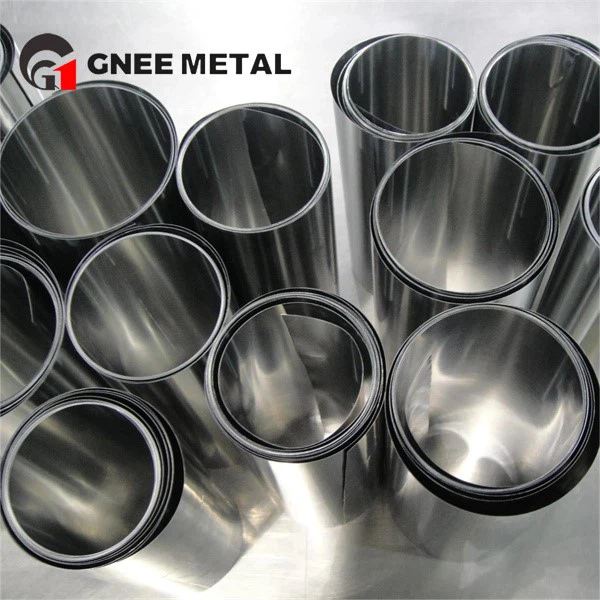
Grade 6 titanium alloy, also known as Ti-5Al-2.5Sn, is a commonly used alpha-beta titanium alloy. It is composed of 90% titanium, 5% aluminum, and 2.5% tin, with trace amounts of other elements. This alloy is known for its excellent corrosion resistance, high strength, and good weldability. Gnee can supply Grade 6 titanium Sheets and Plates/Bars and Rods/Tubes and Pipes/Wires/Forgings/Fittings, etc.
Superior Corrosion Resistance
Varied Inventory, Diverse Shapes
Complies with Rigorous Production Standards
Certified Quality with Test Data
Free Samples Provided
Excellent Gr6 Titanium Material Specifications
Excellent Grade 6 Titanium Sizes
Thickness: 0.3~50mm
Width: 400~3000mm
Length: ≤6000mm
Excellent Grade 6 Titanium Status
Hot Rolled (R), Cold Rolled(Y), Annealed (M), Solution treatment (ST)
Excellent Grade 6 Titanium Standards
ASTM B265, ASTM SB265, AMS 4902, ASME SB265, DIN 17860
Excellent Grade 6 Titanium Testing
Chemical composition test
Physical properties test
Appearance defects inspection
Ultrasonic flaw detection
Eddy current testing
Excellent Grade 6 Titanium Packaging
wrapped with pearl cotton (expandable polyethylene), and then packed into the wooden case for delivery.
Excellent Grade 6 Titanium Processing
Hot rolled
Cold rolled
Cutting
Forming Drilling/ Machining
Grinding
Polishing
Testing
Chemical Composition(%)
| Chemical Composition Limits | |||||||||
| Weight % | Ti | C | Fe | N | Al | O | Sn | H | Other |
| Titanium Ti5Al2.5Sn | bal | 0.10 | 0.05 | 0.05 | 4.0/6.0 | 0.20 | 2.0-3.0 | 0.020 | 0.4 total max |


Mechanical Property
| Material | Tensile Strength min | Yield Strength | Elongation (%) | ||||
| ksi | Mpa | Min | Max | ||||
| KSI | Mpa | Ksi | Mpa | ||||
| Titanium Ti-5Al-2.5Sn Annealed Sheet |
120 | 830 | 115 | 795 | – | – | 10 |
Tolerance
| Thickness(mm) | Width tolerance(mm) | |
| 400~1000 | >1000 | |
| 0.3~0.5 | ±0.05 | ±0.05 |
| 0.5~0.8 | ±0.07 | ±0.07 |
| 0.8~1.1 | ±0.09 | ±0.09 |
| 1.1~1.5 | ±0.11 | ±0.13 |
| 1.5~2.0 | ±0.15 | ±0.16 |
| 2.0~3.0 | ±0.18 | ±0.20 |
| 3.0~4.0 | ±0.22 | ±0.22 |
| 4.0~5.0 | ±0.35 | ±0.35 |
Excellent Gr6 Titanium Materials Features
Good Corrosion Resistance
The addition of palladium in Gr6 titanium enhances its corrosion resistance, particularly in acidic environments, making it suitable for use in chemical processing and marine applications.
Passive Oxide Layer: Titanium naturally forms a thin and adherent oxide layer, primarily titanium dioxide (TiO2), on its surface. This oxide layer acts as a protective barrier, shielding the underlying metal from corrosive elements and preventing direct contact with aggressive substances.
Stability of Oxide Layer: The oxide layer formed on titanium is stable and has a self-healing capability. If the surface is scratched or damaged, the oxide layer can quickly reform in the presence of oxygen, maintaining its protective properties.
Resistance to Pitting Corrosion: Titanium exhibits resistance to pitting corrosion, a localized form of corrosion that can occur in the presence of chloride ions. This property is particularly valuable in applications where exposure to saltwater or saline environments is common.
Corrosion Resistance in Various Environments: Titanium sheets are resistant to corrosion in a wide range of environments, including seawater, acids (such as sulfuric acid and hydrochloric acid), alkalis, and chemical solutions. This versatility makes titanium suitable for diverse industrial applications.
High Strength-To-Weight Ratio
Titanium is renowned for its high strength-to-weight ratio, making Gr6 titanium a lightweight yet strong material.
Low Density: Titanium is a lightweight metal with a low density. This low density contributes significantly to achieving a high strength-to-weight ratio because the material's mass is relatively low.
High Strength: Despite its low density, titanium exhibits excellent strength. Titanium alloys, commonly used in sheet production, can have strength levels comparable to or exceeding those of some steels. This high strength ensures that titanium sheets can withstand mechanical loads and stresses.
Aerospace Applications: The combination of low density and high strength makes titanium sheets particularly valuable in aerospace applications. Components such as aircraft structures, wings, and fuselage panels benefit from the material's ability to provide strength without adding excessive weight.
Structural Efficiency: In structural engineering, materials with a high strength-to-weight ratio are sought after to achieve structural efficiency. Titanium sheets contribute to the creation of structures that are both strong and lightweight, reducing overall weight without compromising structural integrity.
Biocompatibility
Like other titanium alloys, Grade 6 is biocompatible and is often used in medical implants and surgical instruments.
Inert Nature: Titanium is biologically inert, meaning it does not react with bodily fluids or tissues. This inertness reduces the likelihood of adverse reactions, allergies, or rejections when titanium sheets are used in medical implants.
Oxide Layer Formation: When exposed to air, titanium naturally forms a thin and stable oxide layer on its surface, primarily titanium dioxide (TiO2). This oxide layer is non-toxic and provides a protective barrier between the metal and the surrounding biological environment.
Corrosion Resistance: Titanium exhibits exceptional corrosion resistance, even in the harsh physiological environment of the human body. The corrosion resistance ensures that the material does not degrade, maintaining its structural integrity and preventing the release of harmful ions.
Biological Integration: Titanium has the ability to osseointegrate, meaning it can bond directly with bone tissue. This property is particularly advantageous for orthopedic implants, such as hip and knee replacements, where the implant fuses with the surrounding bone over time.
Soft Tissue Compatibility: Titanium sheets are well-tolerated by soft tissues, nerves, and blood vessels. This makes them suitable for a range of medical applications, including cardiovascular implants and dental prosthetics.
Low Allergenicity: Titanium exhibits low allergenicity, meaning it is less likely to induce allergic reactions in the human body. This makes titanium a safe and well-tolerated material for individuals with sensitivities to certain metals.
Heat Resistance
Gr6 titanium maintains its strength and integrity at high temperatures, making it suitable for use in high-temperature applications.
High Melting Point: Titanium has a relatively high melting point of about 1,668 degrees Celsius (3,034 degrees Fahrenheit). This high melting point allows titanium sheets to maintain their structural integrity and mechanical properties at elevated temperatures.
Oxidation Resistance: Titanium forms a protective oxide layer on its surface when exposed to air. This oxide layer enhances the material's resistance to oxidation, even at high temperatures. It acts as a barrier, preventing further oxidation and maintaining the stability of the material.
Corrosion Resistance: Titanium's inherent corrosion resistance extends to high-temperature environments. It remains resistant to corrosion and degradation, ensuring a longer lifespan in applications where exposure to corrosive elements is a concern.
Creep Resistance: Creep is the gradual deformation of a material under constant stress at elevated temperatures. Titanium exhibits good creep resistance, meaning it can withstand prolonged exposure to high temperatures without significant deformation or structural failure.
Retained Strength: Titanium maintains its mechanical strength at high temperatures, allowing it to withstand mechanical loads and stresses even in demanding thermal conditions. This is crucial for applications in aerospace, industrial, and power generation sectors.
Thermal Expansion: Titanium has a relatively low coefficient of thermal expansion, meaning it expands or contracts less than some other materials when exposed to temperature changes. This property helps minimize dimensional changes and potential stress in high-temperature environments.
Formability And Ductility
Gr6 titanium can be easily welded using common welding techniques, which allows for the fabrication of complex structures and components.
Cold Forming: Titanium sheets can be cold-formed, enabling the production of intricate shapes through processes like bending, rolling, and stamping. However, compared to some other metals, titanium requires more force during cold forming due to its lower ductility.
Hot Forming: At elevated temperatures, titanium becomes more ductile, and hot forming processes such as hot rolling and extrusion can be employed to shape the material into desired forms.
Deep Drawing: While not as common as in some other metals, deep drawing can be performed on certain titanium alloys for the production of complex shapes.
Elongation and Reduction in Area: Titanium sheets typically exhibit measurable elongation and reduction in area during tensile testing, indicating their ductile nature. These properties are important indicators of a material's ability to undergo plastic deformation before fracture.
Forging: Titanium is amenable to forging processes, where the material is shaped by applying localized compressive forces. Forged titanium components often exhibit improved mechanical properties and enhanced ductility.
Excellent Gr6 Titanium Materials Applications
Aerospace Industry
Titanium materials are extensively used in the aerospace industry for components like aircraft frames, wings, and structural elements due to their lightweight nature and excellent strength-to-weight ratio.
Medical Implants
Titanium's biocompatibility makes it a preferred material for medical implants, including orthopedic implants, dental implants, and cardiovascular devices. Titanium sheets are used to manufacture these implants due to their corrosion resistance within the human body.
Chemical Processing
Titanium sheets are resistant to corrosion from chemicals, acids, and alkalis, making them suitable for use in chemical processing equipment such as reactors, heat exchangers, and tanks.
Marine Engineering
Titanium's corrosion resistance in seawater makes it a valuable material in marine applications. Titanium sheets are used for ship components, offshore structures, and other marine equipment.
Get Instant Quote & Stock Check
Our factory
Our factory specializes in the field of international trade of titanium materials, professionally producing high-quality series products such as titanium tubes, titanium bars, titanium plates, titanium wires, and titanium strips. The factory is equipped with internationally advanced production and testing equipment, including precision forging units, high-speed cold rolling mills, vacuum melting furnaces, CNC spinning machines, continuous drawing production lines, and automated surface treatment systems. Coupled with precision testing instruments such as spectrometers and ultrasonic flaw detectors, we ensure precise control over the entire process from raw materials to finished products. We are committed to providing global customers with titanium products that offer excellent performance and a complete range of specifications through stable and reliable processes and strict quality management, meeting the application needs of high-end industries such as energy, chemical, aerospace, and medical fields.

Titanium product packaging
We place great emphasis on the transportation safety and delivery quality of our products. All titanium materials are packaged using strict industrial-grade solutions: titanium tubes and bars undergo anti-rust treatment, are tightly wrapped with waterproof stretch film, and then placed in reinforced wooden or iron boxes lined with moisture-proof paper, with fillers added to prevent sliding and collisions during transportation. Titanium plates and strips are covered with protective film, fitted with edge protectors, separated layer by layer with moisture-proof paper, loaded onto sturdy wooden or steel pallets, and securely fastened with steel straps. Fine titanium wires are neatly coiled onto specialized spools and encapsulated in sealed boxes that are waterproof and dustproof. Each packaging unit is accompanied by clear product labels, material certificates, and moisture-proof indicators, ensuring that the goods remain intact, clearly labeled, and safely delivered to global customers through long-distance sea freight and multimodal transportation.

Request Technical Consultation


