


Global demand for custom CNC machining services is surging as aerospace, automotive, and electronics brands seek high-precision, low-volume parts faster. Many overseas buyers worry about quality gaps, communication delays, and IP risks when sourcing from China.
This definitive guide breaks down everything B2B procurement teams and engineers need to know about sourcing custom machined parts from China. We cover core technologies, material selection, pricing, quality control, and step-by-step ordering workflows.
China has evolved beyond low-cost mass production to become a leading advanced machining hub with integrated supply chains and cutting-edge equipment. Read on to learn how to source reliably and reduce production costs without sacrificing precision.
Defining "Custom CNC Machining Services"
Custom CNC machining services refer to computer-controlled manufacturing of parts based on unique customer drawings, rather than off-the-shelf standard components. True custom providers adapt to every design specification, from one-off prototypes to mid-volume production runs.
Core Features of Professional Custom Services
| Feature | Description |
|---|---|
| Print adherence | Strict compliance with GD&T, tolerance, and material requirements |
| Batch flexibility | Support for 1-piece prototypes to 10,000+ piece production |
| Design support | DFM feedback to optimize manufacturability and reduce cost |
| Custom secondary ops | Logo engraving, surface finishing, and assembly on request |
Unlike standard part suppliers, custom CNC shops treat every project as unique. They work directly with engineering teams to resolve design challenges before production starts.
Custom logo machining is one popular value-added service for branding parts without extra tooling costs.
Core Technologies in Custom CNC Machining Services
Choosing the right machining process directly impacts part accuracy, lead time, and total cost. Leading China machining services offer a full range of in-house processes to cover most industrial part needs.
Key Machining Processes and Use Cases
| Process | Capabilities | Typical Applications | Cost Level |
|---|---|---|---|
| CNC milling services | 3/4-axis cutting of prismatic shapes, pockets, holes | Brackets, housings, plates | Low to medium |
| CNC turning services | Rotational cutting for cylindrical parts, shafts, pins | Shafts, bushings, fittings | Low |
| 5-axis CNC machining | Simultaneous 5-side cutting for complex geometries | Turbine blades, aerospace structures, medical implants | High |
Milling is the most widely used process for general industrial parts. Turning is ideal for round, symmetric components with fast cycle times.
5-axis machining eliminates multiple setups, reducing lead time and improving accuracy for complex parts. It is the preferred process for aerospace CNC parts that require tight tolerances and complex contours.
For high-precision small rotational parts, many shops also offer Swiss-type machining for consistent, high-volume output.
The Strategic Advantage: Why Source from China?
A common misconception is that Chinese machining equals low quality. In reality, top-tier Chinese CNC shops invest in the same premium machine tools and quality systems as Western counterparts, at 30-50% lower overall cost.
Integrated Supply Chain Ecosystem
China's dense manufacturing network means raw materials, tooling, and surface finishing are all available within a short distance. This cuts lead times and reduces logistics costs compared to scattered Western supply chains.
Scalability and Flexibility
Chinese machining providers can quickly scale from prototype runs to full production without retooling delays. This agility is critical for startups and fast-growing product lines.
For automotive CNC components, this scalability supports both R&D sample batches and mass production orders under one roof.
Material Selection: Optimizing for Performance and Cost
Material choice is one of the biggest drivers of part performance, machinability, and price. Below are the most common metals used in custom CNC machining, with key properties and use cases.
| Material | Key Properties | Typical Applications | Machinability |
|---|---|---|---|
| Aluminum 6061 | Lightweight, good strength, excellent corrosion resistance | Electronics enclosures, automotive brackets | Excellent |
| Aluminum 7075 | High strength, fatigue-resistant, heavier than 6061 | Aerospace structures, high-stress components | Good |
| Stainless steel 304 | Excellent corrosion resistance, good formability | Food equipment, medical parts, marine hardware | Fair |
| Titanium Ti-6Al-4V | Ultra-high strength-to-weight ratio, biocompatible | Aerospace, medical implants, motorsports | Poor |
Aluminum grades are the most popular for general engineering due to low cost and fast machining. Stainless steel is preferred for corrosion-prone environments.
Titanium offers unmatched performance for extreme conditions but carries higher material and machining costs. Always confirm material certifications with your supplier to avoid counterfeit stock.
For detailed material guidance, explore our full range of aluminum CNC machined parts for lightweight, cost-effective solutions.
Pricing Breakdown: What Determines the Cost?
CNC machining pricing depends on multiple interconnected factors. Understanding these drivers helps buyers optimize designs and reduce costs without compromising quality.
Key Cost Drivers
| Cost Factor | Impact on Price | Cost-Saving Tip |
|---|---|---|
| Machining time | Longer cycle times = higher cost | Simplify geometries, remove unnecessary features |
| Tolerance grade | Tighter tolerances = higher cost | Use the loosest acceptable tolerance for non-critical features |
| Part complexity | More setups or 5-axis work = higher cost | Design for 3-axis machining where possible |
| Surface finishing | Extra finishing steps = higher cost | Choose only necessary finishes for functional surfaces |
Material cost also plays a major role. Titanium and stainless steel cost significantly more per kilogram than aluminum, and their slower machining rates further increase total price.
Batch size is another key factor. Unit prices drop sharply as volume increases, because setup and programming costs are spread across more parts.
Quality Control: The Foundation of Trust (E-A-T)
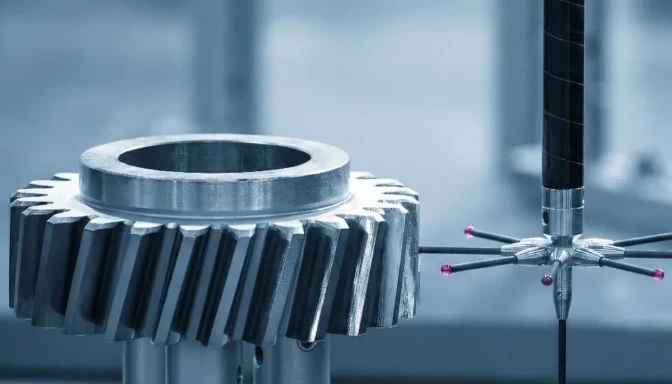
Reliable quality control is the most critical factor in successful offshore sourcing. Reputable Chinese CNC shops follow structured inspection workflows and hold internationally recognized certifications.
Standard Quality Assurance Workflow
| Inspection Stage | Method | Purpose |
|---|---|---|
| Incoming material | Material certificates, hardness test | Verify material grade and composition |
| In-process | Calipers, micrometers, first-article inspection | Catch errors early before full production |
| Final inspection | CMM, surface roughness tester, optical comparator | Confirm all dimensions meet drawing specs |
Top suppliers hold ISO 9001 for general quality, IATF 16949 for automotive parts, and AS9100 for aerospace components. Always request certification copies before placing an order.
For example, a European aerospace client recently reduced their defect rate from 8% to 0.3% after switching to a Chinese 5-axis shop with full AS9100 certification and in-house CMM inspection.
Learn more about our rigorous quality inspection processes and certification standards.
Surface Finishing: Aesthetics and Functionality
Surface finishing improves both the appearance and performance of machined parts. In-house finishing capabilities reduce lead times and ensure consistent quality across production runs.

Common Surface Finishing Options
| Finish Type | Functional Benefit | Aesthetic Benefit | Compatible Materials |
|---|---|---|---|
| Anodizing | Improves corrosion and wear resistance | Smooth, uniform color options | Aluminum |
| Polishing | Reduces friction, improves cleanability | High-gloss mirror finish | Stainless steel, aluminum |
| Powder coating | Adds durable scratch-resistant layer | Wide range of color choices | Steel, aluminum |
| Bead blasting | Creates uniform matte texture | Hides machining marks | Most metals |
Surface finishing CNC parts also helps with branding, as custom logos and part numbers can be etched or engraved during the finishing process.
Suppliers with in-house finishing can complete parts in one workflow, avoiding shipping delays between separate vendors.
Explore our full range of CNC surface finishing services to match your functional and branding needs.
The Hidden Cost: Communication & Engineering Support
Many buyers overlook the cost of poor communication when sourcing overseas. Misinterpreted drawings can lead to costly reworks, delayed launches, and strained supplier relationships.
How to Identify True Manufacturers vs. Traders
| Indicator | Real Manufacturer | Trading Company |
|---|---|---|
| Engineering support | Provides DFM feedback and design suggestions | Only forwards messages between buyer and factory |
| Factory access | Offers live video tours and on-site visits | Cannot show production floor or equipment |
| Response speed | Answers technical questions within 24 hours | Delayed responses due to middleman layers |
Look for suppliers with English-speaking engineering teams who can review your drawings directly. This reduces miscommunication and speeds up project timelines.
Professional engineering support also helps identify cost-saving design changes early, before production begins.
Step-by-Step: How to Order Custom Parts
Ordering custom CNC parts from China follows a clear, structured workflow. Following these steps ensures smooth communication and on-time delivery.
1. Submit your design files (STEP, IGES, or DWG) along with material, tolerance, and finish requirements.
2. Receive a detailed quote within 24-48 hours, including DFM feedback and cost optimization suggestions.
3. Approve the quote and pay the deposit to start production.
4. Receive in-process photos and first-article inspection reports for approval.
5. Complete final inspection and pay the balance before shipment.
6. Receive parts via air or sea freight, with full inspection documentation included.
For prototype orders, many suppliers offer 3-7 day turnaround to speed up product development cycles.
Submit Your Drawing for a Fast Quote
FAQ
Q: 1. What is the typical lead time for custom CNC machining orders?
A: Prototype orders usually take 3-7 business days, while production runs of 100-1,000 pieces take 10-20 days. Lead times vary based on part complexity, material availability, and surface finishing requirements.
Q: 2. How do you protect my intellectual property when sourcing from China?
A: Reputable suppliers sign NDAs before receiving design files, and never share or reproduce customer parts for third parties. Always confirm IP protection terms in your purchase agreement.
Q: 3. Do you offer assembly services for machined components?
A: Many full-service CNC shops offer sub-assembly services, including fastener installation, press fitting, and functional testing. This reduces your in-house assembly workload and logistics costs.
Q: 4. What quality guarantees do you provide?
A: Top suppliers offer a 100% inspection guarantee: any part that fails to meet drawing specifications will be replaced or refunded. Always confirm warranty terms before placing an order.
Q: 5. Can you handle both small prototype runs and large production orders?
A: Yes, most custom CNC shops support batch sizes from 1 piece to 10,000+ pieces. This scalability lets you use the same supplier from prototype stage through full production.
Q: 6. What file formats do you accept for part drawings?
A: Standard formats include STEP, IGES, DWG, and STL. Providing fully dimensioned 2D drawings alongside 3D models helps ensure accurate quoting and production.
Q: 7. How do you handle shipping and customs for international orders?
A: Suppliers typically offer both air express (for small, urgent orders) and sea freight (for large, cost-sensitive orders). Most handle all export documentation and can work with your preferred freight forwarder.
Q: 8. Can you provide material certificates for all parts?
A: Yes, certified suppliers provide mill test reports (MTRs) for all raw materials, confirming material grade, composition, and mechanical properties match your specifications.
Q: 9. What tolerance levels can you achieve?
A: Standard tolerances are ±0.05mm for general parts, while high-precision 5-axis machining can achieve tolerances as tight as ±0.005mm for critical aerospace and medical components.
Q: 10. Do you offer custom logo and marking services?
A: Yes, custom logo machining is available via laser engraving, chemical etching, or stamping. Logos can be added to most flat or curved surfaces with precise depth and alignment.
Q: 11. What payment terms do you accept?
A: Standard terms are 30% deposit upfront and 70% balance before shipment. For long-term partners, many suppliers offer more flexible payment terms based on order history.
Q: 12. Can you support design for manufacturability (DFM) reviews?
A: Professional suppliers offer free DFM reviews to identify design issues, suggest cost-saving changes, and ensure your part can be produced efficiently without sacrificing performance.
Conclusion: Choosing a Partner, Not Just a Vendor
Sourcing custom CNC machining services from China offers significant cost, speed, and scalability advantages when you work with the right partner. The key is to prioritize suppliers with strong quality systems, in-house engineering support, and transparent communication.
From 5-axis CNC machining for complex aerospace parts to high-volume turning for automotive components, Chinese machining providers have the capabilities to meet the most demanding industrial requirements.
By focusing on long-term collaboration rather than one-off low prices, buyers can build reliable supply chains that support growth and innovation for years to come.


