


Why Titanium Is Chosen for Medical Implants
Three material properties explain most of titanium's use in implants. First, titanium forms a thin, stable surface oxide (TiO2) within seconds of exposure to air or body fluids. This passive layer is chemically inert in the physiological environment, and it is the basis of titanium's biocompatibility. Second, titanium is non-magnetic; together with its relatively low X-ray artifact, this makes follow-up imaging, including MRI, more practical than with many other metals. Third, the elastic modulus of titanium and its common alloys is roughly 105–115 GPa - much closer to cortical bone (about 10–30 GPa) than stainless steel (about 193 GPa) or cobalt-chromium alloys (about 210–230 GPa). A closer modulus match reduces stress shielding, the tendency of a stiff implant to carry load that bone would otherwise carry, which supports long-term bone remodeling. These figures are typical engineering values.
On the biological side, implant performance relies on osseointegration: bone cells grow onto and interlock with the implant surface. Surface texture and chemistry influence this process, which is why surface treatment is a routine part of implant production. None of this makes titanium a treatment by itself - it is a structural material that must be designed, manufactured, and evaluated as part of a medical device.
Medical-Grade Titanium: What the Standards Define
Medical implant grades are defined by international standards, and only a few compositions are accepted. Unalloyed (commercially pure) titanium is covered by ASTM F67 in the United States and ISO 5832-2 internationally; the alloy Ti-6Al-4V ELI is covered by ASTM F136 and ISO 5832-3. "ELI" stands for extra low interstitial: the alloy keeps the same 6% aluminum / 4% vanadium base as ASTM grade 5, but tightens the limits on interstitial elements - most importantly oxygen, capped at 0.13% maximum in ASTM F136, compared with 0.20% for standard grade 5. Lower interstitial content improves ductility and fracture toughness, which matters for implants that must survive years of cyclic loading.
Medical titanium grades and typical composition limits
| Grade / Alloy | Standard | Al (%) | V (%) | Fe max (%) | O max (%) | Typical implant uses |
|---|---|---|---|---|---|---|
| CP Titanium Grade 1 | ASTM F67 / ISO 5832-2 | – | – | 0.20 | 0.18 | Dental and maxillofacial components; highest formability |
| CP Titanium Grade 2 | ASTM F67 / ISO 5832-2 | – | – | 0.30 | 0.25 | General surgical implants, bone screws |
| CP Titanium Grade 4 | ASTM F67 / ISO 5832-2 | – | – | 0.50 | 0.40 | Bone screws and plates needing higher strength in a pure grade |
| Ti-6Al-4V ELI (Grade 23) | ASTM F136 / ISO 5832-3 | 5.5–6.5 | 3.5–4.5 | 0.25 | 0.13 | Hip stems, knee components, trauma plates, spinal rods |


The Forging Route: From Ingot to Implant Stock
Forging is the primary hot-working route for titanium implant stock. It does three things: it closes internal porosity left from melting, it refines the coarse as-cast grain structure, and it conditions the microstructure that determines the strength and fatigue properties the implant needs.
Step 1 - Ingot Breakdown (Open-Die Forging)
Titanium ingots are converted to billet or bar on open-die hydraulic presses. The ingot is heated into the beta field and worked repeatedly to break down the cast structure. This step is about geometry and structure, not final properties.
Step 2 - Alpha-Beta Forging (Typical)
The property-defining step for Ti-6Al-4V ELI is alpha-beta forging: working the material below its beta transus - typically about 980–1010 °C for this alloy - so that both alpha and beta phases are deformed. Forging in this range, typically around 900–950 °C, produces a microstructure of equiaxed alpha in a transformed beta matrix, which balances strength and ductility. Forging temperatures and reductions are process parameters that each manufacturer adjusts for its equipment and product; the ranges above are typical values, not a specification.
Step 3 - Closed-Die and Precision Forging
For complex shapes such as femoral stems, closed-die forging presses a heated preform into a die cavity and produces near-net shapes that reduce machining. Because die wear and lubricant residues must be controlled, medical forging shops run dedicated tooling and process controls.
Step 4 - Post-Forging Processing and Inspection
After forging, the stock is typically annealed, or solution-treated and aged in the case of Ti-6Al-4V ELI, then straightened, machined, and tested. Composition is verified by chemical analysis, internal soundness by ultrasonic testing, and mechanical properties by tensile and hardness testing. Surface contamination (oxygen-enriched alpha case and scale) formed during hot working must be removed before machining, usually by acid pickling or by machining allowance.
Where Forged Titanium Is Used: Applications
Typical applications of forged titanium in orthopedics and dentistry
| Application | Typical grade | Why this grade is selected |
|---|---|---|
| Hip and knee implants (stems, components) | Ti-6Al-4V ELI | High strength and fatigue resistance; osseointegration |
| Bone plates, screws, trauma nails | CP Grade 4 or Ti-6Al-4V ELI | Strength; pure-grade screws reduce galvanic concerns in mixed-metal assemblies |
| Spinal fixation rods | Ti-6Al-4V ELI | Fatigue performance; low MRI artifacts |
| Dental implants and abutments | CP Grades 1–4, sometimes Ti-6Al-4V | Osseointegration; grade chosen by load and formability |
Surface Treatment and Osseointegration
Implant surfaces are routinely modified after machining. Sandblasting and acid etching create micro-scale roughness that supports bone cell attachment. Anodizing can grow a thicker oxide layer, and nanotubular structures in the tens-to-hundreds-of-nanometers range have been studied in research settings for cell response. Silver-containing coatings have been investigated in laboratory studies for their ability to reduce bacterial colonization; these are research findings, and clinical benefit depends on the complete device and its regulatory evaluation.
Quality Systems and Regulatory Context
Titanium material suppliers deliver metal that meets a material standard such as ASTM F136. The implant manufacturer is responsible for the medical device: design validation, biocompatibility evaluation (for example the ISO 10993 series), manufacturing under a quality management system such as ISO 13485, and market authorization in each country where the device is sold - for example, FDA requirements in the United States and MDR requirements in the European Union. This article is materials-engineering information, not medical advice; any clinical decision belongs to qualified medical professionals.
Our product range
| Product Category | Standard Forms / Types | Common Grades (ASTM) | Typical Dimensions / Specifications | Key Applications |
|---|---|---|---|---|
| Titanium Pipes & Tubes | Seamless Pipe, Welded Tube, Heat Exchanger Tubes, Condenser Tubes, Capillary Tubes | Grade 1, 2, 3, 5 (Ti-6Al-4V), 7, 9 (Ti-3Al-2.5V), 12 | OD: 0.5mm - 300mm+ Wall Thickness: 0.1mm - 20mm Length: Custom up to 15m |
Aerospace, Chemical Processing, Marine, Power Plant Condensers, Bicycle Frames, Medical Implants |
| Titanium Sheets & Plates | Hot-Rolled Plate, Cold-Rolled Sheet, Checker Plate (Flooring) | Grade 1, 2, 3, 5 (Ti-6Al-4V), 7, 12 | Thickness: 0.1mm - 100mm+ Width: Up to 2000mm Length: Up to 6000mm |
Chemical Tanks, Pressure Vessels, Architectural Cladding, Marine Hardware, Armor Plating, Heat Exchangers |
| Titanium Bars & Rods | Round Bar, Square Bar, Hex Bar, Forged Bar, Wire Rod | Grade 1, 2, 4, 5 (Ti-6Al-4V), 7, 12 | Diameter/Size: 1mm - 500mm+ Length: 1000mm - 6000mm (Std.), Custom |
Fasteners (Bolts, Nuts), Surgical Implants, Pump Shafts, Valve Components, Golf Clubs, Marine Shafting |
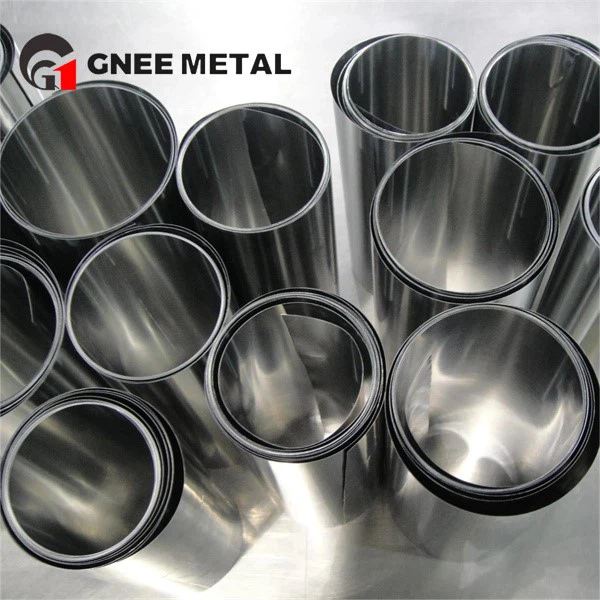
| Titanium Strips & Coils | Cold-Rolled Strip, Precision Foil, Coiled Strip | Grade 1, 2, 5 (Ti-6Al-4V), 12 | Thickness: 0.02mm (Foil) - 5mm Width: 5mm - 500mm Coil Weight: Up to 1000kg |
Bellows, Medical Stents, Gaskets, Honeycomb Cores, Springs, Electronic Components |
| Titanium Wires | Welding Wire, Spring Wire, Fastener Wire, Mesh Wire, Medical Suture Wire | Grade 1, 2, 4, 5 (Ti-6Al-4V), ELI (Extra Low Interstitial) | Diameter: 0.05mm - 10mm Condition: Annealed, Hard-Drawn Form: Coils, Spools, Straight Lengths |
3D Printing (Wire-AM), Welding Filler, Chemical Mesh, Orthodontic Archwires, Fishing Leaders, Springs |
Our factory
Our factory specializes in the field of international trade of titanium materials, professionally producing high-quality series products such as titanium tubes, titanium bars, titanium plates, titanium wires, and titanium strips. The factory is equipped with internationally advanced production and testing equipment, including precision forging units, high-speed cold rolling mills, vacuum melting furnaces, CNC spinning machines, continuous drawing production lines, and automated surface treatment systems. Coupled with precision testing instruments such as spectrometers and ultrasonic flaw detectors, we ensure precise control over the entire process from raw materials to finished products. We are committed to providing global customers with titanium products that offer excellent performance and a complete range of specifications through stable and reliable processes and strict quality management, meeting the application needs of high-end industries such as energy, chemical, aerospace, and medical fields.

Titanium product packaging
We place great emphasis on the transportation safety and delivery quality of our products. All titanium materials are packaged using strict industrial-grade solutions: titanium tubes and bars undergo anti-rust treatment, are tightly wrapped with waterproof stretch film, and then placed in reinforced wooden or iron boxes lined with moisture-proof paper, with fillers added to prevent sliding and collisions during transportation. Titanium plates and strips are covered with protective film, fitted with edge protectors, separated layer by layer with moisture-proof paper, loaded onto sturdy wooden or steel pallets, and securely fastened with steel straps. Fine titanium wires are neatly coiled onto specialized spools and encapsulated in sealed boxes that are waterproof and dustproof. Each packaging unit is accompanied by clear product labels, material certificates, and moisture-proof indicators, ensuring that the goods remain intact, clearly labeled, and safely delivered to global customers through long-distance sea freight and multimodal transportation.

Discuss Your Project Requirements
FAQ
1. Is titanium magnetic?
No. Titanium and its common implant alloys are non-magnetic, which is why they are compatible with MRI follow-up. MRI compatibility of a specific implant still depends on the device design and on the manufacturer's labeling.
2. What is the difference between Ti-6Al-4V grade 5 and grade 23 (ELI)?
The base composition is the same. Grade 23 tightens the interstitial limits, most notably oxygen (≤ 0.13% versus ≤ 0.20% max), which improves ductility and fracture toughness for implant applications.
3. Why forge instead of cast for load-bearing implants?
Forging closes internal porosity, refines the grain structure, and typically improves fatigue strength compared with as-cast material. Cast parts can be suitable for non-load-bearing applications, but forging is the standard route for stems, plates, and rods.
4. Can titanium implants be 3D printed?
Yes. Powder-bed processes such as selective laser melting (SLM) and electron beam melting (EBM) are used for porous and patient-specific structures, for example acetabular shells. Forged and printed routes can be combined within one implant.
5. Which standards apply to medical titanium?
At the material level: ASTM F67 / ISO 5832-2 for unalloyed titanium, and ASTM F136 / ISO 5832-3 for Ti-6Al-4V ELI. At the device level, requirements follow the regulations of each market, supported by quality systems such as ISO 13485.


