


TA7 (Gr6) titanium alloy, known for its low density of 4.45 g/cm³, high-temperature stability up to 400°C, and excellent weldability, serves as a key material in aero-engine components, corrosion-resistant marine parts, and chemical equipment, offering a balance of strength and corrosion resistance.
Comprehensive Analysis of TA7 (Gr6) Titanium Alloy
TA7 titanium alloy, corresponding to Grade 6 (Gr6) in the American material standard system, is a classic medium-strength, non-heat-treatable α-type titanium alloy. It possesses excellent thermal stability and welding performance and finds wide application in both the aerospace industry and civilian sectors.
I. Core Characteristics
The long-term preference for TA7 alloy is primarily attributed to its well-balanced and excellent overall properties:
Good Thermal Stability and High-Temperature Strength: As an α-type titanium alloy, its microstructure is stable at high temperatures. It can operate for extended periods within the 400-450°C range while maintaining high strength and creep resistance.
Excellent Welding Performance: It can be welded using various methods such as argon arc welding and electron beam welding. Post-weld heat treatment is not required, and the welded joints exhibit high strength and reliable performance.
Outstanding Corrosion Resistance: Its corrosion resistance in humid atmospheres, seawater, and various oxidizing or neutral media surpasses that of most stainless steels, approaching the level of pure titanium.
Satisfactory Room-Temperature Mechanical Properties: It offers a good combination of medium strength and favorable plasticity, facilitating both cold and hot working and forming processes.
Low Density: Inheriting the inherent advantages of titanium alloys, its density is significantly lower than that of steel and high-temperature alloys, making it a key material for achieving lightweight design.
II. Chemical Composition (Nominal Composition, wt%)
TA7 (Gr6) is a Ti-Al-Sn ternary alloy. Its main alloying elements and their functions are as follows:
Titanium (Ti): The base element.
Aluminum (Al): The primary α-stabilizing element. It significantly increases the alloy's strength and high-temperature strength through solid solution strengthening while also reducing density.
Tin (Sn): A neutral element that also contributes to solid solution strengthening. It works synergistically with aluminum to enhance the alloy's strength, typically with a lesser adverse effect on plasticity compared to aluminum alone.
The specific compositional ranges are typically: Al 4.0-5.5%, Sn 2.0-3.0%, with the remainder being Ti and trace impurities (such as Fe, O, C, N, etc.). Impurity elements must be strictly controlled to ensure adequate plasticity and toughness.
III. Physical and Basic Performance Parameters
Density: Approximately 4.45 g/cm³. This is a typical value; the actual density may vary slightly due to minor compositional fluctuations and processing history.
Elastic Modulus: The room-temperature tensile elastic modulus is approximately 110-120 GPa.
Thermal Conductivity and Linear Expansion Coefficient: It has a relatively low thermal conductivity, around 7-8 W/(m·K). Its linear expansion coefficient is also small, typically in the range of 8-9 ×10⁻⁶/°C.
IV. Common Product Forms and Dimensions
TA7 alloy can be processed into various semi-finished products with diverse specifications. Specific dimensions should comply with national standards or purchase contracts.
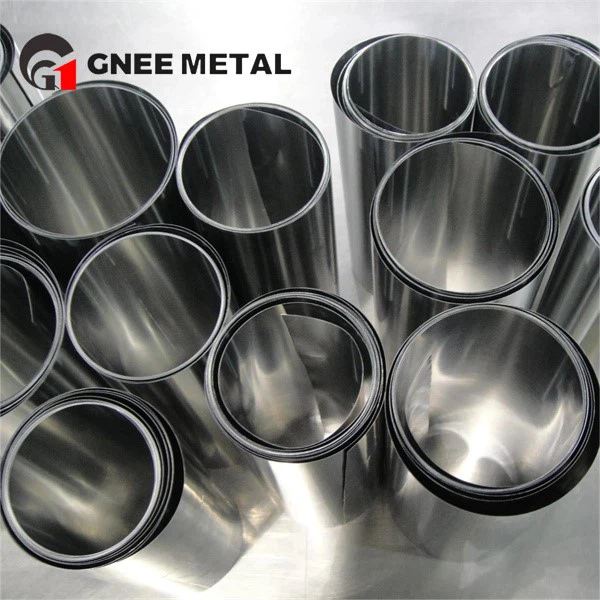
Plate/Sheet: Common thicknesses range from a fraction of a millimeter to tens of millimeters, with widths potentially up to several meters.
Bar, Rod, and Forgings: Diameters can range from a few millimeters to several hundred millimeters. Used for manufacturing various shaft-like components, disks, and structural forgings.
Wire and Tube: Wire is used for welding electrodes; tubes can be used in heat exchangers and similar equipment.
Castings: Suitable for manufacturing complex-shaped static structural components.


Primary Applications
1. Aerospace Industry
Applications: Mainly used for manufacturing moderately loaded structural components such as compressor disks, blades, and casings in aircraft engines, as well as welded structures, firewalls, and skin panels in airframes.
Key Performance Indicators: Focus is on high-temperature endurance strength (e.g., 100-hour endurance strength at 400°C) and creep limit. Room-temperature tensile strength is typically at the level of ≥850 MPa, with elongation requirements usually no less than 10%. All indicators must meet stringent aerospace material standards.
2. Shipbuilding and Marine Engineering
Applications: Manufacturing seawater corrosion-resistant piping systems, valves, pump bodies for ships, and pressure hulls for deep-sea submersibles.
Key Performance Indicators: The core requirement is corrosion resistance, necessitating testing for corrosion rates in specific media (e.g., artificial seawater, acidic solutions). There are also clear requirements for strength, plasticity, and low-temperature impact toughness.
3. Chemical and General Industries
Applications: Used in manufacturing corrosion-resistant electrolytic cells, reactors, heat exchangers, pumps, and valves.
Key Performance Indicators: Beyond basic mechanical properties, emphasis is placed on resistance to uniform corrosion, pitting corrosion, and stress corrosion cracking in specific chemical media.
4. Medical and Other Fields
Applications: Due to its good biocompatibility, it can be used for surgical instruments and auxiliary parts for implants (non-major load-bearing). Also used for high-quality sports equipment and automotive racing components.
Key Performance Indicators: Medical applications must meet relevant biocompatibility standards (e.g., ISO 10993). For other fields, its specific strength and high durability are key considerations.
Get Instant Quote & Stock Check
Our factory
Our factory specializes in the field of international trade of titanium materials, professionally producing high-quality series products such as titanium tubes, titanium bars, titanium plates, titanium wires, and titanium strips. The factory is equipped with internationally advanced production and testing equipment, including precision forging units, high-speed cold rolling mills, vacuum melting furnaces, CNC spinning machines, continuous drawing production lines, and automated surface treatment systems. Coupled with precision testing instruments such as spectrometers and ultrasonic flaw detectors, we ensure precise control over the entire process from raw materials to finished products. We are committed to providing global customers with titanium products that offer excellent performance and a complete range of specifications through stable and reliable processes and strict quality management, meeting the application needs of high-end industries such as energy, chemical, aerospace, and medical fields.

Titanium product packaging
We place great emphasis on the transportation safety and delivery quality of our products. All titanium materials are packaged using strict industrial-grade solutions: titanium tubes and bars undergo anti-rust treatment, are tightly wrapped with waterproof stretch film, and then placed in reinforced wooden or iron boxes lined with moisture-proof paper, with fillers added to prevent sliding and collisions during transportation. Titanium plates and strips are covered with protective film, fitted with edge protectors, separated layer by layer with moisture-proof paper, loaded onto sturdy wooden or steel pallets, and securely fastened with steel straps. Fine titanium wires are neatly coiled onto specialized spools and encapsulated in sealed boxes that are waterproof and dustproof. Each packaging unit is accompanied by clear product labels, material certificates, and moisture-proof indicators, ensuring that the goods remain intact, clearly labeled, and safely delivered to global customers through long-distance sea freight and multimodal transportation.

Request Technical Consultation


