


In the aviation industry, titanium materials have become core materials for manufacturing critical components due to their low density, high specific strength, and excellent corrosion resistance. Different grades of aviation titanium alloys, varying in composition and properties, are suitable for different aviation components and operating conditions. They are primarily categorized into α-type (Alpha-type), α+β-type (Alpha+Beta type), and β-type (Beta-type) titanium alloys.
α-Type Titanium Alloys
α-type titanium alloys have a single α-phase microstructure at room temperature, offering good high-temperature stability and weldability.
Typical Grade TA7: Its composition is Ti-5Al-2.5Sn. Aluminum increases the alloy's strength and thermal stability, while tin further enhances its thermal strength. TA7 exhibits good creep rupture strength and thermal stability at temperatures below 500°C and is commonly used to manufacture components such as aero-engine compressor discs and blades.
Typical Grade TA15: This grade contains elements like aluminum, vanadium, and molybdenum, providing excellent overall performance. It can operate long-term at temperatures around 500°C and is widely used in load-bearing structural components of aircraft, such as beams and frames.
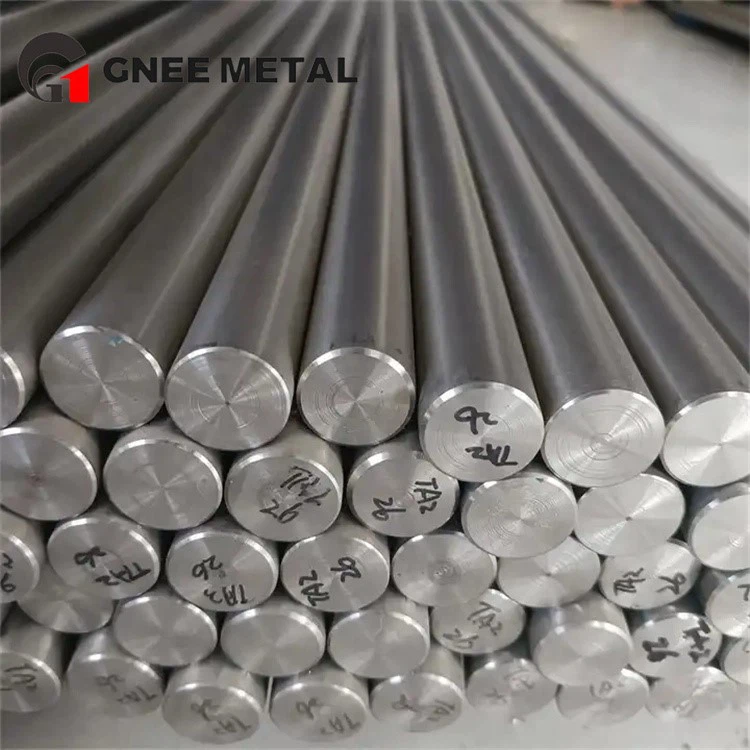


α+β-Type Titanium Alloys
α+β-type titanium alloys combine the advantages of both α-type and β-type alloys. They offer high strength, good plasticity, and can be strengthened by heat treatment.
The most representative grade is Ti-6Al-4V (TC4), which is the most widely used titanium alloy today. It contains 6% aluminum (which increases strength) and 4% vanadium (which improves workability and toughness). TC4 has a service temperature range between -196°C and 350°C. Its high specific strength and good processability make it extensively used in aviation for manufacturing fuselage frames, wing structural components, as well as engine fans, compressor discs, and blades.
Another typical α+β-type alloy is Ti-6Al-2Sn-4Zr-2Mo (TC11). The addition of tin, zirconium, and molybdenum gives it higher thermal strength and creep rupture strength. It is often used to manufacture components in aero-engines that operate at higher temperatures, such as high-pressure compressor discs and blades.
β-Type Titanium Alloys
β-type titanium alloys have a microstructure primarily composed of β-phase at room temperature. They feature high strength, high toughness, good cold workability, and can be significantly strengthened by heat treatment.
A typical grade is TB6, with a composition of Ti-10V-2Fe-3Al. This alloy offers high strength and good hardenability, making it suitable for manufacturing high-strength structural components like aircraft landing gear and wing joints.
Although β-type titanium alloys have excellent properties, their high degree of alloying makes melting and processing more difficult, resulting in relatively higher costs, which somewhat limits their application.
The range of typical aviation titanium alloy grades is diverse. α-type alloys play a significant role in manufacturing high-temperature components due to their good thermal stability and weldability. α+β-type alloys, with their balanced strength and plasticity, are commonly used for aviation structural parts. β-type alloys meet the demands for components with extremely high structural strength requirements. These different types of titanium alloy grades complement each other, collectively providing a solid material foundation for the development of the aviation industry and driving aviation technology to new heights.
Discuss Your Project Requirements
Our product range
| Category | Product Name | Common Specifications (Available Upon Request) | Key Applications | |
|---|---|---|---|---|
| Titanium Tube | Seamless Titanium Tube Welded Titanium Tube |
ASTM B338 Gr1, Gr2, Gr5, Gr7, Gr9, Gr12 OD: 1mm - 300mm Wall Thickness: 0.5mm - 20mm Standards: ASTM, ASME, DIN, JIS |
Heat Exchangers, Condensers, Chemical Processing, Aerospace, Marine, Medical Implants | Get Free Sample & Evaluation |
| Titanium Sheet/Plate | Titanium Sheet Titanium Plate |
ASTM B265 Gr1, Gr2, Gr5, Gr7, Gr9, Gr12 Thickness: 0.1mm - 100mm Width: Up to 2000mm Conditions: Hot Rolled, Cold Rolled, Annealed |
Chemical Vessels, Pressure Vessels, Aerospace Structures, Marine Hardware, Architectural Cladding, Anodes | Get Free Sample & Evaluation |
| Titanium Bar/Rod | Titanium Round Bar Titanium Hexagon Bar Titanium Square Bar |
ASTM B348 Gr1, Gr2, Gr5, Gr7, Gr9, Gr12 Diameter/Section: 3mm - 300mm Length: As per requirement Forms: Forged, Rolled, Turned & Polished |
Fasteners, Valve Parts, Pump Shafts, Surgical Instruments, Sports Equipment, Automotive Components | Get Free Sample & Evaluation |
| Titanium Wire | Titanium Coil Wire Straight Titanium Wire Welding Wire |
ASTM B863 Gr1, Gr2, Gr5, Gr7, Gr9, Gr12 Diameter: 0.1mm - 10mm Forms: Annealed, Pickled Spool Weight: Customizable |
Welding Filler, 3D Printing (Wire Arc), Springs, Mesh, Medical Staples & Sutures, Fishing Tackle | Get Free Sample & Evaluation |
| Titanium Strip/Foil | Titanium Strip (Coil) Titanium Foil |
ASTM B265 Gr1, Gr2 Thickness: 0.03mm - 2.0mm Width: Up to 600mm Surface: Bright, Matte, Pickled |
Bellows, Gaskets, Honeycomb Structures, Heat Shields, Precision Instrument Parts, Battery Current Collectors | Get Free Sample & Evaluation |
Our factory
Our factory operates a dedicated production facility equipped with modern machinery for processing titanium. We have a complete set of equipment including forging presses, hot and cold rolling mills, tube drawing and welding lines, bar & wire drawing machines, and surface treatment units. This allows us to control the production process from raw material to finished products such as sheets, plates, tubes, bars, and wires. Our workshop is capable of handling large-volume orders while maintaining consistent quality across our product range.

Titanium product packaging
Our packaging is designed for maximum security and international standards. We use tailored wooden crates for heavy plates and bars, with internal waterproof wrapping and blocking to prevent movement. Tubes and coils are securely packed in wooden boxes with reinforced edges and protective end caps. For smaller items like wires and strips, we use standard export cartons with inner plastic and moisture-proof sealing. All packages are clearly marked with product details, weight, and handling instructions to ensure safe arrival. We can also customize packing methods, such as palletization or container optimization, based on specific shipping and customer requirements.

Discuss Your Project Requirements


