


Titanium alloy forging is a complex and detailed process, and each grade of forging process has its own unique characteristics and differences. A mature forging process requires a perfect combination of theoretical knowledge and practical experience. Therefore, when purchasing titanium alloy forgings, it is important to find manufacturers with rich theoretical and practical experience. Today, we will explore the importance of temperature control in the titanium forging process. it is a complex and detailed process, and each grade of titanium alloy forging process has its own unique characteristics and differences. A mature forging process requires a perfect combination of theoretical knowledge and practical experience. Therefore, when purchasing titanium alloy forgings, it is important to find manufacturers with rich theoretical and practical experience. Today, we will explore the importance of temperature control in the titanium alloy forging process.
Titanium Alloy Forging Temperature: What You Need to Know
The forging temperature of titanium alloy is generally divided into two categories: temperature above the phase transition point and temperature below the phase transition point. The so-called "phase transition point" refers to the critical temperature at which the metal undergoes phase change during heating or cooling. Phase change involves the transformation of the internal crystal structure of the metal, which usually means a change in the arrangement of atoms. The key factors affecting the phase transition point are the chemical composition of the metal, especially the alloying elements, which significantly change the temperature of the phase transition point. Since the phase transition point is the temperature at which the metal crystal structure undergoes a transformation, it has a decisive influence on the performance of the material, so it is widely used in the forging process design and heat treatment process of the material.
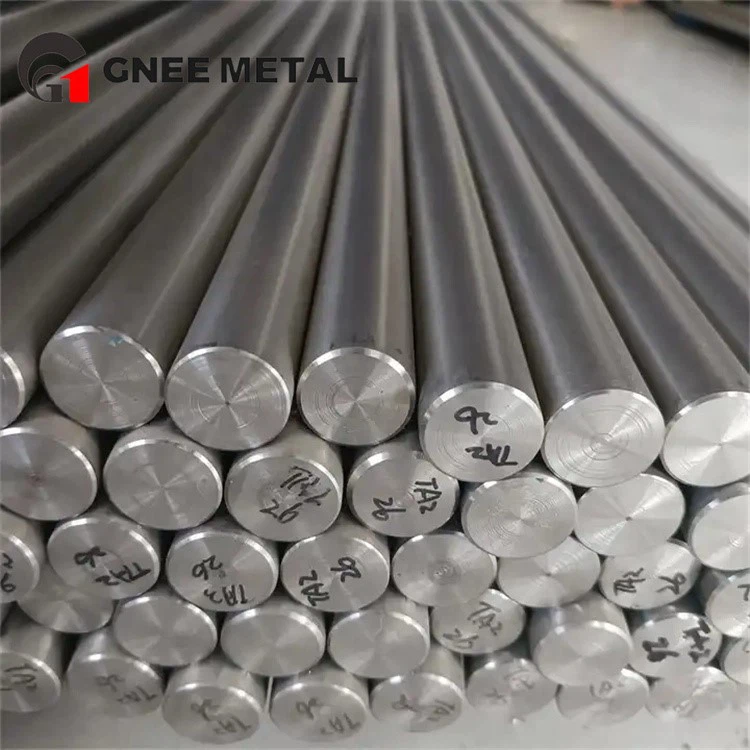


Therefore, due to the differences in the chemical composition of titanium alloys, their phase transition temperatures are also different. From industrial pure titanium to titanium alloys of different grades, the difference in phase transition temperature is quite significant. In order to obtain a dense internal structure of titanium alloy, billeting and drawing are usually carried out above the phase transition point, followed by multiple drawings below the phase transition point. Finally, the forming temperature is usually selected to be 30°C to 50°C below the phase transition point temperature. Taking pure titanium as an example, its phase transition point temperature ranges from 880°C to 890°C (different chemical compositions will cause the phase transition point temperature to fluctuate). Generally, the billeting temperature of pure titanium is set at 1000°C to 1050°C, while the deformation temperature below the phase transition point is lower than 860°C, and the forming temperature of the final product is between 820°C and 860°C. Taking the highly concerned Gr5 (Ti-6Al-4V) titanium alloy as an example, its phase transition point temperature ranges from 980°C to 995°C (again, differences in chemical composition will affect the fluctuation of the phase transition point temperature). The billet temperature of Gr5 titanium alloy is generally set at 1100℃ to 1150℃, the deformation temperature below the phase transition point is lower than 970℃, and the forming temperature of the final product is between 940℃ and 960℃. The forging temperature mentioned in the above case is the commonly used temperature range, but according to different product standards, the forging temperature and process will also be adjusted accordingly.
Why Temperature Matters in Titanium Alloy Forging
Every forging process is tailored to meet specific product standards and technical requirements. The forging temperature can vary depending on these standards, making it essential for manufacturers to adjust the temperature and techniques accordingly.
Therefore, the required forging temperature for titanium alloys depends on several factors, including the alloy grade, product type, specific standards, and the manufacturing process involved. It's important to note that forging temperature plays a crucial role in the overall quality and performance of titanium alloy products.
Discuss Your Project Requirements
Our product range
| Category | Product Name | Common Specifications (Available Upon Request) | Key Applications | |
|---|---|---|---|---|
| Titanium Tube | Seamless Titanium Tube Welded Titanium Tube |
ASTM B338 Gr1, Gr2, Gr5, Gr7, Gr9, Gr12 OD: 1mm - 300mm Wall Thickness: 0.5mm - 20mm Standards: ASTM, ASME, DIN, JIS |
Heat Exchangers, Condensers, Chemical Processing, Aerospace, Marine, Medical Implants | Get Free Sample & Evaluation |
| Titanium Sheet/Plate | Titanium Sheet Titanium Plate |
ASTM B265 Gr1, Gr2, Gr5, Gr7, Gr9, Gr12 Thickness: 0.1mm - 100mm Width: Up to 2000mm Conditions: Hot Rolled, Cold Rolled, Annealed |
Chemical Vessels, Pressure Vessels, Aerospace Structures, Marine Hardware, Architectural Cladding, Anodes | Get Free Sample & Evaluation |
| Titanium Bar/Rod | Titanium Round Bar Titanium Hexagon Bar Titanium Square Bar |
ASTM B348 Gr1, Gr2, Gr5, Gr7, Gr9, Gr12 Diameter/Section: 3mm - 300mm Length: As per requirement Forms: Forged, Rolled, Turned & Polished |
Fasteners, Valve Parts, Pump Shafts, Surgical Instruments, Sports Equipment, Automotive Components | Get Free Sample & Evaluation |
| Titanium Wire | Titanium Coil Wire Straight Titanium Wire Welding Wire |
ASTM B863 Gr1, Gr2, Gr5, Gr7, Gr9, Gr12 Diameter: 0.1mm - 10mm Forms: Annealed, Pickled Spool Weight: Customizable |
Welding Filler, 3D Printing (Wire Arc), Springs, Mesh, Medical Staples & Sutures, Fishing Tackle | Get Free Sample & Evaluation |
| Titanium Strip/Foil | Titanium Strip (Coil) Titanium Foil |
ASTM B265 Gr1, Gr2 Thickness: 0.03mm - 2.0mm Width: Up to 600mm Surface: Bright, Matte, Pickled |
Bellows, Gaskets, Honeycomb Structures, Heat Shields, Precision Instrument Parts, Battery Current Collectors | Get Free Sample & Evaluation |
Our factory
Our factory operates a dedicated production facility equipped with modern machinery for processing titanium. We have a complete set of equipment including forging presses, hot and cold rolling mills, tube drawing and welding lines, bar & wire drawing machines, and surface treatment units. This allows us to control the production process from raw material to finished products such as sheets, plates, tubes, bars, and wires. Our workshop is capable of handling large-volume orders while maintaining consistent quality across our product range.

Titanium product packaging
Our packaging is designed for maximum security and international standards. We use tailored wooden crates for heavy plates and bars, with internal waterproof wrapping and blocking to prevent movement. Tubes and coils are securely packed in wooden boxes with reinforced edges and protective end caps. For smaller items like wires and strips, we use standard export cartons with inner plastic and moisture-proof sealing. All packages are clearly marked with product details, weight, and handling instructions to ensure safe arrival. We can also customize packing methods, such as palletization or container optimization, based on specific shipping and customer requirements.

Discuss Your Project Requirements


