


As an industrial engineer or procurement specialist, you understand choosing the right strategic metal rod can define success. In aerospace, nuclear power, and chemical sectors, titanium, zirconium, and nickel rods are rewiring industrial standards – and you'll learn precisely how each stacks up.
Why You Should Care: Strategic Rod Metals
Titanium rods (⌀20–300 mm) with ultra-light density (4.5 g/cm³) and high-temperature strength (up to 550 °C) helped you achieve a 30% weight reduction on the C919 wing beam.
Zirconium rods (⌀50–150 mm) resist boiling 10% HCl corrosion (<0.01 mm/a), making them your go-to for HPR1000 fuel cladding.
Nickel rods, like Inconel 625, sustain 1100 °C in turbine discs-don't risk your engine's reliability without them.
However, import controls by the US/EU impact your supply chain:
Nuclear-grade zirconium: hydride-orientation tech restricted by Westinghouse.
High-temp nickel: you struggle to import pure melt furnaces.
Evolution of Rod Performance: What You Gain
| Metal | Upgrade | Your Advantage |
|---|---|---|
| Titanium | Ti‑3Al‑1Mo‑1Zr: β-phase tuned reduces hydrogen permeation to 10⁻⁷ g/cm²/h | Titanium rods for deep-sea submersibles (e.g., 10,000 m submarine) |
| Zirconium | Zr‑Sn‑Nb‑Fe alloy: 15% lower neutron absorption | Extend your fuel cycles to 24 months |
| Nickel | Nitinol memory alloy: >95% shape recovery | Vascular stents with just 5% re-stenosis |


Global Industry Shifts: What You Should Track
1. Green recycling:
Electrolytic titanium: energy use down from 40 → 18 kWh/kg, saving you ~40%.
Zirconium scrap reuse hits 92%.
2. Standard-setting power:
China leads ISO 24364 ultrasonic inspection for titanium rods: defect detection goes from ⌀1.0 mm → ⌀0.4 mm.
3. Breaking supply chokepoints:
Nickel rod (O ≤ 30 ppm) domestic purity leaps from 35% → 60%.
You still import aerospace-grade Inconel 718. Under the National Materials Security Plan, by 2028, China targets full self-sufficient supply chains for titanium, zirconium, and nickel rods.
Material Specs & Industrial Application Guide
1. Chemical Composition & Grades
Titanium rods: Ti ≥99 % + Al/V/Mo → α/β phase strength.
e.g., Grade 5 (Ti‑6Al‑4V): aerospace-grade.
Zirconium rods: Zr ≥95 % + Sn/Nb/Fe for corrosion/hydrogen control.
e.g., Zr‑4 (Sn 1.5 % + Fe 0.2 %): nuclear-grade.
Nickel rods: Ni ≥99 % + Cr/Mo/Ti/Be boost oxidation and elasticity.
e.g., Inconel 625 (Ni‑22Cr‑9Mo): high‑temp alloys.
2. Physical & Mechanical Properties
Titanium: 4.5 g/cm³; 1668 °C melt; UTS 895–1170 MPa; 200 MPa·cm³/g specific strength.
Zirconium: 6.5 g/cm³; 1852 °C; UTS 450–550 MPa; 70 MPa·cm³/g.
Nickel (Inconel): 8.9 g/cm³; 1455 °C; UTS 750–1350 MPa; 85 MPa·cm³/g; high stiffness (E=200 GPa).
3. Corrosion Resistance
Titanium: marine, chloride, oxidizing acid resistant (<0.001 mm/a), but not resistant to reducing acids (e.g., HCl).
Zirconium excels in boiling HCl (<0.01 mm/a); ideal for nuclear reactors.
Nickel: best for reducing acids and high-temperature oxidation (Cr > 15%).
4. Machining Best Practices
Each rod requires your precise handling:
Titanium: slow speeds (<50 m/min), high-pressure coolant, vacuum bake‑out (650 °C/4 h).
Zirconium: forge <700 °C, surface nitriding.
Nickel: anneal at 800 °C, nano-lubricant.
Nitinol: DSC-controlled temp.
5. Production Processes You Can Count On
Titanium: triple-VAR → β-phase forging → solution + aging.
Zirconium: EB melting → cladding + hot rolling → β‑quench.
Nickel: ESR → multi-pass drawing → inert-gas anneal.
Nitinol innovation: cold-draw + flash arc anneal → elastic modulus ~45 GPa (bone-like).
6. Breakthrough Cases
Aerospace:
Titanium rods in C919 wing beams (Grade 5) reduced weight by 30%.
Titanium rocket nozzles endure 600 °C.
Medical:
Grade 5 ELI reduces revision implants by 70%;
Nitinol rods for stents and orthopaedics (patella screws).
Energy/Process:
Zirconium fuel cladding resists neutron swelling.
Nickel rods in electrolysis anodes for HCl.
Marine:
Deep-sea hulls to 900 m rated.
Zirconium shafts resist cavitation attack.
Our product range
| Product Category | Standard Forms / Types | Common Grades (ASTM) | Typical Dimensions / Specifications | Key Applications |
|---|---|---|---|---|
| Titanium Pipes & Tubes | Seamless Pipe, Welded Tube, Heat Exchanger Tubes, Condenser Tubes, Capillary Tubes | Grade 1, 2, 3, 5 (Ti-6Al-4V), 7, 9 (Ti-3Al-2.5V), 12 | OD: 0.5mm - 300mm+ Wall Thickness: 0.1mm - 20mm Length: Custom up to 15m |
Aerospace, Chemical Processing, Marine, Power Plant Condensers, Bicycle Frames, Medical Implants |
| Titanium Sheets & Plates | Hot-Rolled Plate, Cold-Rolled Sheet, Checker Plate (Flooring) | Grade 1, 2, 3, 5 (Ti-6Al-4V), 7, 12 | Thickness: 0.1mm - 100mm+ Width: Up to 2000mm Length: Up to 6000mm |
Chemical Tanks, Pressure Vessels, Architectural Cladding, Marine Hardware, Armor Plating, Heat Exchangers |
| Titanium Bars & Rods | Round Bar, Square Bar, Hex Bar, Forged Bar, Wire Rod | Grade 1, 2, 4, 5 (Ti-6Al-4V), 7, 12 | Diameter/Size: 1mm - 500mm+ Length: 1000mm - 6000mm (Std.), Custom |
Fasteners (Bolts, Nuts), Surgical Implants, Pump Shafts, Valve Components, Golf Clubs, Marine Shafting |
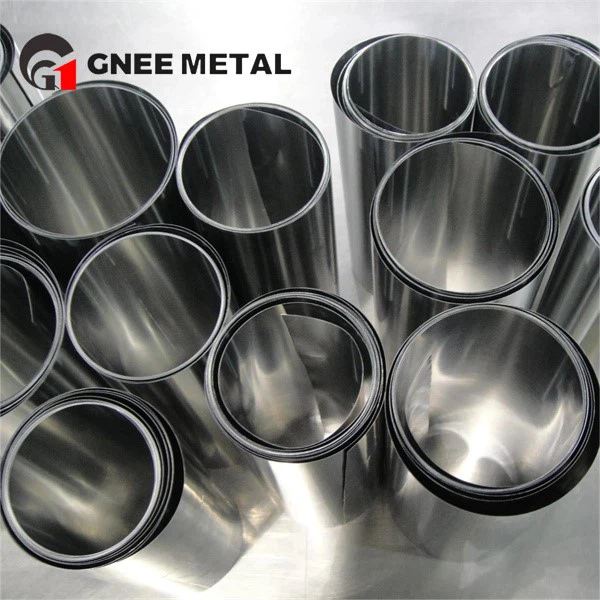
| Titanium Strips & Coils | Cold-Rolled Strip, Precision Foil, Coiled Strip | Grade 1, 2, 5 (Ti-6Al-4V), 12 | Thickness: 0.02mm (Foil) - 5mm Width: 5mm - 500mm Coil Weight: Up to 1000kg |
Bellows, Medical Stents, Gaskets, Honeycomb Cores, Springs, Electronic Components |
| Titanium Wires | Welding Wire, Spring Wire, Fastener Wire, Mesh Wire, Medical Suture Wire | Grade 1, 2, 4, 5 (Ti-6Al-4V), ELI (Extra Low Interstitial) | Diameter: 0.05mm - 10mm Condition: Annealed, Hard-Drawn Form: Coils, Spools, Straight Lengths |
3D Printing (Wire-AM), Welding Filler, Chemical Mesh, Orthodontic Archwires, Fishing Leaders, Springs |
Our factory
Our factory specializes in the field of international trade of titanium materials, professionally producing high-quality series products such as titanium tubes, titanium bars, titanium plates, titanium wires, and titanium strips. The factory is equipped with internationally advanced production and testing equipment, including precision forging units, high-speed cold rolling mills, vacuum melting furnaces, CNC spinning machines, continuous drawing production lines, and automated surface treatment systems. Coupled with precision testing instruments such as spectrometers and ultrasonic flaw detectors, we ensure precise control over the entire process from raw materials to finished products. We are committed to providing global customers with titanium products that offer excellent performance and a complete range of specifications through stable and reliable processes and strict quality management, meeting the application needs of high-end industries such as energy, chemical, aerospace, and medical fields.

Titanium product packaging
We place great emphasis on the transportation safety and delivery quality of our products. All titanium materials are packaged using strict industrial-grade solutions: titanium tubes and bars undergo anti-rust treatment, are tightly wrapped with waterproof stretch film, and then placed in reinforced wooden or iron boxes lined with moisture-proof paper, with fillers added to prevent sliding and collisions during transportation. Titanium plates and strips are covered with protective film, fitted with edge protectors, separated layer by layer with moisture-proof paper, loaded onto sturdy wooden or steel pallets, and securely fastened with steel straps. Fine titanium wires are neatly coiled onto specialized spools and encapsulated in sealed boxes that are waterproof and dustproof. Each packaging unit is accompanied by clear product labels, material certificates, and moisture-proof indicators, ensuring that the goods remain intact, clearly labeled, and safely delivered to global customers through long-distance sea freight and multimodal transportation.

Discuss Your Project Requirements


