


Are you looking for a material that combines strength, durability, and lightweight properties? Titanium-welded pipes might just be the perfect solution for your next project. With an array of advantages, it's no wonder that titanium pipes are becoming increasingly popular across industries such as aerospace, medical, and new energy. Here's why you should consider titanium welded tubes
Superior Strength with Light Weight
Titanium welded tubes offer incredible tensile strength, ranging from 300-900 MPa. To put this into perspective, that's much higher than 304 stainless steel pipes (520 MPa) and 6061 aluminum pipes (290 MPa). And yet, titanium pipes have only 60% of the density of steel.
Aerospace
A satellite propulsion system switched to high-strength titanium tubing, reducing the wall thickness by 30%, increasing pressure resistance by 15%, and cutting weight by 35%. This directly boosted payload capacity by 5%.
Deep-sea Exploration
Lightweight titanium tubes are 40% lighter than steel pipes, offering 20% better resistance to deformation and 2.5 times the lifespan of traditional steel pipes. They remain stable even in high-pressure environments.
Energy Efficiency Meets Lightweight Design in Electric Vehicles
The low density of titanium (4.51 g/cm³) makes it an ideal material for the automotive industry, especially in electric vehicles (EVs). With the increasing demand for lightweight components, welded titanium tubing offer optimal solutions.
A leading EV manufacturer replaced steel with titanium tubing in their engine cooling systems. The weight of each pipe dropped from 1.2 kg to 0.6 kg, resulting in a 5% increase in range and an 8% boost in cooling system efficiency.
While corrosion-resistant titanium piping has a slightly higher initial cost, its corrosion resistance is superior to aluminum, and its service life is twice as long. The overall lifecycle cost is comparable to aluminum, making titanium a more economical option.


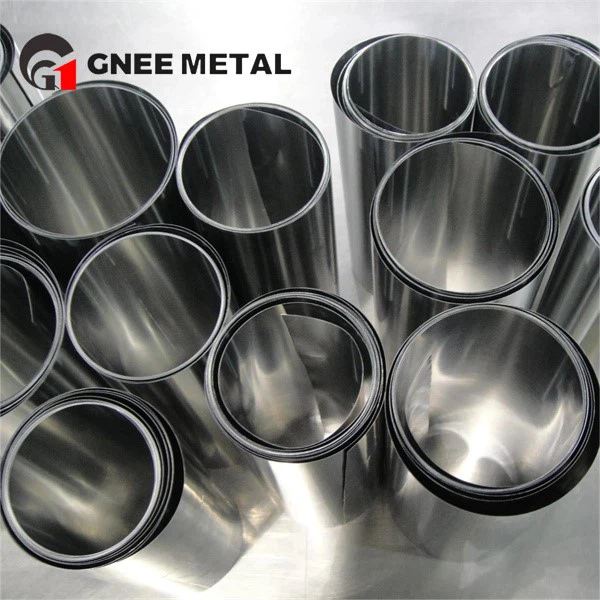
Unmatched Corrosion Resistance: A Game-Changer for Marine and Chemical Sectors
Titanium naturally forms a stable oxide layer (TiO₂) on its surface, providing remarkable resistance to corrosive environments, including concentrated acids and seawater.
In the South China Sea, a heat exchanger using titanium welded tubes has remained corrosion-free for 3 years, while 316L stainless steel pipes showed signs of corrosion within a year. The corrosion rate of titanium pipes is only 0.002 mm/year-one-tenth that of stainless steel pipes.
A chemical company found that replacing stainless steel with titanium pipes saved 30% in maintenance costs over 10 years. The titanium material doesn't require regular re-coating, saving both time and money.
Wide Temperature Tolerance for Extreme Environments
Titanium alloys remain stable across an impressive temperature range from -253°C to 500°C, making them perfect for both cryogenic and high-temperature applications.
A spacecraft's liquid oxygen delivery system used welded titanium piping, which retained 99.8% sealing after 50,000 thermal cycles from -196°C to +200°C. In comparison, aluminum pipes failed after just 2,000 cycles.
In the petrochemical industry, high-strength titanium piping outperformed nickel-based alloys in high-temperature environments (500°C), with costs 40% lower and no need for annual replacements.
Dimensionally Stable with Minimal Thermal Expansion
Titanium has a low thermal expansion coefficient (8.6×10⁻⁶/°C), much lower than carbon steel (12×10⁻⁶/°C) or aluminum (23×10⁻⁶/°C), ensuring it won't deform under temperature fluctuations.
A company that replaced its steam pipes with titanium tubing saw a 30% reduction in pipe expansion, an 80% drop in flange leak rates, and fewer repairs-from 8 per year to just 2. In semiconductor manufacturing, the pipes improved fluid transport accuracy by 10%, reducing the scrap rate from 3% to 1.5%.
Biocompatibility: The Safe Choice for Medical Implants
In orthopedic applications, welded titanium pipes components for artificial joints have a loosening rate of only 2% after 10 years, compared to 6% for cobalt-chromium alloys. Infections post-surgery are also reduced by 40%.
3D-printed titanium welded tubing is highly customizable, reducing recovery times by 30%, and with a low re-stenosis rate of just 5% over 5 years, it offers both safety and functionality.
Cost-Effective Over Its Lifetime
Though titanium welded piping cost about 30% more upfront than traditional materials, their long lifespan makes them more economical in the long run. Titanium piping last 15 years in corrosive environments-2.5 times longer than 316L stainless steel and 4 times longer than carbon steel.
For a marine platform, initial spending on titanium welded pipes was $200,000 higher, but over the next 10 years, maintenance savings amounted to $600,000, with a payback period of just 4 years. Furthermore, titanium welded piping reduce carbon emissions by 40% over their lifespan, supporting low-carbon manufacturing.
Expanding Applications from Cutting-Edge Technology to Everyday Use
Titanium alloy welded pipes are no longer just for aerospace and deep-sea exploration. They're making their way into more industries:
New Energy: Titanium's heat resistance makes it an ideal solution for hydrogen storage and transportation, especially where aluminum pipes face limitations.
Medical: Replacing cobalt-chromium alloys, titanium-welded tubes reduce infection rates and improve patient recovery.
Marine Engineering: Offering ten times the corrosion resistance of stainless steel, titanium alloy welded pipes are becoming a staple in deep-sea equipment.
Why Choose Titanium Welded Piping?
Titanium welded piping combine outstanding properties that make them an attractive option for industries requiring high performance and durability. Whether you're in aerospace, medical, new energy, or marine sectors, titanium offers solutions that improve efficiency, reduce long-term costs, and enhance safety.
Discuss Your Project Requirements
Our product range
| Product Category | Standard Forms / Types | Common Grades (ASTM) | Typical Dimensions / Specifications | Key Applications |
|---|---|---|---|---|
| Titanium Pipes & Tubes | Seamless Pipe, Welded Tube, Heat Exchanger Tubes, Condenser Tubes, Capillary Tubes | Grade 1, 2, 3, 5 (Ti-6Al-4V), 7, 9 (Ti-3Al-2.5V), 12 | OD: 0.5mm - 300mm+ Wall Thickness: 0.1mm - 20mm Length: Custom up to 15m |
Aerospace, Chemical Processing, Marine, Power Plant Condensers, Bicycle Frames, Medical Implants |
| Titanium Sheets & Plates | Hot-Rolled Plate, Cold-Rolled Sheet, Checker Plate (Flooring) | Grade 1, 2, 3, 5 (Ti-6Al-4V), 7, 12 | Thickness: 0.1mm - 100mm+ Width: Up to 2000mm Length: Up to 6000mm |
Chemical Tanks, Pressure Vessels, Architectural Cladding, Marine Hardware, Armor Plating, Heat Exchangers |
| Titanium Bars & Rods | Round Bar, Square Bar, Hex Bar, Forged Bar, Wire Rod | Grade 1, 2, 4, 5 (Ti-6Al-4V), 7, 12 | Diameter/Size: 1mm - 500mm+ Length: 1000mm - 6000mm (Std.), Custom |
Fasteners (Bolts, Nuts), Surgical Implants, Pump Shafts, Valve Components, Golf Clubs, Marine Shafting |
| Titanium Strips & Coils | Cold-Rolled Strip, Precision Foil, Coiled Strip | Grade 1, 2, 5 (Ti-6Al-4V), 12 | Thickness: 0.02mm (Foil) - 5mm Width: 5mm - 500mm Coil Weight: Up to 1000kg |
Bellows, Medical Stents, Gaskets, Honeycomb Cores, Springs, Electronic Components |
| Titanium Wires | Welding Wire, Spring Wire, Fastener Wire, Mesh Wire, Medical Suture Wire | Grade 1, 2, 4, 5 (Ti-6Al-4V), ELI (Extra Low Interstitial) | Diameter: 0.05mm - 10mm Condition: Annealed, Hard-Drawn Form: Coils, Spools, Straight Lengths |
3D Printing (Wire-AM), Welding Filler, Chemical Mesh, Orthodontic Archwires, Fishing Leaders, Springs |
Our factory
Our factory specializes in the field of international trade of titanium materials, professionally producing high-quality series products such as titanium tubes, titanium bars, titanium plates, titanium wires, and titanium strips. The factory is equipped with internationally advanced production and testing equipment, including precision forging units, high-speed cold rolling mills, vacuum melting furnaces, CNC spinning machines, continuous drawing production lines, and automated surface treatment systems. Coupled with precision testing instruments such as spectrometers and ultrasonic flaw detectors, we ensure precise control over the entire process from raw materials to finished products. We are committed to providing global customers with titanium products that offer excellent performance and a complete range of specifications through stable and reliable processes and strict quality management, meeting the application needs of high-end industries such as energy, chemical, aerospace, and medical fields.

Titanium product packaging
We place great emphasis on the transportation safety and delivery quality of our products. All titanium materials are packaged using strict industrial-grade solutions: titanium tubes and bars undergo anti-rust treatment, are tightly wrapped with waterproof stretch film, and then placed in reinforced wooden or iron boxes lined with moisture-proof paper, with fillers added to prevent sliding and collisions during transportation. Titanium plates and strips are covered with protective film, fitted with edge protectors, separated layer by layer with moisture-proof paper, loaded onto sturdy wooden or steel pallets, and securely fastened with steel straps. Fine titanium wires are neatly coiled onto specialized spools and encapsulated in sealed boxes that are waterproof and dustproof. Each packaging unit is accompanied by clear product labels, material certificates, and moisture-proof indicators, ensuring that the goods remain intact, clearly labeled, and safely delivered to global customers through long-distance sea freight and multimodal transportation.

Discuss Your Project Requirements


