


Overview of TA15 Titanium Alloy: The Performance Code of a Near-α Alloy
(1) Chemical Composition and Alloy Characteristics
TA15 titanium alloy has a nominal composition of Ti-6.5Al-2Zr-1Mo-1V. In this formulation:
The α-stabilizing element Al (Aluminum) provides crucial solid solution strengthening, with an aluminum equivalent of 6.58%.
The neutral element Zr (Zirconium) acts as a stabilizer.
The β-stabilizing elements Mo (Molybdenum) and V (Vanadium) work together to improve the alloy's workability.
This composition gives TA15 the unique advantages of a "near-α type" alloy: it possesses the excellent thermal strength of α-type alloys, good weldability, and the workability close to that of α+β type alloys.
(2) Physical and Mechanical Properties
TA15 excels in high-temperature performance and specific strength.
High-Temperature Performance: It can operate stably for up to 3000 hours at 500°C, with a service life extending to about 6000 hours at 450°C. It can briefly withstand instantaneous temperatures up to 800°C.
Specific Strength: At room temperature, its tensile strength is ≥930 MPa, while its density is only about 4.5 g/cm³. This results in a specific strength (strength-to-density ratio) significantly better than that of stainless steel and nickel-based alloys, making it ideal for weight-critical aerospace applications.
Core Performance Analysis: Three Major Advantages
(1) Excellent High-Temperature Stability and Creep Resistance
As a high-aluminum equivalent near-α alloy, TA15 maintains over 70% of its strength at 500°C and exhibits outstanding creep resistance. This makes it a key material for components like aero-engine combustion chamber casings and spacecraft skins that must endure extreme heat and stress.
(2) Excellent Weldability and Structural Adaptability
TA15's welding behavior is similar to α-type alloys. It is suitable for various welding processes (TIG, electron beam), with weld seam strength reaching 90%-95% of the base metal. Complex annealing is often not required post-welding. This facilitates the manufacturing of integrated structures like aircraft fuselage frames and engine welded rings.
(3) Multi-Environment Corrosion Resistance and Surface Protection
TA15 demonstrates good corrosion resistance in marine climates, acid-base media, and even nuclear radiation environments. The addition of Mo enhances its resistance to chloride-ion (Cl⁻) corrosion. For use above 600°C, spraying an Al-Si coating can significantly improve its oxidation resistance.
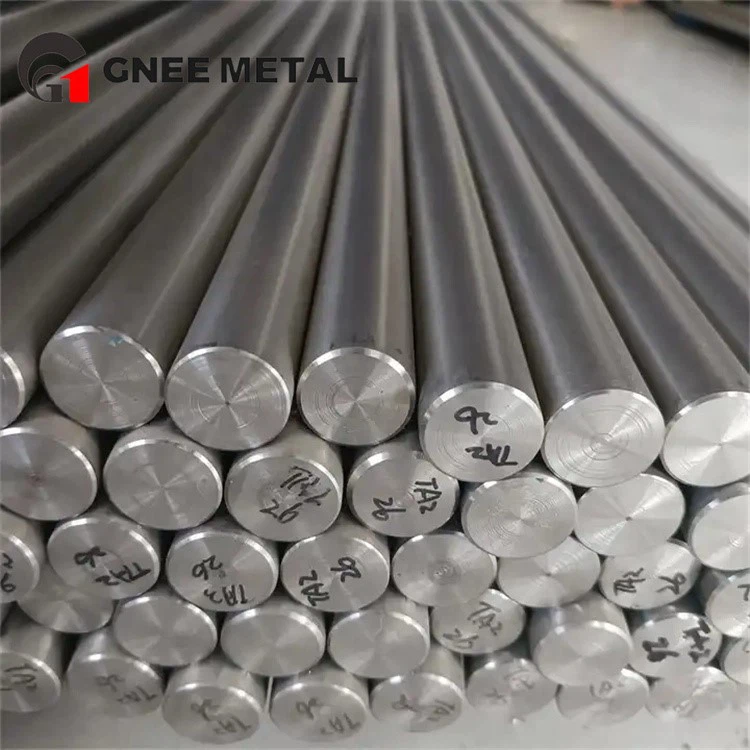


Application Fields: From Aerospace to High-End Equipment
(1) Aerospace: Core Material for High-Temperature Load-Bearing Components
Engines: Widely used in combustion chamber casings, compressor blades, and nozzle flaps, where its high-temperature strength and stability are critical.
Airframes: Applied as sheets, plates, and forgings in thermal barrier zones of supersonic aircraft (e.g., wing leading edges), achieving 30%-40% weight reduction.
Spacecraft: Used in cabin section frameworks and other structures requiring high strength and corrosion resistance in extreme environments.
(2) Shipbuilding and Marine Engineering: The "Deep-Sea Guardian"
Its excellent corrosion resistance and high strength make it suitable for:
Submarine pressure hulls and propeller fairings.
Key components in seawater desalination plants and offshore wind power structures.
(3) Energy and Chemical Industries: A Reliable Choice for Harsh Environments
Nuclear & Geothermal: Used in reactor cooling system liners and geothermal pipes, thanks to its corrosion and radiation resistance.
Chemical Equipment: An ideal material for reactors and heat exchangers handling corrosive media, offering longer service life and lower maintenance costs than stainless steel.
Processing Technology and Key Points: Precision Control
(1) Melting and Casting: Triple Vacuum Arc Remelting
TA15 ingots are typically produced through three cycles of Vacuum Arc Remelting (VAR) to ensure exceptional chemical homogeneity and low impurity content. Castings are made using vacuum arc skull furnaces to minimize oxidation.
(2) Hot Forming and Welding: Precise Temperature Control
Hot Forming: For processes like hot stamping of plates, heating must be precisely controlled between 850-950°C (below the β-transus temperature) to prevent grain coarsening. Cooling is primarily done by air cooling to avoid residual stresses from rapid quenching.
Welding: Vacuum electron beam welding or laser welding are preferred. Post-weld stress relief annealing at 600-650°C is essential to eliminate residual stresses and improve weld toughness.
(3) Surface Treatment and Heat Treatment
Surface Treatment: For use above 600°C, an Al-Si oxidation-resistant coating is applied. For marine environments, pickling/passivation with nitric-hydrofluoric acid enhances corrosion resistance.
Heat Treatment: The standard heat treatment involves solution treatment at 910-980°C followed by air cooling, and then aging at 530-580°C. For forgings requiring higher fracture toughness, β annealing can be performed.
Discuss Your Project Requirements
Our product range
| Category | Product Name | Common Specifications (Available Upon Request) | Key Applications | |
|---|---|---|---|---|
| Titanium Tube | Seamless Titanium Tube Welded Titanium Tube |
ASTM B338 Gr1, Gr2, Gr5, Gr7, Gr9, Gr12 OD: 1mm - 300mm Wall Thickness: 0.5mm - 20mm Standards: ASTM, ASME, DIN, JIS |
Heat Exchangers, Condensers, Chemical Processing, Aerospace, Marine, Medical Implants | Get Free Sample & Evaluation |
| Titanium Sheet/Plate | Titanium Sheet Titanium Plate |
ASTM B265 Gr1, Gr2, Gr5, Gr7, Gr9, Gr12 Thickness: 0.1mm - 100mm Width: Up to 2000mm Conditions: Hot Rolled, Cold Rolled, Annealed |
Chemical Vessels, Pressure Vessels, Aerospace Structures, Marine Hardware, Architectural Cladding, Anodes | Get Free Sample & Evaluation |
| Titanium Bar/Rod | Titanium Round Bar Titanium Hexagon Bar Titanium Square Bar |
ASTM B348 Gr1, Gr2, Gr5, Gr7, Gr9, Gr12 Diameter/Section: 3mm - 300mm Length: As per requirement Forms: Forged, Rolled, Turned & Polished |
Fasteners, Valve Parts, Pump Shafts, Surgical Instruments, Sports Equipment, Automotive Components | Get Free Sample & Evaluation |
| Titanium Wire | Titanium Coil Wire Straight Titanium Wire Welding Wire |
ASTM B863 Gr1, Gr2, Gr5, Gr7, Gr9, Gr12 Diameter: 0.1mm - 10mm Forms: Annealed, Pickled Spool Weight: Customizable |
Welding Filler, 3D Printing (Wire Arc), Springs, Mesh, Medical Staples & Sutures, Fishing Tackle | Get Free Sample & Evaluation |
| Titanium Strip/Foil | Titanium Strip (Coil) Titanium Foil |
ASTM B265 Gr1, Gr2 Thickness: 0.03mm - 2.0mm Width: Up to 600mm Surface: Bright, Matte, Pickled |
Bellows, Gaskets, Honeycomb Structures, Heat Shields, Precision Instrument Parts, Battery Current Collectors | Get Free Sample & Evaluation |
Our factory
Our factory operates a dedicated production facility equipped with modern machinery for processing titanium. We have a complete set of equipment including forging presses, hot and cold rolling mills, tube drawing and welding lines, bar & wire drawing machines, and surface treatment units. This allows us to control the production process from raw material to finished products such as sheets, plates, tubes, bars, and wires. Our workshop is capable of handling large-volume orders while maintaining consistent quality across our product range.

Titanium product packaging
Our packaging is designed for maximum security and international standards. We use tailored wooden crates for heavy plates and bars, with internal waterproof wrapping and blocking to prevent movement. Tubes and coils are securely packed in wooden boxes with reinforced edges and protective end caps. For smaller items like wires and strips, we use standard export cartons with inner plastic and moisture-proof sealing. All packages are clearly marked with product details, weight, and handling instructions to ensure safe arrival. We can also customize packing methods, such as palletization or container optimization, based on specific shipping and customer requirements.

Discuss Your Project Requirements


