


1. Alloy Overview
TA7 is a medium-strength, alpha-type titanium alloy whose properties cannot be enhanced by heat treatment; it is typically used in the annealed condition. It possesses excellent fracture toughness at both room and elevated temperatures, good fusion weldability (TIG and MIG under inert gas protection) and is used for components such as casing housings and wall panels. Long-term service temperature reaches 500°C, with short-term service up to 800°C. TA7 ELI (low interstitial) is suitable for low-temperature applications.
2. Grades and Designations
| Item | Value |
|---|---|
| Material grades | TA7, TA7 ELI, ZTA7 (cast) |
| International designation | Ti-5Al-2.5Sn (US), BT5-1 (Russia) - national equivalents, per respective standards |
| Key standards | GB, GJB (Chinese military), HB (aerospace), AMS |
3. Heat Treatment Regimes
| Operation | Parameters |
|---|---|
| Annealing - sheet | 700-800°C, 10-120 min, air cool |
| Annealing - bars & forgings | 750-850°C, 0.5-4 h, air cool |
| Annealing - castings | 600-700°C, 1-2 h, air or furnace cool |
| Stress relief | 540-650°C, 15-360 min, air or furnace cool |
| HIP (castings) | 910±10°C, 100-140 MPa argon, 2-2.5 h, furnace cool below 300°C |
4. Melting and Casting
Ingots undergo two or more vacuum arc remelting (VAR) cycles. Al and Sn are added as an Al-Sn master alloy; consumable electrodes are joined by plasma welding under argon (TIG prohibited). Castings are produced in vacuum arc skull furnaces.
5. Key Properties
Melting temperature range: 1540-1650°C
Magnetic: non-magnetic
Corrosion: stable in atmosphere and seawater; more susceptible to hot-salt stress corrosion than TC4 (e.g. stress corrosion after 100 h in artificial sea-salt at 316°C under 207 MPa stress)
Phase transformation: beta→alpha+beta transus 1040-1090°C; alpha→alpha+beta transus 930-970°C
6. Microstructure and Welding
Below the alpha→alpha+beta transus (~950°C) the equilibrium microstructure is single-phase alpha; rapid cooling forms alpha' or alpha'' phases which decompose to alpha on annealing. The alloy welds well: TIG/MIG under inert gas maintains high low-temperature toughness. Brazing is generally avoided due to intermetallic brittleness. Argon-arc, spot and seam welding are commonly used; argon-arc joints show high strength coefficients at room, high and low temperatures.
7. Applications
Engine adapter mounts, front casing housings, sealing ring housings (die forgings and rings), plus liners, bracket mounts and wall panels formed by hot pressing of sheet - used in the aviation industry.
8. Caution
TA7 is relatively sensitive to brittleness from higher interstitial and impurity levels, especially at cryogenic temperatures - control chemistry carefully.
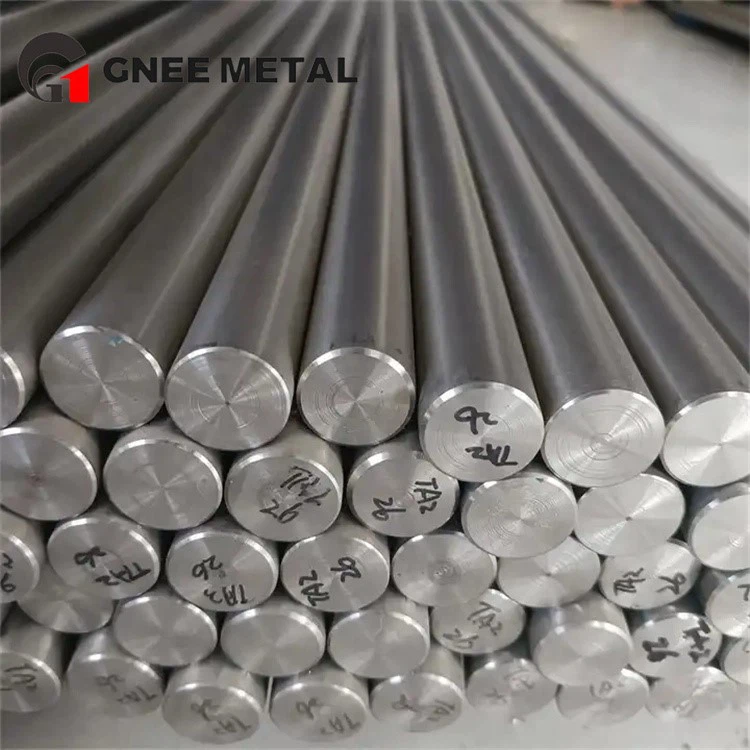


Our product range
| Category | Product Name | Common Specifications (Available Upon Request) | Key Applications | |
|---|---|---|---|---|
| Titanium Tube | Seamless Titanium Tube Welded Titanium Tube |
ASTM B338 Gr1, Gr2, Gr5, Gr7, Gr9, Gr12 OD: 1mm - 300mm Wall Thickness: 0.5mm - 20mm Standards: ASTM, ASME, DIN, JIS |
Heat Exchangers, Condensers, Chemical Processing, Aerospace, Marine, Medical Implants | Get Free Sample & Evaluation |
| Titanium Sheet/Plate | Titanium Sheet Titanium Plate |
ASTM B265 Gr1, Gr2, Gr5, Gr7, Gr9, Gr12 Thickness: 0.1mm - 100mm Width: Up to 2000mm Conditions: Hot Rolled, Cold Rolled, Annealed |
Chemical Vessels, Pressure Vessels, Aerospace Structures, Marine Hardware, Architectural Cladding, Anodes | Get Free Sample & Evaluation |
| Titanium Bar/Rod | Titanium Round Bar Titanium Hexagon Bar Titanium Square Bar |
ASTM B348 Gr1, Gr2, Gr5, Gr7, Gr9, Gr12 Diameter/Section: 3mm - 300mm Length: As per requirement Forms: Forged, Rolled, Turned & Polished |
Fasteners, Valve Parts, Pump Shafts, Surgical Instruments, Sports Equipment, Automotive Components | Get Free Sample & Evaluation |
| Titanium Wire | Titanium Coil Wire Straight Titanium Wire Welding Wire |
ASTM B863 Gr1, Gr2, Gr5, Gr7, Gr9, Gr12 Diameter: 0.1mm - 10mm Forms: Annealed, Pickled Spool Weight: Customizable |
Welding Filler, 3D Printing (Wire Arc), Springs, Mesh, Medical Staples & Sutures, Fishing Tackle | Get Free Sample & Evaluation |
| Titanium Strip/Foil | Titanium Strip (Coil) Titanium Foil |
ASTM B265 Gr1, Gr2 Thickness: 0.03mm - 2.0mm Width: Up to 600mm Surface: Bright, Matte, Pickled |
Bellows, Gaskets, Honeycomb Structures, Heat Shields, Precision Instrument Parts, Battery Current Collectors | Get Free Sample & Evaluation |
Our factory
Our factory operates a dedicated production facility equipped with modern machinery for processing titanium. We have a complete set of equipment including forging presses, hot and cold rolling mills, tube drawing and welding lines, bar & wire drawing machines, and surface treatment units. This allows us to control the production process from raw material to finished products such as sheets, plates, tubes, bars, and wires. Our workshop is capable of handling large-volume orders while maintaining consistent quality across our product range.

Titanium product packaging
Our packaging is designed for maximum security and international standards. We use tailored wooden crates for heavy plates and bars, with internal waterproof wrapping and blocking to prevent movement. Tubes and coils are securely packed in wooden boxes with reinforced edges and protective end caps. For smaller items like wires and strips, we use standard export cartons with inner plastic and moisture-proof sealing. All packages are clearly marked with product details, weight, and handling instructions to ensure safe arrival. We can also customize packing methods, such as palletization or container optimization, based on specific shipping and customer requirements.

Discuss Your Project Requirements


