


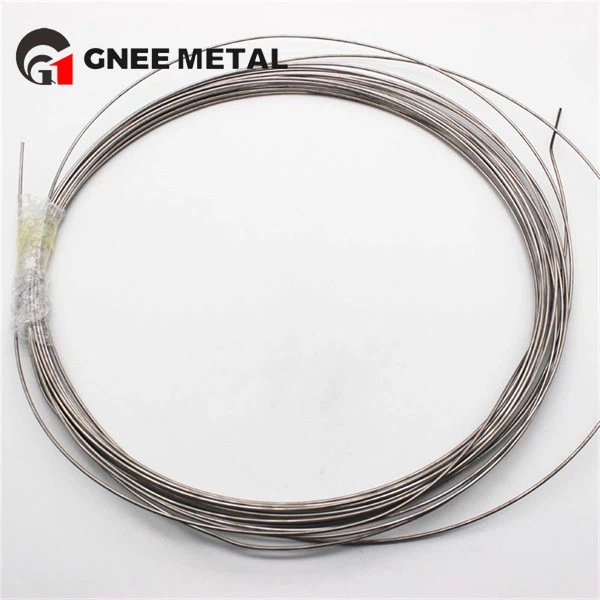

Titanium Alloy Wire
What is Titanium Alloy Wire?
Titanium is a silver-white metal with many excellent properties. For example, the density of titanium is 4.54g/cm3, which is 43% lighter than steel, but its mechanical strength is similar to that of steel. And titanium is resistant to high temperatures and has a melting point of 1942K, which is nearly 500K higher than steel. In recent years, with the continuous research of titanium, more and more products made for titanium can be found in our daily life and titanium wires are one of them.
Professional titanium material supplier - GNEE
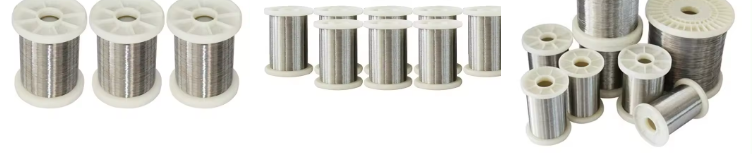
Available Titanium Alloy Grades
| Grade | UNS Number | Alloy Type | Key Characteristics | Primary Applications |
|---|---|---|---|---|
| Grade 5 | R56400 | Ti-6Al-4V | High strength, most widely used titanium alloy | Aerospace, medical, high-performance industrial |
| Grade 7 | R52400 | Ti-0.15Pd | Enhanced reducing acid corrosion resistance | Chemical processing, aggressive environments |
| Grade 9 | R56320 | Ti-3Al-2.5V | Intermediate strength, excellent formability | Aerospace tubing, sports equipment, marine |
| Grade 12 | R53400 | Ti-0.3Mo-0.8Ni | Corrosion resistance, medium strength | Chemical processing, desalination, oil & gas |
| Grade 19 | R58640 | Ti-3Al-8V-6Cr-4Zr-4Mo | Beta alloy, ultra-high strength | Springs, fasteners, high-performance |
| Grade 23 | R56401 | Ti-6Al-4V ELI | Extra low interstitial, medical grade | Implantable medical devices |
| Grade 32 | R55111 | Ti-5Al-1Sn-1Zr-1V-0.8Mo | Medium strength, good elevated temperature | Gas turbine components |
Chemical Composition (%)
| Element | Grade 5 | Grade 7 | Grade 9 | Grade 12 | Grade 23 |
|---|---|---|---|---|---|
| Titanium (Ti) | Balance | Balance | Balance | Balance | Balance |
| Aluminum (Al) | 5.5-6.75 | - | 2.5-3.5 | - | 5.5-6.50 |
| Vanadium (V) | 3.5-4.5 | - | 2.0-3.0 | - | 3.5-4.5 |
| Palladium (Pd) | - | 0.12-0.25 | - | - | - |
| Molybdenum (Mo) | - | - | - | 0.2-0.4 | - |
| Nickel (Ni) | - | - | - | 0.6-0.9 | - |
| Iron (Fe) max | 0.40 | 0.30 | 0.25 | 0.30 | 0.25 |
| Oxygen (O) max | 0.20 | 0.25 | 0.15 | 0.25 | 0.13 |
| Carbon (C) max | 0.08 | 0.08 | 0.08 | 0.08 | 0.08 |
| Nitrogen (N) max | 0.05 | 0.03 | 0.03 | 0.03 | 0.05 |
| Hydrogen (H) max | 0.015 | 0.015 | 0.015 | 0.015 | 0.012 |
Physical Properties
| Property | Grade 5 | Grade 7 | Grade 9 | Grade 12 | Grade 23 |
|---|---|---|---|---|---|
| Density (g/cm³) | 4.43 | 4.51 | 4.48 | 4.51 | 4.43 |
| Density (lb/in³) | 0.160 | 0.163 | 0.162 | 0.163 | 0.160 |
| Melting Point (°C) | 1600-1660 | 1660-1700 | 1600-1660 | 1620-1680 | 1600-1660 |
| Beta Transus (°C) | 970-1000 | 890-920 | 935-945 | 890-920 | 970-1000 |
| Thermal Cond. (W/m·K) | 6.7 | 16.4 | 7.5 | 15.5 | 6.7 |
| Electrical Res. (μΩ·m) | 1.78 | 0.56 | 1.40 | 0.60 | 1.78 |
| Modulus (GPa) | 114 | 105 | 105 | 105 | 114 |
| CTE (µm/m·°C) | 8.6 | 8.6 | 9.5 | 8.8 | 8.6 |
| Magnetic | Non | Non | Non | Non | Non |
Mechanical Properties (Annealed Condition)
| Property | Grade 5 | Grade 7 | Grade 9 | Grade 12 | Grade 23 |
|---|---|---|---|---|---|
| Tensile Strength (MPa) | 895-1000 | 345-450 | 620-760 | 485-620 | 860-1000 |
| Tensile Strength (ksi) | 130-145 | 50-65 | 90-110 | 70-90 | 125-145 |
| Yield Strength (MPa) | 825-950 | 275-380 | 480-620 | 380-520 | 790-950 |
| Yield Strength (ksi) | 120-138 | 40-55 | 70-90 | 55-75 | 115-138 |
| Elongation (%) | 10-15 | 20-30 | 15-25 | 18-28 | 12-18 |
| Reduction of Area (%) | 20-35 | 30-45 | 25-40 | 30-45 | 30-45 |
| Hardness (HRC) | 30-36 | - | 20-26 | - | 28-34 |
| Hardness (HV) | 310-360 | 145-180 | 240-280 | 180-220 | 290-340 |
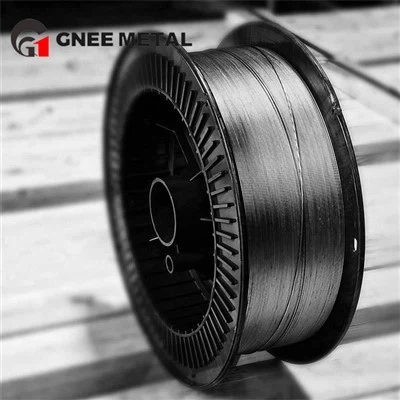
According to the different properties of titanium and titanium alloys, titanium wire with different requirements can be prepared, generally divided into pure titanium wire, titanium alloy wire, pure titanium glasses wire, titanium straight wire, titanium welding wire, titanium hanging wire, titanium coil wire, titanium bright wire, medical titanium wire, titanium nickel alloy wire, etc.
Titanium wire applications
At present, more than 80% of titanium and titanium alloy wires are used as welding wires, such as welding of various titanium equipment, welding pipes, repair welding of turbine discs and blades of aircraft jet engines, and welding of casings.
Due to its excellent corrosion resistance, titanium wire has been widely used in chemical, pharmaceutical, papermaking, and other industries. It can be made into a mesh for seawater filter, purified water filter, chemical drug filter, etc.
Industry-leading titanium production technology
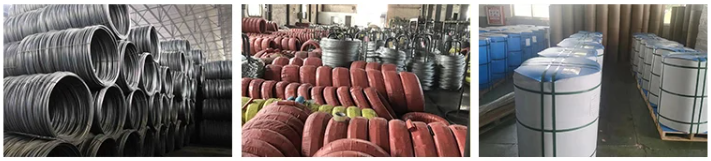
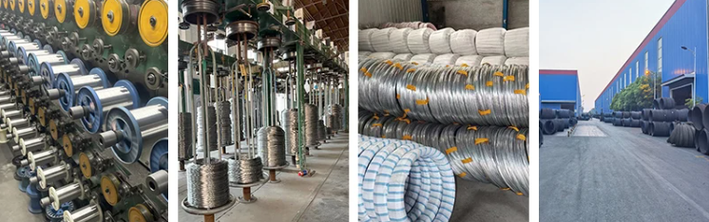
About us
Our factory is a state-of-the-art titanium wire production facility spanning 12,000 square meters, equipped with 16 precision wire drawing lines, vacuum annealing furnaces, and ultrasonic cleaning systems to ensure superior surface quality and dimensional accuracy. We operate under ISO 9001:2015 and AS9100D certifications, with an annual production capacity exceeding 500 tons of titanium and titanium alloy wire across all major alloy grades including 5, 7, 9, 12, and 23. Our in-house metallurgical laboratory performs 100% traceability testing including chemical analysis (OES), mechanical testing, and hydrogen content verification, ensuring every spool meets ASTM, AWS, AMS, and customer specifications. From micro-fine wire for medical devices to heavy wire for industrial components, we deliver precision-wound spools, straight lengths, and custom-packaged wire to clients worldwide.
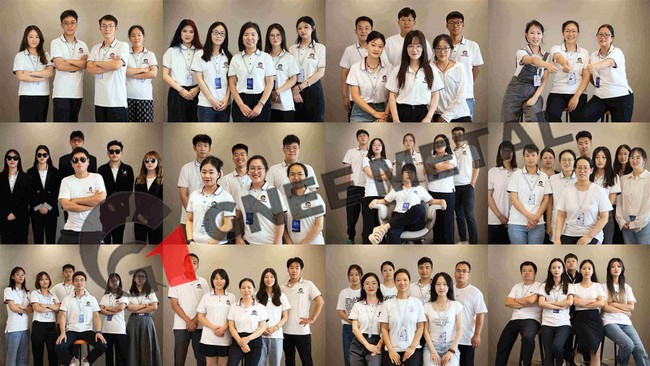
Trustworthy Team

FAQ
Q: Are there different grades of titanium wires?
A: Yes, titanium is available in various grades, each with specific properties suited for different applications. Common grades include commercially pure titanium (CP Grade 1-4) and titanium alloys (e.g., Ti-6Al-4V).
Q: How is the corrosion resistance of titanium wires beneficial?
A: Titanium's exceptional corrosion resistance makes it suitable for use in environments where exposure to corrosive elements is a concern. This property extends the lifespan of components made from titanium wires.
Q: Can titanium wires be used in jewelry?
A: Yes, titanium wires are commonly used in the jewelry industry due to their durability, corrosion resistance, and hypoallergenic properties. Titanium jewelry is often favored for its lightweight feel and resistance to tarnish.
Q: Are there any limitations or considerations when working with titanium wires?
A: While titanium wires offer many advantages, there are some challenges, such as difficulties in machining and welding. Specialized equipment and expertise may be required, and costs associated with processing titanium can be higher compared to other materials.
Professional Team
Customer visits

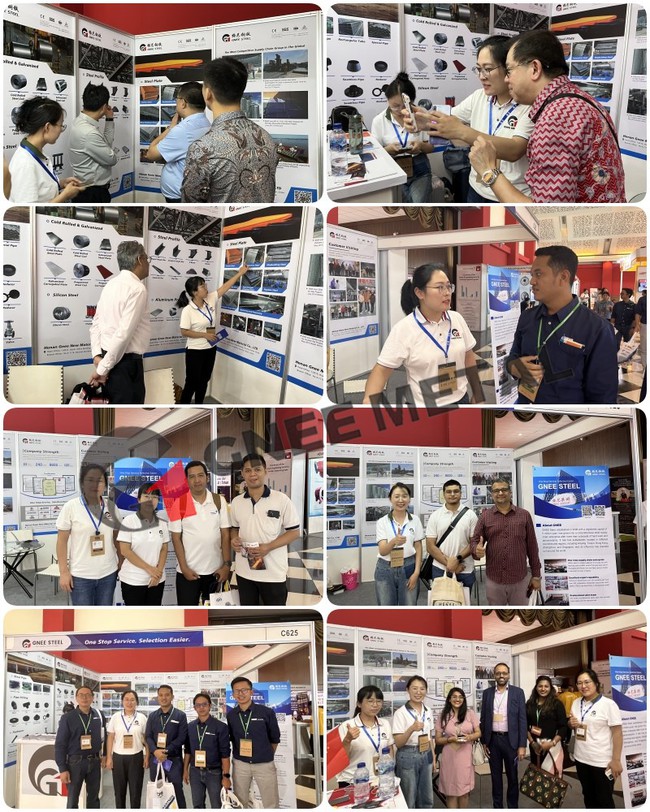
GNEE Participation in Exhibitions
Hot Tags: titanium alloy wire, China titanium alloy wire manufacturers, suppliers, factory, titanium, Titanium Gr9 Wire Industry, titanium wire for beauty treatments, thin Gr5 titanium wire, Gr5 Titanium Round Wire, titanium wire for industrial manufacturing, titanium wire for inverters
You Might Also Like


Send Inquiry