


Products Description
Titanium Gr 5 Gr7 Gr9 Straight Pipe
Thin Walled Gr23 Capillary Titanium Tubes
Grade 2 High Purity Titanium Foil
In the automotive industry, mufflers, as core components of exhaust systems, have long faced the dilemma of high-temperature oxidation, thermal fatigue, and lightweight design. Traditional materials (such as stainless steel and pure titanium) are prone to performance degradation under extreme operating conditions. However, titanium alloys, with their high specific strength, excellent corrosion resistance, and high-temperature stability, are gradually becoming the material of choice for high-end automotive mufflers. This article focuses on the technological innovations of titanium alloys in automotive mufflers, analyzing how material optimization has achieved significant performance improvements.
Extreme Operating Challenges of Automotive Mufflers
Automotive exhaust systems must withstand temperatures of 700-800°C (far exceeding motorcycle exhaust temperatures) and are subject to attack from corrosive components in exhaust gases (such as SO₂ and NOx). Traditional materials have the following limitations:
1. Pure titanium (JIS grade 2): It easily forms a hard, brittle oxide layer at high temperatures, leading to surface flaking and reduced fatigue strength. Experiments show that after 200 hours of continuous exposure to 800°C, the oxide layer thickness of pure titanium increases by 15μm and its flexural strength decreases by 40%.
2. Stainless steel: Inadequate corrosion resistance makes it susceptible to leakage due to oxide scale shedding after long-term use. In a simulated exhaust environment, a stainless steel muffler developed corrosion perforation after only 500 hours of operation.
3. Early titanium alloys (such as the Ti-1.5Al prototype): While offering improved oxidation resistance, their high-temperature strength is insufficient, making them difficult to meet the molding requirements of complex muffler structures. At 400°C, their tensile strength is only 550 MPa, a limited improvement over pure titanium.
Key contradiction: The need to simultaneously achieve high-temperature oxidation resistance, high strength, and good ductility to withstand the extreme environment downstream of the muffler center pipe (700-800°C).
Ti-1.5Al Titanium Alloy: Technological Breakthrough and Performance Verification
To address these challenges, the industry has developed an improved Ti-1.5Al titanium alloy, achieving significant performance improvements through composition optimization and process control.
1. Composition Design and Anti-Oxidation Mechanism
Al Element Control: Adding 1.5% Al forms a dense Al₂O₃ protective film, inhibiting oxygen diffusion into the titanium matrix. Experimental data shows that the oxidation rate of the improved Ti-1.5Al at 800°C is 60% lower than that of pure titanium, and the oxide layer exfoliation rate is reduced from 15μm/h to 2μm/h.
Trace Element Synergy: Introducing 0.1% Y (yttrium) refines the grain size and prevents grain boundary embrittlement caused by oxidation. The addition of Y increases the material's elongation after fracture from 12% to 15%, meeting the requirements of muffler stamping.
Heat Treatment: A solution treatment plus aging (STA) treatment is used, maintaining the material at 550°C for 4 hours followed by air cooling, to achieve full β-phase transformation and achieve a balance between strength and ductility.
2. High-Temperature Performance Comparison
At 400°C, the improved Ti-1.5Al achieves a flexural strength of 480 MPa, three times that of pure titanium; and a tensile strength of 550 MPa, two times that of pure titanium. In a high-temperature cycling test at 800°C, its strength decay rate is less than 5%, compared to over 20% for pure titanium.
3. Processability and Reliability
Formability: The improved Ti-1.5Al's ductility (elongation after fracture ≥15%) supports stamping and bending processes for complex pipes, increasing yield by 25% compared to earlier titanium alloys.
Thermal Stability: After 1000 hours of high-temperature cycling testing (700-800°C), the material exhibited no surface cracks, with the oxide layer thickness increasing by only 8μm.
International Certification: Registered with ASTM standards in 2009, it received market access approval from five countries, including the United States, the United Kingdom, and Germany, becoming the first high-temperature-resistant titanium alloy to be mass-produced by mainstream automotive manufacturers.

Technical Advantages and Application Scenarios of Titanium Alloy Mufflers
1. Lightweight and Energy-Saving Benefits
The density of titanium alloy (4.5g/cm³) is only 60% of that of stainless steel. For example, the use of titanium alloy in a luxury car muffler reduced its weight from 8.2kg to 5.6kg, a 32% reduction. Actual vehicle tests showed a 2.1% decrease in fuel consumption and a 5.8g/km reduction in CO2 emissions.
2. Improved Durability
In a simulated 100,000km road test, the titanium alloy muffler:
The oxide layer thickness increased by only 8μm (compared to 45μm for stainless steel);
No fatigue cracks occurred (multiple through-cracks occurred in stainless steel);
Exhaust resistance fluctuations were less than 3% (compared to 15% for stainless steel), minimizing power loss.
3. Typical Application Cases
High-Performance Vehicles: The Porsche 911 Turbo S uses a titanium alloy muffler, achieving a 12kg weight reduction, more precisely tuned sound, and a 0.2 second reduction in 0-100km/h acceleration time.
Hybrid Vehicles: The Toyota Prius Prime uses a titanium alloy center tube to reduce heat loss, improving the efficiency of the battery thermal management system by 8% and increasing the all-electric range by 6km.
Racing: The F1 racing car's muffler uses a titanium alloy thin-walled tube (0.8mm thick), which has been tested at 1000°C for two hours without failure and is 40% lighter than a stainless steel solution.
The application of titanium alloy in automotive mufflers represents a perfect fusion of materials science and engineering practice. From innovative Ti-1.5Al compositions to international standard certification, titanium alloys not only address the industry's pain points of high-temperature oxidation and strength degradation, but also drive the evolution of automotive exhaust systems towards lightweight, long-life, and low-emissions performance. With breakthroughs in additive manufacturing and surface engineering technologies, titanium alloy mufflers will become standard equipment for high-end cars and new energy vehicles, contributing key material solutions to global carbon reduction goals.
Titanium specifications provided by GNEE
CNC machined parts
|
Type
|
Drilling, Etching,Chemical Machining, Laser MachiningMilling, Other Machining Service, Turning, Wire EDM,Rapid Prototyping
|
|||
|
Material
|
Titanium,Aluminum, Brass, Bronze, Copper, Hardened Metal, Pre-cious Metal, Stainless Steel, Steel Alloy
|
|||
|
Process
|
CNC Machining,CNC Turning, CNC Milling, CNC Boring,CNC Grinding,CNC Drilling
|
|||
|
Surface Treatment
|
Anodizing,Plating,Polishing,Sandblasting,Laser Engraving,Oxide Black,Nickel Plating,Chrome Plat Or Customer's Requirements
|
|||
|
Tolerance
|
+/-0.01mm
|
|||
|
Lead Time
|
Sample: 7 days
|
|||
|
Mass Production
|
2-3 weeks
|
|||
|
Package
|
Standard Carton Or Plastic Tray, Sponge Tray, CardboardTray, etc., Can Be Customized According To CustomerRequirements
|
|||
|
Application
|
Appliance,Auto, Building, Capital equipment, Energy,Instrumentation,Medical device.Telecommunications
|
|||
Titanium tube
|
Material |
Pure Titanium/ Titanium Alloy |
|
Standard |
GB/T 3624,GB/T 3625,GB/T 26057
ASTM B337,ASTM B338,ASTM B861,ASTM B862 JIS H 4630 |
|
Common Grade |
National standard grades: TA1, TA2, TC4, TA9, TA18, TA10 |
|
|
Length: 50-6000mm or according to customer requirements |
|
Outer diameter: 6-80mm or according to customer requirements |
|
|
Wall thickness: 0.35-10mm or according to customer requirements |
|
|
Production Process |
Welding or Seamless |
|
Section shape |
Round and others |
|
Surface |
Bright annealing, Pickling,Polishing |
|
Packing |
Coil or straight length by boxes |
Titanium rod
|
item |
Titanium Bars /Titanium Rod |
|
Standard |
GB/T2965-2007,JIS H4650-2001,ASTM B348-06,DIN17862-93, ASTM F136,AMS4928,GB/T13810,Q/BS5331-91,etc |
|
Grade |
TA1,TA2,TA3,TA7,TA9,TA10,TC4,TC4ELI,TC6,TC9,TC10,TC11, GR1,GR2,GR3,GR5,GR7,GR12 |
|
Diameter |
1-500mm |
|
Length |
1-12m |
|
Surface |
Black,polish,brush,hair line,etc |
|
Package |
Standard export package ,by wooden box ,or as required |
|
Application |
Titanium bar Is mainly used in machinery and equipment, electroplate equipment, medical and all kinds of precision parts and other industries |
Titanium Sheet/Coil
|
Titanium Plate and sheet Type |
Plate, Sheet, Strip, Coils, Foils, Flats, Clad Plate, Plain Sheet, Rolling Sheet, Rolling Plate, Flat Shim, Flat Sheet, Shim |
|
Grade |
Gr1 Gr2 Gr3 Gr4 Gr7 Gr9 Gr12 ASME SB265,AMS 4911,AMS 4919,AMS 4914,ASTM F67,ASTM F136, MSRR, AMS, BS |
|
Titanium Alloy Plate Length |
1000mm-13000mm or as required |
|
Titanium Plate Width |
1000mm-1219mm-1500mm-1800mm-2000mm-2500mm or as required |
|
UNS Plate Thickness |
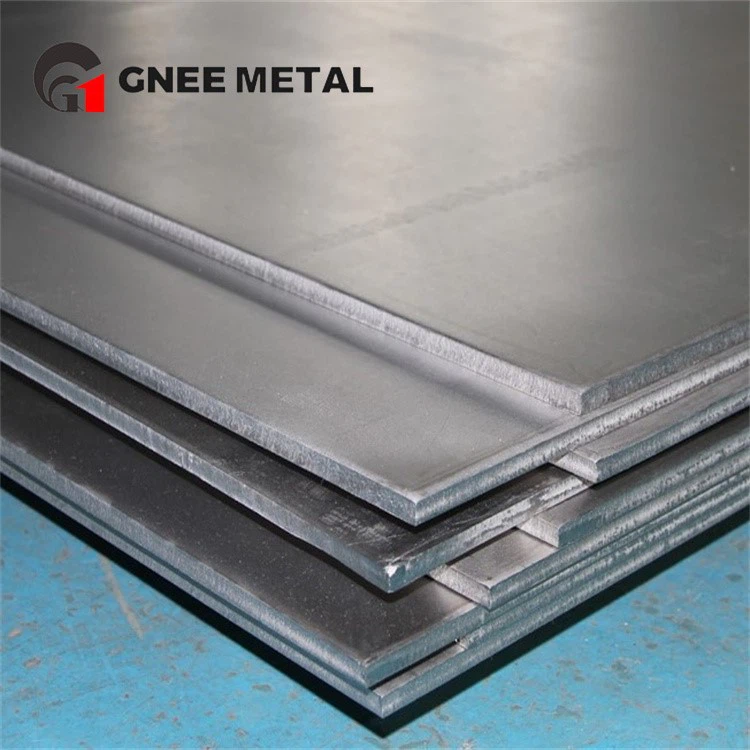
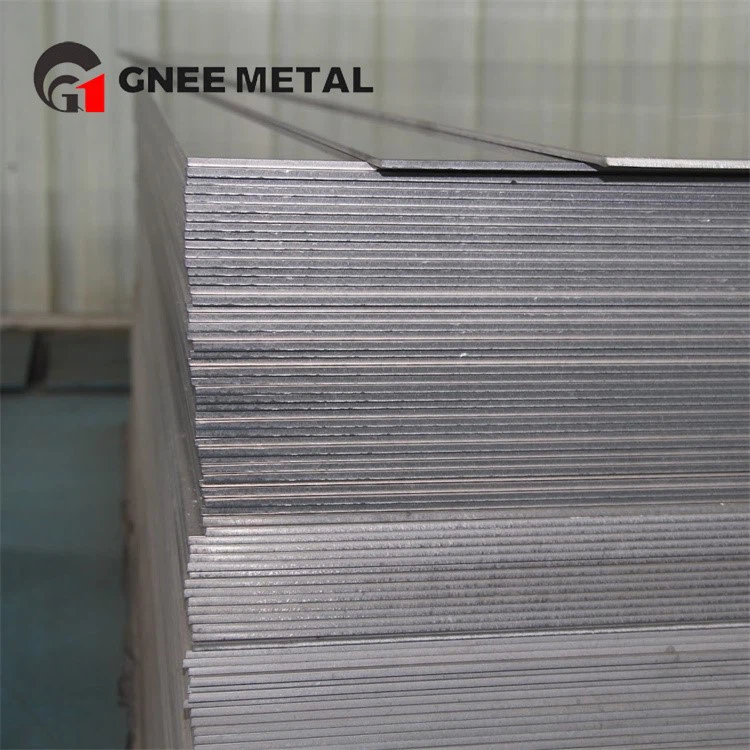
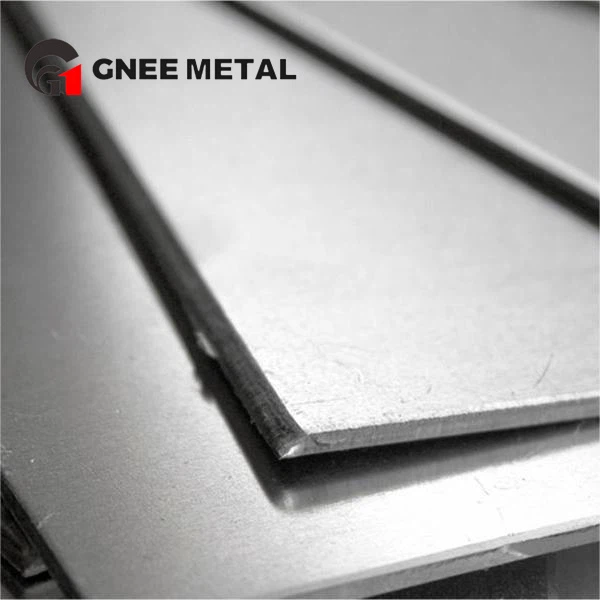
0.3 to 120mm or as required |
|
ASTM B265 Titanium Alloy Plate Process |
Hot/ Cold Rolled/forging |
|
Titanium Sheet ASTM |
ASTM B265 |
|
Titanium Sheet AMS |
AMS 4902 |
|
Tolerances of width and thickness |
EN 10258 (formerly DIN 59381),EN 10151 ASTM B265 Titanium Alloy strip for springs,EN 10088 ASTM B265 Titanium Alloy strip |
|
Cp Titanium Plate standards and approvals |
EN ISO 18286 EN 10051 EN 10088-1 ISO 15510 EN ISO 9445 ASTM A 480 ASTM A 959 ASME IID |
|
Standard Plate & Sheet Sizes |
1000 x 2000 mm, 1220 x 2440 mm, 1500 x 3000 mm, 2000 x 2000 mm, 2000 x 4000 mm |
|
Cold rolled Titanium Plate 0.5-6.4 mm |
|
|
Hot rolled Titanium Plate 3.0–60.0 mm |
|
|
UNS Plate Hardness |
Soft, Hard, Half Hard, Quarter Hard, Spring Hard ASTM B265 Titanium Alloy Sheet suppliers |
|
Availability of Titanium Alloy Foil sizes |
Thickness : 8-100 microns (0.00031-0.004 in) |
|
Width: Up to 500 mm (19.5 in) |
|
|
Weight (in rolls) : Up to 50 kg (110 lb); e.g. approxi- mately 1400 m at 8 microns and ap- proximately 112 m at 100 microns. |
|
|
Cutting |
To provide a comprehensive service, we use a variety of cutting methods, including: |
|
Plasma profiles |
As per customer's drawings |
|
Value added services for Cp Titanium Plate |
Laser cutting, Waterjet cutting, Plasma cutting, Bending and mechanical processing, edge preparation, welding, sawing and |
|
China Titanium Plate Manufacturer |
ASTM B265 Titanium Alloy Plate: material 3/16″ [5.00 mm] and over in thickness and over 10″ [250 mm] in width; Titanium Sheet: |
|
UNS Plate Origin |
CHINA |
|
Packing of DIN plate |
Bundles with waterproof cloth outside or plywood box |
|
Test |
UT, SGS testing, TUV etc |
titanium wire
|
Product Name |
Factory direct titanium wire pure titanium alloy wire special specifications can be sold |
|
Material |
Pure titanium and Titanium alloy |
|
Titanium Grade |
GR1/GR2/GR3/Gr4/GR5/GR7/GR9/GR12/Gr5Eli/Gr23
ERTi-1/ERTi-2/ERTi-3/ERTi-4/ERTi-5Eli/ERTi-7/ERTi-9/ERTi-11/ERTi-12 Ti15333/Nitinol Alloy |
|
Standard |
AWS A5.16/ASTM B863/ASME SB863, ASTMF67, ASTM F136, ISO-5832-2(3) etc |
|
Shape |
Titanium Coil Wire/Titanium Spool Wire/Titanium Straight Wire |
|
Wire Gauge |
Dia(0.06--6) *L |
|
Process |
Bar billets-hot rolling-drawing-annealing-strength-pickling |
|
Surface |
Polishing, picking, acid washed, black oxide |
|
Main Technique |
Hot Forged; Hot Rolled; Cold drawn; Straighten etc |
|
Material Milling Certificate |
According to. EN 10204.3.1 |
|
Application |
Welding, Industry, Medical, Aerospace, Electronic etc |
The company boasts leading domestic titanium processing production lines, including:
German-imported precision titanium tube production line (annual production capacity: 30,000 tons);
Japanese-technology titanium foil rolling line (thinnest to 6μm);
Fully automated titanium rod continuous extrusion line;
Intelligent titanium plate and strip finishing mill;
The MES system enables digital control and management of the entire production process, achieving product dimensional accuracy of ±0.01μm.


