


When it comes to titanium alloys used in medical applications, you might wonder if F136 titanium alloy is medical-grade and how it compares to G23 titanium. In this post, we'll explore the medical properties of F136 and examine the key differences between F136 and G23 titanium alloys. By the end, you'll better understand which material best suits your needs.
Medical Properties of F136 Titanium Alloy
Yes, it is indeed medical-grade! It is specifically designed to meet the requirements set by the American Society for Testing and Materials (ASTM). With its excellent biocompatibility, corrosion resistance, and lightweight nature, F136 titanium alloy is widely used in the medical field. Whether you're considering it for body piercings such as ear studs or lip rings, or for more critical applications like orthopedic implants and dental implants, F136 titanium is a top choice.
Key Medical Advantages
Excellent biocompatibility
Superior fatigue resistance
High corrosion resistance in body fluids
Non-magnetic and MRI compatible
Excellent osseointegration
Suitable for long-term implant applications
Compared to 316L stainless steel, it offers superior quality and performance, making it more suitable for implantable medical devices. Its hypoallergenic properties also make it a safer option for long-term use inside the human body, ensuring fewer complications and better patient outcomes.
ASTM F136 Specifications
ASTM F136 is the international standard for Titanium-6Aluminum-4Vanadium ELI (Extra Low Interstitial) alloy used in surgical implants and medical devices. Compared with standard Grade 5 titanium, ASTM F136 offers improved biocompatibility, enhanced fatigue resistance, and tighter chemical composition control, making it the preferred material for long-term implant applications.
| Item | Specification |
|---|---|
| Material | Ti-6Al-4V ELI |
| ASTM Standard | ASTM F136 |
| UNS Number | R56401 |
| Material Grade | Grade 23 |
| Product Forms | Bar, Rod, Wire, Plate, Sheet, Forging |
| Manufacturing Process | Hot Rolled / Cold Drawn / Forged |
| Surface Finish | Pickled, Polished, Ground, Machined |
| Certification | EN10204 3.1 / ISO 9001 |
| MOQ | 1 Piece |
| Custom Service | Cutting, CNC Machining, Custom Dimensions |
Is F136 Titanium Alloy Medical-Grade? And How Does It Compare to G23?
Yes. ASTM F136 titanium alloy is one of the most widely recognized medical-grade titanium materials used for long-term implantable devices. It is based on Ti-6Al-4V ELI (Extra Low Interstitial), which corresponds to Grade 23 (UNS R56401). Compared with standard Grade 5 titanium, F136/G23 contains lower levels of oxygen and iron, providing improved ductility, fracture toughness, and fatigue resistance-critical properties for orthopedic and dental implants.
Although the terms ASTM F136 and Grade 23 (G23) are often used interchangeably, they are not exactly the same. Grade 23 refers to the titanium alloy grade, while ASTM F136 is the medical specification that defines the chemical composition, mechanical properties, manufacturing requirements, and quality standards for surgical implant applications.
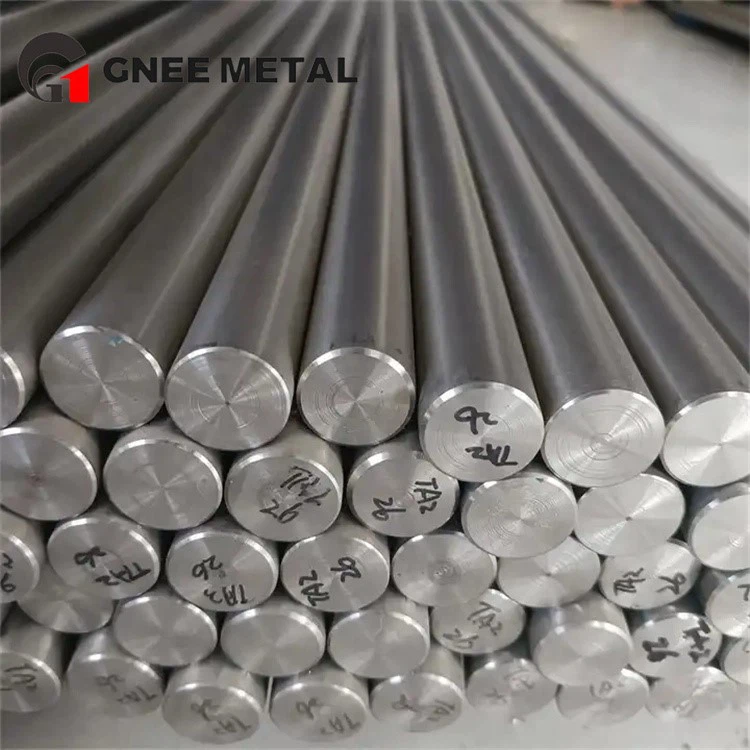


Which Titanium Alloy Should You Choose?
Both F136 and G23 titanium alloys are excellent choices for medical applications, but your decision depends on the specific requirements of your project. If you're looking for a titanium alloy suitable for a wide range of medical devices, F136 might be the way to go. However, if you need a material with ultra-low interstitials for long-term implants, then G23 titanium is the ideal choice.
Discuss Your Project Requirements
ASTM F136 vs ASTM F67
| Property | ASTM F136 | ASTM F67 |
|---|---|---|
| Material | Ti-6Al-4V ELI | Commercially Pure Titanium |
| UNS | R56401 | R50250 / R50400 / R50550 / R50700 |
| Strength | ★★★★★ High | ★★★ Moderate |
| Fatigue Resistance | Excellent | Good |
| Biocompatibility | Excellent | Excellent |
| Implant Applications | Permanent Implants | Medical Devices & Some Implants |
| Cost | Higher | Lower |
Choose ASTM F136 when high strength and long-term implant performance are required. Choose ASTM F67 when maximum corrosion resistance and excellent formability are more important than strength.
Medical Applications of ASTM F136 Titanium
| Industry | Typical Components | Benefits |
|---|---|---|
| Orthopedics | Bone Plates, Bone Screws, Hip & Knee Implants | High fatigue strength and long implant life |
| Dental | Dental Implants, Abutments | Excellent osseointegration |
| Spine Surgery | Spinal Fixation Systems | High mechanical reliability |
| Trauma Devices | Trauma Plates, Intramedullary Nails | Excellent fracture toughness |
| Surgical Instruments | Forceps, Scissors, Clamps | Corrosion resistant and lightweight |
| Medical Devices | Implant Components | Long-term biocompatibility |
Our product range
| Category | Product Name | Common Specifications (Available Upon Request) | Key Applications | |
|---|---|---|---|---|
| Titanium Tube | Seamless Titanium Tube Welded Titanium Tube |
ASTM B338 Gr1, Gr2, Gr5, Gr7, Gr9, Gr12 OD: 1mm - 300mm Wall Thickness: 0.5mm - 20mm Standards: ASTM, ASME, DIN, JIS |
Heat Exchangers, Condensers, Chemical Processing, Aerospace, Marine, Medical Implants | Get Free Sample & Evaluation |
| Titanium Sheet/Plate | Titanium Sheet Titanium Plate |
ASTM B265 Gr1, Gr2, Gr5, Gr7, Gr9, Gr12 Thickness: 0.1mm - 100mm Width: Up to 2000mm Conditions: Hot Rolled, Cold Rolled, Annealed |
Chemical Vessels, Pressure Vessels, Aerospace Structures, Marine Hardware, Architectural Cladding, Anodes | Get Free Sample & Evaluation |
| Titanium Bar/Rod | Titanium Round Bar Titanium Hexagon Bar Titanium Square Bar |
ASTM B348 Gr1, Gr2, Gr5, Gr7, Gr9, Gr12 Diameter/Section: 3mm - 300mm Length: As per requirement Forms: Forged, Rolled, Turned & Polished |
Fasteners, Valve Parts, Pump Shafts, Surgical Instruments, Sports Equipment, Automotive Components | Get Free Sample & Evaluation |
| Titanium Wire | Titanium Coil Wire Straight Titanium Wire Welding Wire |
ASTM B863 Gr1, Gr2, Gr5, Gr7, Gr9, Gr12 Diameter: 0.1mm - 10mm Forms: Annealed, Pickled Spool Weight: Customizable |
Welding Filler, 3D Printing (Wire Arc), Springs, Mesh, Medical Staples & Sutures, Fishing Tackle | Get Free Sample & Evaluation |
| Titanium Strip/Foil | Titanium Strip (Coil) Titanium Foil |
ASTM B265 Gr1, Gr2 Thickness: 0.03mm - 2.0mm Width: Up to 600mm Surface: Bright, Matte, Pickled |
Bellows, Gaskets, Honeycomb Structures, Heat Shields, Precision Instrument Parts, Battery Current Collectors | Get Free Sample & Evaluation |
Our factory
Our factory operates a dedicated production facility equipped with modern machinery for processing titanium. We have a complete set of equipment including forging presses, hot and cold rolling mills, tube drawing and welding lines, bar & wire drawing machines, and surface treatment units. This allows us to control the production process from raw material to finished products such as sheets, plates, tubes, bars, and wires. Our workshop is capable of handling large-volume orders while maintaining consistent quality across our product range.

Titanium product packaging
Our packaging is designed for maximum security and international standards. We use tailored wooden crates for heavy plates and bars, with internal waterproof wrapping and blocking to prevent movement. Tubes and coils are securely packed in wooden boxes with reinforced edges and protective end caps. For smaller items like wires and strips, we use standard export cartons with inner plastic and moisture-proof sealing. All packages are clearly marked with product details, weight, and handling instructions to ensure safe arrival. We can also customize packing methods, such as palletization or container optimization, based on specific shipping and customer requirements.

Discuss Your Project Requirements
FAQ
1. What is ASTM F136 titanium?
ASTM F136 is the standard specification for Ti-6Al-4V ELI (Grade 23) titanium alloy used in surgical implants and medical devices.
2. Is ASTM F136 the same as Grade 23?
Yes. ASTM F136 is the material specification, while Grade 23 (UNS R56401) is the titanium alloy grade defined by that specification.
3. Why is Grade 23 called ELI?
ELI stands for Extra Low Interstitial, meaning lower oxygen, nitrogen, carbon, and iron contents to improve ductility and fracture toughness.
4. What products are available in ASTM F136?
We supply bars, rods, wires, plates, sheets, forgings, and custom-machined components.
5. Is ASTM F136 MRI compatible?
Yes. Grade 23 titanium is non-magnetic and widely used in MRI-compatible medical implants.
6. Can you provide EN10204 3.1 certificates?
Yes. All ASTM F136 materials can be supplied with EN10204 3.1 Mill Test Certificates upon request.
7. What is your minimum order quantity?
Our standard MOQ is 1 piece, with custom dimensions available.
8. Can you manufacture custom sizes?
Yes. We offer custom cutting, CNC machining, and precision fabrication based on customer drawings.


