


Products Description
Titanium Gr 5 Gr7 Gr9 Straight Pipe
Thin Walled Gr23 Capillary Titanium Tubes
Grade 2 High Purity Titanium Foil
Titanium alloys are widely used in high-tech fields such as aviation, aerospace, marine, and chemical engineering due to their lightweight, high strength, excellent corrosion resistance, and high-temperature performance. TA8 titanium alloy, an alloy primarily composed of titanium, aluminum, and vanadium, belongs to the α-β titanium alloy family. It exhibits high strength and excellent oxidation resistance, making it suitable for engineering structures with medium-strength requirements. Key properties of TA8 titanium alloy, such as hardness, melting temperature, and microstructure, directly influence its performance in practical applications. Therefore, studying the relationship between these properties is crucial for further optimizing alloy composition and enhancing its application performance.
TA8 Titanium Alloy Hardness
Hardness is a material's ability to resist external indentation or scratching and is a key indicator for evaluating its mechanical properties. The hardness of TA8 titanium alloy is affected by alloy composition, heat treatment, and processing technology. TA8 alloy typically has a high hardness, approximately HRB 85-90 (Brinell hardness). Aluminum and vanadium in the alloy effectively increase its hardness. The addition of vanadium, in particular, forms stable vanadium compounds, increasing the alloy's deformation resistance. In addition to alloy composition, heat treatment also plays a crucial role in affecting hardness. TA8 titanium alloy can effectively improve its hardness properties through appropriate solution treatment and aging treatments. For example, solution treatment can completely transform the β phase in the alloy into the α phase or α+β phase, thereby enhancing the material's hardness and tensile strength. Aging treatment can further strengthen the precipitated phases, thereby improving hardness and wear resistance.
Melting Temperature Range of TA8 Titanium Alloy
The melting temperature range of TA8 titanium alloy is typically between 1600°C and 1700°C, a wide range primarily related to the alloy's composition and phase structure. The melting point of a titanium alloy is generally influenced by the ratio of α to β phases in the alloy, with the α phase having a higher melting point and the β phase having a lower melting point. The coexistence of α and β phases in TA8 titanium alloy, along with the inclusion of elements such as aluminum and vanadium, reduces the alloy's melting point range. Structural changes during the melting process also affect the melting temperature. For example, when the α-phase content in the alloy is high, the melting temperature approaches the theoretical melting point of titanium (1668°C), while as the β-phase proportion increases, the melting temperature decreases accordingly. Therefore, the melting temperature range of TA8 titanium alloy varies primarily due to the ratio of the α- and β-phases and the solubility of other elements in the alloy.

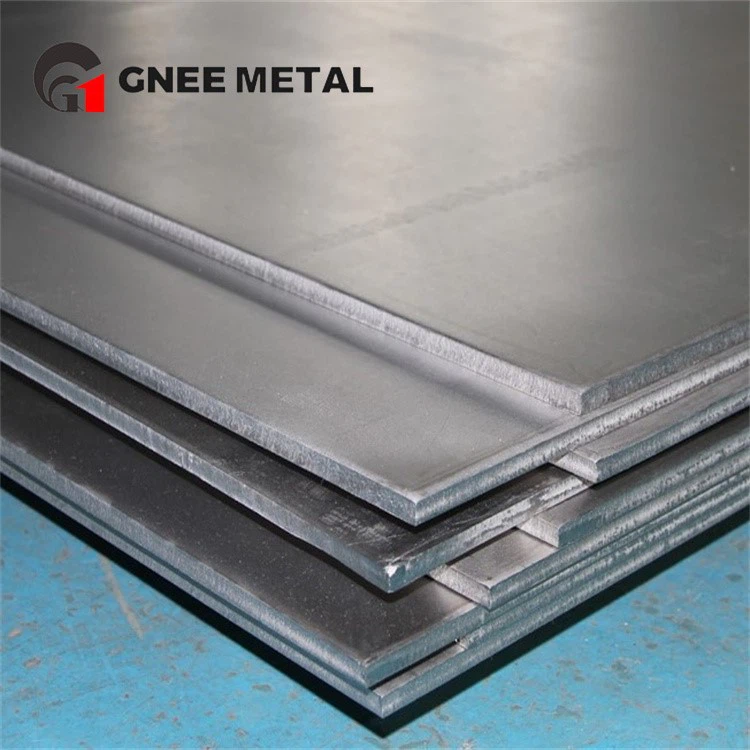
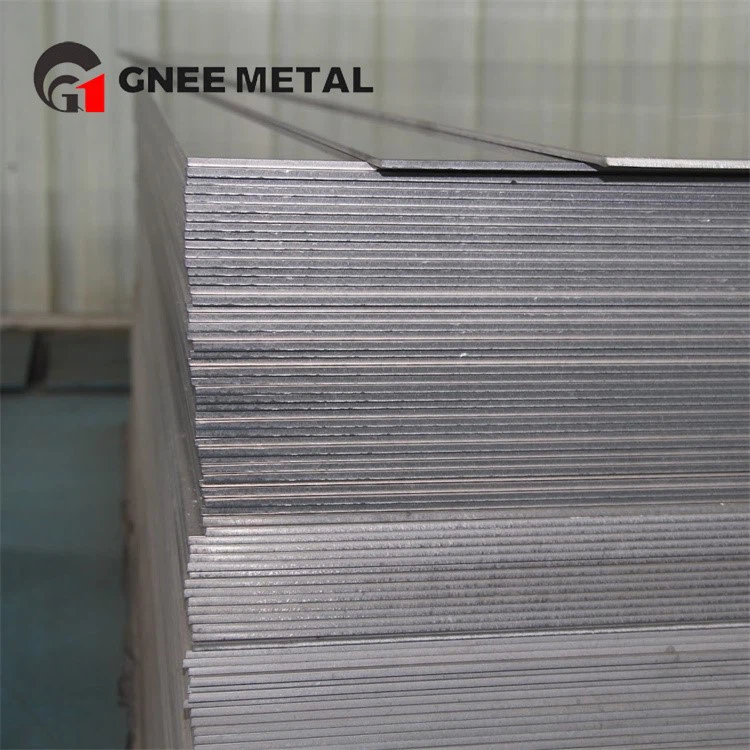
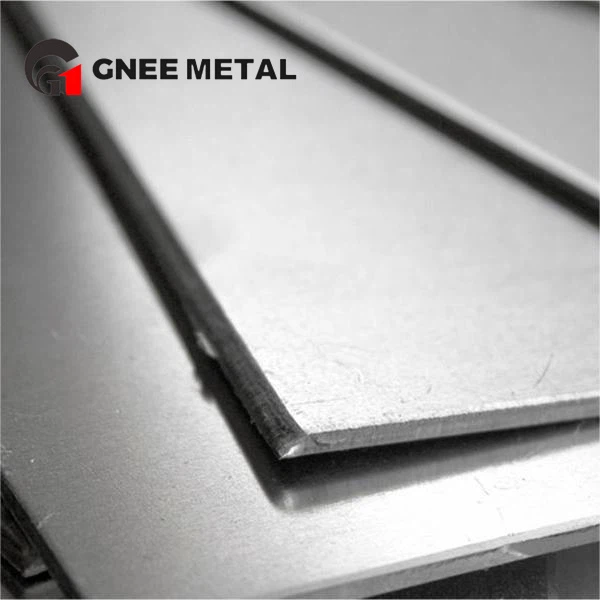
Microstructure of TA8 Titanium Alloy
The microstructure of TA8 titanium alloy has a crucial influence on its mechanical properties. At room temperature, the alloy typically exhibits a coexistence of α and β phases. The α-phase exhibits a close-packed hexagonal structure, which offers high thermal stability and good plasticity; the β-phase exhibits a body-centered cubic structure, which exhibits high ductility and good strength. Therefore, the microstructure of TA8 titanium alloy can be optimized by adjusting the alloy composition and heat treatment. Heat treatment is a key means of influencing the microstructure of TA8 titanium alloy. Solution treatment and aging treatment at different temperatures can adjust the ratio of the α- and β-phases, thereby modifying the alloy's mechanical properties. For example, solution treatment can achieve complete transformation of the β-phase into the α-phase, thereby improving the alloy's strength and hardness. Aging treatment, through the formation of precipitates, further enhances the material's mechanical properties, especially its high-temperature properties. The microstructure of TA8 titanium alloy is also affected by cold working and hot working processes. Cold working refines the alloy's grain size, leading to increased hardness and strength. Hot working improves the material's plasticity and optimizes the alloy's microstructure, reducing brittleness.
Performance Relationship Analysis
The hardness, melting temperature, and microstructure of TA8 titanium alloy are closely related. The alloy's hardness is closely related to the ratio of α and β phases in its microstructure. Generally, the α phase is relatively hard and stable, and increasing the α phase content can increase hardness. The melting temperature is also closely related to the phase structure within the microstructure, with the phase transition temperature between the α and β phases, in particular, having a significant impact on the melting temperature range. The interplay between hardness, melting temperature, and microstructure determines the overall performance of TA8 titanium alloy. Therefore, in practical applications, these properties require optimization through rational composition design and heat treatment processes.
TA8 titanium alloy is an important titanium alloy material with high hardness and a good melting temperature range. Optimizing its microstructure is crucial for enhancing its mechanical properties. By rationally adjusting the alloy composition and optimizing the heat treatment process, its hardness, melting temperature, and overall mechanical properties can be significantly improved. Future research will further explore the effects of trace elements in the alloy on its microstructure and properties, providing more precise theoretical support for the application and performance improvement of TA8 titanium alloy. Therefore, in-depth research on the performance characteristics of TA8 titanium alloy, especially its performance under high temperatures and extreme environments, has important engineering application value and scientific significance.
Titanium specifications provided by GNEE
CNC machined parts
|
Type
|
Drilling, Etching,Chemical Machining, Laser MachiningMilling, Other Machining Service, Turning, Wire EDM,Rapid Prototyping
|
|||
|
Material
|
Titanium,Aluminum, Brass, Bronze, Copper, Hardened Metal, Pre-cious Metal, Stainless Steel, Steel Alloy
|
|||
|
Process
|
CNC Machining,CNC Turning, CNC Milling, CNC Boring,CNC Grinding,CNC Drilling
|
|||
|
Surface Treatment
|
Anodizing,Plating,Polishing,Sandblasting,Laser Engraving,Oxide Black,Nickel Plating,Chrome Plat Or Customer's Requirements
|
|||
|
Tolerance
|
+/-0.01mm
|
|||
|
Lead Time
|
Sample: 7 days
|
|||
|
Mass Production
|
2-3 weeks
|
|||
|
Package
|
Standard Carton Or Plastic Tray, Sponge Tray, CardboardTray, etc., Can Be Customized According To CustomerRequirements
|
|||
|
Application
|
Appliance,Auto, Building, Capital equipment, Energy,Instrumentation,Medical device.Telecommunications
|
|||
Titanium tube
|
Material |
Pure Titanium/ Titanium Alloy |
|
Standard |
GB/T 3624,GB/T 3625,GB/T 26057
ASTM B337,ASTM B338,ASTM B861,ASTM B862 JIS H 4630 |
|
Common Grade |
National standard grades: TA1, TA2, TC4, TA9, TA18, TA10 |
|
|
Length: 50-6000mm or according to customer requirements |
|
Outer diameter: 6-80mm or according to customer requirements |
|
|
Wall thickness: 0.35-10mm or according to customer requirements |
|
|
Production Process |
Welding or Seamless |
|
Section shape |
Round and others |
|
Surface |
Bright annealing, Pickling,Polishing |
|
Packing |
Coil or straight length by boxes |
Titanium rod
|
item |
Titanium Bars /Titanium Rod |
|
Standard |
GB/T2965-2007,JIS H4650-2001,ASTM B348-06,DIN17862-93, ASTM F136,AMS4928,GB/T13810,Q/BS5331-91,etc |
|
Grade |
TA1,TA2,TA3,TA7,TA9,TA10,TC4,TC4ELI,TC6,TC9,TC10,TC11, GR1,GR2,GR3,GR5,GR7,GR12 |
|
Diameter |
1-500mm |
|
Length |
1-12m |
|
Surface |
Black,polish,brush,hair line,etc |
|
Package |
Standard export package ,by wooden box ,or as required |
|
Application |
Titanium bar Is mainly used in machinery and equipment, electroplate equipment, medical and all kinds of precision parts and other industries |
Titanium Sheet/Coil
|
Titanium Plate and sheet Type |
Plate, Sheet, Strip, Coils, Foils, Flats, Clad Plate, Plain Sheet, Rolling Sheet, Rolling Plate, Flat Shim, Flat Sheet, Shim |
|
Grade |
Gr1 Gr2 Gr3 Gr4 Gr7 Gr9 Gr12 ASME SB265,AMS 4911,AMS 4919,AMS 4914,ASTM F67,ASTM F136, MSRR, AMS, BS |
|
Titanium Alloy Plate Length |
1000mm-13000mm or as required |
|
Titanium Plate Width |
1000mm-1219mm-1500mm-1800mm-2000mm-2500mm or as required |
|
UNS Plate Thickness |
0.3 to 120mm or as required |
|
ASTM B265 Titanium Alloy Plate Process |
Hot/ Cold Rolled/forging |
|
Titanium Sheet ASTM |
ASTM B265 |
|
Titanium Sheet AMS |
AMS 4902 |
|
Tolerances of width and thickness |
EN 10258 (formerly DIN 59381),EN 10151 ASTM B265 Titanium Alloy strip for springs,EN 10088 ASTM B265 Titanium Alloy strip |
|
Cp Titanium Plate standards and approvals |
EN ISO 18286 EN 10051 EN 10088-1 ISO 15510 EN ISO 9445 ASTM A 480 ASTM A 959 ASME IID |
|
Standard Plate & Sheet Sizes |
1000 x 2000 mm, 1220 x 2440 mm, 1500 x 3000 mm, 2000 x 2000 mm, 2000 x 4000 mm |
|
Cold rolled Titanium Plate 0.5-6.4 mm |
|
|
Hot rolled Titanium Plate 3.0–60.0 mm |
|
|
UNS Plate Hardness |
Soft, Hard, Half Hard, Quarter Hard, Spring Hard ASTM B265 Titanium Alloy Sheet suppliers |
|
Availability of Titanium Alloy Foil sizes |
Thickness : 8-100 microns (0.00031-0.004 in) |
|
Width: Up to 500 mm (19.5 in) |
|
|
Weight (in rolls) : Up to 50 kg (110 lb); e.g. approxi- mately 1400 m at 8 microns and ap- proximately 112 m at 100 microns. |
|
|
Cutting |
To provide a comprehensive service, we use a variety of cutting methods, including: |
|
Plasma profiles |
As per customer's drawings |
|
Value added services for Cp Titanium Plate |
Laser cutting, Waterjet cutting, Plasma cutting, Bending and mechanical processing, edge preparation, welding, sawing and |
|
China Titanium Plate Manufacturer |
ASTM B265 Titanium Alloy Plate: material 3/16″ [5.00 mm] and over in thickness and over 10″ [250 mm] in width; Titanium Sheet: |
|
UNS Plate Origin |
CHINA |
|
Packing of DIN plate |
Bundles with waterproof cloth outside or plywood box |
|
Test |
UT, SGS testing, TUV etc |
titanium wire
|
Product Name |
Factory direct titanium wire pure titanium alloy wire special specifications can be sold |
|
Material |
Pure titanium and Titanium alloy |
|
Titanium Grade |
GR1/GR2/GR3/Gr4/GR5/GR7/GR9/GR12/Gr5Eli/Gr23
ERTi-1/ERTi-2/ERTi-3/ERTi-4/ERTi-5Eli/ERTi-7/ERTi-9/ERTi-11/ERTi-12 Ti15333/Nitinol Alloy |
|
Standard |
AWS A5.16/ASTM B863/ASME SB863, ASTMF67, ASTM F136, ISO-5832-2(3) etc |
|
Shape |
Titanium Coil Wire/Titanium Spool Wire/Titanium Straight Wire |
|
Wire Gauge |
Dia(0.06--6) *L |
|
Process |
Bar billets-hot rolling-drawing-annealing-strength-pickling |
|
Surface |
Polishing, picking, acid washed, black oxide |
|
Main Technique |
Hot Forged; Hot Rolled; Cold drawn; Straighten etc |
|
Material Milling Certificate |
According to. EN 10204.3.1 |
|
Application |
Welding, Industry, Medical, Aerospace, Electronic etc |
The company boasts leading domestic titanium processing production lines, including:
German-imported precision titanium tube production line (annual production capacity: 30,000 tons);
Japanese-technology titanium foil rolling line (thinnest to 6μm);
Fully automated titanium rod continuous extrusion line;
Intelligent titanium plate and strip finishing mill;
The MES system enables digital control and management of the entire production process, achieving product dimensional accuracy of ±0.01μm.


