


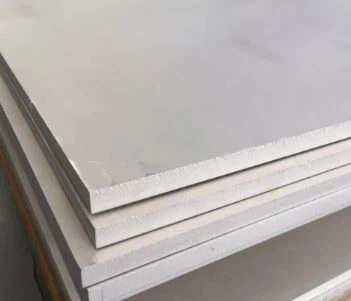


Gr1 Gr2 Gr5 Gr7 Gr12 Titanium Sheet
Grade:Gr1 Gr2 Gr5 Gr7 Gr12
Standard:ASTM B265
Thickness:≥0.5mm
Width:1000-2000mm
Length:≤6000mm(normal size)
Surface:;Pickling/Polished
Technique:Cold Rolling Hot Rolling
What Are Titanium Sheets?
| Grade | Type | Key Strength | Best For |
|---|---|---|---|
| Gr1 | Commercially Pure | Maximum Formability | Deep drawing, severe forming, chemical processing |
| Gr2 | Commercially Pure | Best Balance | General purpose, marine, industrial, pressure vessels |
| Gr5 | Alpha-Beta Alloy | Highest Strength | Aerospace, medical implants, high-performance structures |
| Gr7 | CP with Palladium | Superior Corrosion Resistance | Aggressive chemical processing, reducing acids |
| Gr12 | Near-Alpha Alloy | Enhanced Corrosion + Strength | Chemical processing, hot brines, elevated temperatures |
Chemical Composition by Grade
| Element | Gr1 | Gr2 | Gr5 | Gr7 | Gr12 |
|---|---|---|---|---|---|
| Titanium (Ti) | Balance | Balance | Balance | Balance | Balance |
| Aluminum (Al) | – | – | 5.5-6.5% | – | – |
| Vanadium (V) | – | – | 3.5-4.5% | – | – |
| Palladium (Pd) | – | – | – | 0.12-0.25% | – |
| Molybdenum (Mo) | – | – | – | – | 0.2-0.4% |
| Nickel (Ni) | – | – | – | – | 0.6-0.9% |
| Iron (Fe) max | 0.20% | 0.30% | 0.40% | 0.30% | 0.30% |
| Oxygen (O) max | 0.18% | 0.25% | 0.20% | 0.25% | 0.25% |
| Carbon (C) max | 0.08% | 0.08% | 0.08% | 0.08% | 0.08% |
| Nitrogen (N) max | 0.03% | 0.03% | 0.05% | 0.03% | 0.03% |
| Hydrogen (H) max | 0.015% | 0.015% | 0.015% | 0.015% | 0.015% |
Mechanical Properties (Annealed Condition)
| Property | Gr1 | Gr2 | Gr5 | Gr7 | Gr12 |
|---|---|---|---|---|---|
| Tensile Strength (min) | 240 MPa | 345 MPa | 895 MPa | 345 MPa | 483 MPa |
| Yield Strength (min) | 170 MPa | 275 MPa | 828 MPa | 275 MPa | 345 MPa |
| Elongation (min) | 24% | 20% | 10% | 20% | 18% |
| Hardness (typical) | 120 HB | 150 HB | 32 HRC | 150 HB | 180 HB |
| Modulus of Elasticity | 103 GPa | 103 GPa | 110 GPa | 103 GPa | 105 GPa |
Physical Properties
| Property | Gr1, Gr2, Gr7 | Gr5 | Gr12 | Units |
|---|---|---|---|---|
| Density | 4.51 | 4.43 | 4.51 | g/cm³ |
| Melting Point | 1660-1700 | 1605-1660 | 1660-1700 | °C |
| Thermal Conductivity | 16-19 | 6.7-7.5 | 19-22 | W/m·K |
| Electrical Resistivity | 0.48-0.55 | 1.7-1.8 | 0.52-0.55 | µΩ·m |
| Thermal Expansion | 8.6-9.2 | 8.6-9.2 | 8.9-9.3 | µm/m·°C |
| Magnetic Properties | Non-magnetic | Non-magnetic | Non-magnetic | – |
Applications by Grade
| Industry | Gr1 | Gr2 | Gr5 | Gr7 | Gr12 |
|---|---|---|---|---|---|
| Aerospace | – | Ducting | Structures, components | – | – |
| Medical | – | Instruments | Implants | – | – |
| Chemical Processing | Liners | General | High-strength components | Aggressive acids | Hot brines |
| Marine | – | General | High-performance | – | Elevated temp |
| Industrial | Deep drawing | General purpose | High-strength | Corrosion-critical | Process equipment |
| Architectural | Formed elements | Structural | – | – | – |
| Desalination | – | General | – | Brine heaters | Evaporators |
| Oil & Gas | – | – | Downhole | Sour service | Sour service |
Dimensions
Thickness Range (Sheet)
| Grade | Thickness Range | Standard Widths | Standard Lengths |
|---|---|---|---|
| Gr1, Gr2, Gr7, Gr12 | 0.3 – 5.0 mm | 1000, 1250, 1500, 2000 mm | 2000, 3000, 4000 mm |
| Gr5 | 0.4 – 5.0 mm | 1000, 1250, 1500 mm | 2000, 3000, 4000 mm |
Thickness Tolerances (ASTM B265)
| Thickness (mm) | Tolerance (mm) |
|---|---|
| 0.3 – 0.5 | ±0.05 |
| 0.5 – 1.0 | ±0.08 |
| 1.0 – 2.0 | ±0.10 |
| 2.0 – 3.0 | ±0.13 |
| 3.0 – 4.0 | ±0.15 |
| 4.0 – 5.0 | ±0.18 |
How do I select the right titanium grade for my application?
| If you need... | Choose... |
|---|---|
| Maximum formability for complex shapes | Gr1 |
| Best all-around balance for general use | Gr2 |
| Highest strength for structural applications | Gr5 |
| Superior corrosion resistance in reducing acids | Gr7 |
| Enhanced corrosion resistance with good strength | Gr12 |
What is the difference between Gr1 and Gr2?
| Parameter | Gr1 | Gr2 |
|---|---|---|
| Tensile Strength | 240 MPa | 345 MPa |
| Formability | Excellent | Very Good |
| Typical Use | Deep drawing | General purpose |
Gr1 offers maximum formability; Gr2 provides a better balance of strength and formability for most applications.
What is the difference between Gr5 and Gr2?
| Parameter | Gr2 | Gr5 |
|---|---|---|
| Tensile Strength | 345 MPa | 895 MPa |
| Formability | Very Good | Moderate |
| Cost | Lower | Higher |
| Applications | General purpose | High-strength structures |
Gr5 offers approximately 2.5x the strength of Gr2 for demanding applications.
Our Factory
VAR (Vacuum Arc Remelting) Furnaces – Multiple furnaces capable of producing premium quality titanium ingots up to 10 tons, ensuring uniform chemistry and freedom from inclusions. For Gr7, precise palladium control is maintained throughout the melting process; for Gr5, strict control of aluminum and vanadium ensures consistent properties.
Plasma Arc Melting (PAM) – For specialty alloys requiring extended refining
Electron Beam Cold Hearth Melting – For ultra-clean aerospace and medical grades

Hot Tags: gr1 gr2 gr5 gr7 gr12 titanium sheet, China gr1 gr2 gr5 gr7 gr12 titanium sheet manufacturers, suppliers, factory, titanium, titanium plate for sporting goods, curved titanium plate, polished titanium plate, titanium plate alloy composition, standard titanium plate, Gr7 Titanium plate Metal
Previous
The GR7 GR9 Titanium Alloy SheetYou Might Also Like


Send Inquiry