


In the field of precision machining, titanium alloys, due to their high strength, corrosion resistance, and excellent biocompatibility, have found widespread application in high-end manufacturing fields such as aerospace and medical devices. However, the high hardness and low thermal conductivity of titanium alloys present a formidable barrier, leading to frequent problems such as rapid tool wear, high cutting temperatures, and low efficiency during cutting, severely restricting the further application of titanium alloys in precision machining. Precision machining technology systematically overcomes this bottleneck by optimizing the coordination of tools, parameters, and equipment, opening up a new path for efficient and high-precision machining of titanium alloys.
Innovation in tool materials and structures is a key breakthrough in overcoming the challenges of titanium alloy machining. Traditional cutting tools often struggle to cope with the challenges of titanium alloy machining. Precision machining processes, however, boldly utilize high-performance materials such as ultrafine-grain carbide, ceramic tools, and PCBN (cubic boron nitride) tools. These tools offer high hardness and wear resistance, and can withstand high-temperature and high-pressure cutting environments, providing a robust tool for titanium alloy machining. Optimizing tool geometry is also crucial. For example, increasing the rake angle effectively reduces cutting forces, while using a corrugated edge reduces tool sticking. These optimization measures imbue the tool with "intelligence," effectively improving cutting efficiency. For example, using coated carbide tools to machine titanium parts can extend tool life by more than three times, significantly reducing machining costs and improving production efficiency.
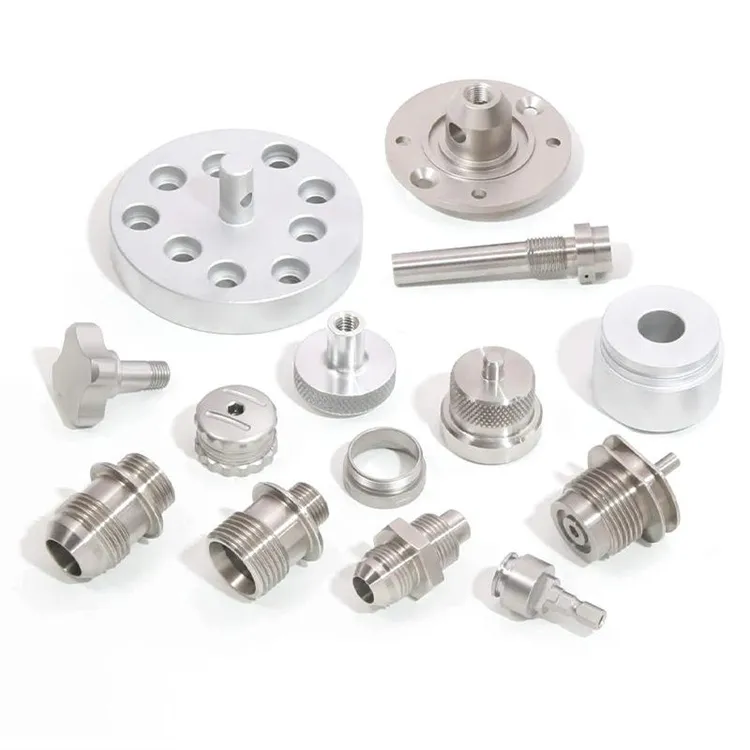


Precise control of cutting parameters is key to solving titanium alloy cutting challenges. Taking advantage of titanium alloy's low thermal conductivity, precision machining processes cleverly reduce cutting speeds and increase feed rates to minimize heat buildup in the tool and workpiece. For example, controlling the cutting speed between 30 and 100°C can significantly reduce tool life. 60m/min, this range can not only avoid the softening of the tool caused by high temperature, but also take away the heat through rapid chip removal, achieving the effect of "killing two birds with one stone". In addition, the use of high-pressure cooling system is also an important measure, which is to reduce the cutting fluid to 10- A 20MPa pressure jet is injected into the cutting area, effectively cooling and lubricating the cutting process, enhancing cooling and lubrication, reducing cutting temperatures by over 20%, and significantly improving machining efficiency.
The diverse application of process methods is crucial for ensuring efficient and high-precision machining of titanium alloys. In addition to traditional cutting, precision machining incorporates specialized processing techniques such as ultrasonic vibration cutting and cryogenic cutting. Ultrasonic vibration cutting causes the tool to vibrate at high frequencies, effectively reducing cutting forces and friction, making the cutting process smoother. Cryogenic cutting cools the workpiece with liquid nitrogen, reducing material plasticity and improving machinability. Furthermore, efficient cutting path planning within multi-axis machining centers reduces idle travel time, effectively accelerating the machining process and achieving efficient and high-precision machining of titanium alloy parts.
Through the coordinated optimization of tools, parameters, and processes, precision machining effectively addresses the challenge of low titanium alloy cutting efficiency, providing a reliable solution for the precision machining needs of high-end manufacturing and helping sectors such as aerospace and medical devices move towards higher-quality development.
The company boasts leading domestic titanium processing production lines, including:
German-imported precision titanium tube production line (annual production capacity: 30,000 tons);
Japanese-technology titanium foil rolling line (thinnest to 6μm);
Fully automated titanium rod continuous extrusion line;
Intelligent titanium plate and strip finishing mill;
The MES system enables digital control and management of the entire production process, achieving product dimensional accuracy of ±0.01μm.


