


Pure titanium is a silvery-white metal with many excellent properties.
Titanium's density is 43% lower than that of steel and slightly higher than the long-renowned light metal magnesium. Titanium is also extremely strong. Pure titanium has a tensile strength of up to 180 kg/mm², comparable to steel, twice that of aluminum, and five times that of magnesium. Titanium is also heat-resistant, with a melting point of 1942K, nearly 1000K higher than gold and nearly 500K higher than steel. While some steels are stronger than titanium alloys, titanium alloys have a specific strength (the ratio of tensile strength to density) that exceeds that of high-quality steel.
Titanium alloys have excellent heat resistance, low-temperature toughness, and fracture toughness, making them popular for aircraft engine parts and rocket and missile structural components.

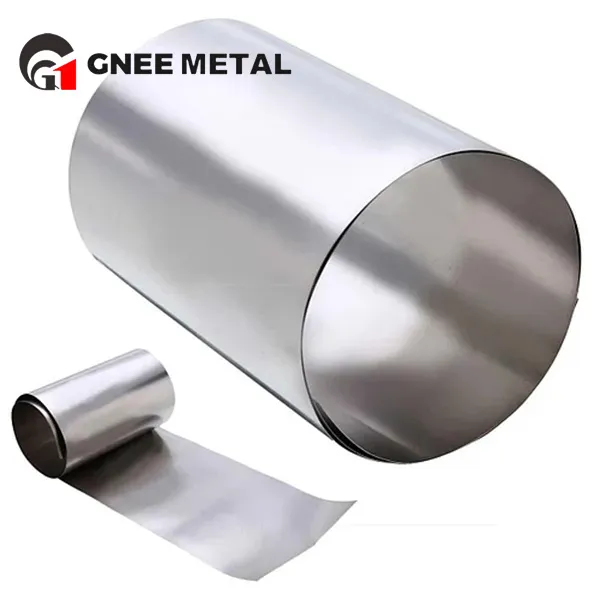

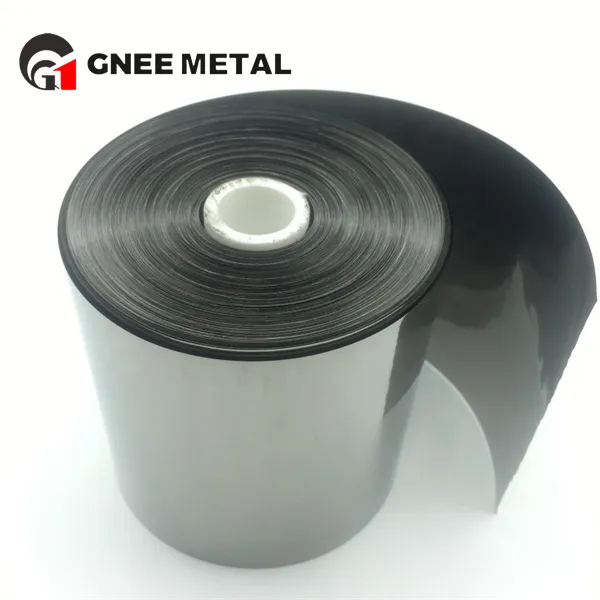
Titanium alloys can also be used as fuel and oxidizer tanks and high-pressure vessels. Titanium alloys have been used in the manufacture of automatic rifles, mortar base plates, and recoilless gun barrels.
Titanium is a relatively active metal. When heated, titanium reacts with non-metallic elements such as O₂, N₂, H₂, S, and halogens. However, at room temperature, a very thin, dense protective oxide film forms on its surface, which resists strong acids and even aqua regia, demonstrating strong corrosion resistance. Therefore, while ordinary metals become riddled with holes in acidic, alkaline, and salt solutions, titanium remains unscathed.
Titanium's corrosion resistance makes it frequently used in the chemical industry. In the past, components containing hot nitric acid in chemical reactors were made of stainless steel. Stainless steel, however, is also sensitive to the highly corrosive agent, hot nitric acid, and these components had to be replaced every six months. While titanium is more expensive than stainless steel, its ability to provide five years of continuous service makes it significantly more cost-effective.
In the petroleum industry, titanium is primarily used in various containers, reactors, heat exchangers, distillation towers, piping, pumps, and valves.
Titanium can be used as electrodes, condensers in power plants, and in environmental pollution control devices. Titanium-nickel shape memory alloys are widely used in instrumentation. Because titanium is biocompatible, it resists corrosion from secretions in the human body, is non-toxic, and adapts to all sterilization methods. Therefore, it is widely used in medical devices such as artificial hips, knees, shoulders, ribs, skulls, aortic valves, and bone fixation clamps. When new muscle fibers wrap around these "titanium bones," they begin to support normal human activity.
The company boasts leading domestic titanium processing production lines, including:
German-imported precision titanium tube production line (annual production capacity: 30,000 tons);
Japanese-technology titanium foil rolling line (thinnest to 6μm);
Fully automated titanium rod continuous extrusion line;
Intelligent titanium plate and strip finishing mill;
The MES system enables digital control and management of the entire production process, achieving product dimensional accuracy of ±0.01μm.


